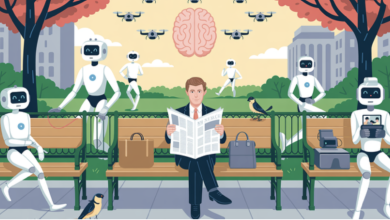
A cardiologist in a 40-provider ambulatory group can run an ambient scribe, a coding assistant and a patient-messaging bot before lunch. What they often cannot do is pull up, in structured form, the lipid panel their patient had drawn at a retail lab three months ago. The results exist, they’re just buried in a fractured system.
The gap between what AI promises and what the systems underneath it can deliver has become the real story of healthcare technology heading into 2027. Budgets are being approved on the assumption that smarter models will fix broken processes. Though in most provider organizations, the opposite is closer to the truth: the process breaks the model.
Spending Is Accelerating. Readiness Isn’t.
Two curves are rising at the same time, and the tension between them explains most of what is happening in health IT right now.
The first is adoption. In a 2026 Snowflake and Hakkōda survey of 183 senior healthcare leaders, 77% said they already invested or planned to invest in generative or agentic AI, and roughly 65% had adopted, were experimenting with, or planned to deploy it within the year.
The second is frustration. Nearly 85% of those same leaders said improving data sharing and interoperability had become a higher priority than it was two years ago, showing that they feel the pressure these AI solutions have on their infrastructure.
August research from UPMC and KLAS shows where that strain puts the industry: clinical documentation tools were the most commonly deployed AI application, cited by 52% of respondents, with revenue cycle, coding and billing next at 36%. When asked what hurts most about their data, executives pointed to manual workarounds, spreadsheets and inconsistent definitions across teams.
None of those are AI problems, but rather the conditions AI inherits.
Readiness lags further than most leaders are willing to admit. Menlo’s State of AI in Healthcare report found that while 85% of practices have explored AI in some form, only 18% are genuinely ready to deploy it in a patient’s care delivery.
The workarounds staff invent in the meantime carry their own risk. In fact, a 2026 Wolters Kluwer survey found 40% of hospitals had unauthorized AI tools running inside their systems, creating concerning cybersecurity and patient data risks.
The Problem Isn’t the Model
Model sophistication is not healthcare’s own constraint. The systems available today can summarize a chart, draft prior authorizations and flag a drug interaction with an accuracy that would have seemed impossible three years ago. What they can’t do is find or use data that was never captured in a usable form.
Most provider organizations sit on decades of accumulated mess. Faxed consult notes. Scanned discharge summaries. Outside imaging that arrives as an unindexed PDF. Vitals typed into a free-text comment box because the template had nowhere else to put them. The data is often there already, just invisible to an algorithm.
Laura Miller, CEO and co-founder of TempDev, a consultancy that builds workflow automation and reporting tools inside NextGen Enterprise environments, has spent most of her career finding those gaps and optimizing healthcare facility workflows.
Her framing on this matter is direct. “The intelligence can be incredible. The data plumbing is still a mess,” she wrote in a recent post on LinkedIn.
The consumer market makes the point efficiently. Testing a major AI assistant’s new health feature, Miller found it didn’t connect to the two lab vendors most patients use and that insurance typically covers, but did connect to a consumer testing startup that – in her experience – couldn’t properly integrate her own device data. It’s the same integration gap a mid-sized cardiology group hits when it tries to feed five years of patient history into a risk model, only smaller and easier to see.
“A lab result shouldn’t just live as a PDF you uploaded six months ago,” she wrote. “An important radiology finding shouldn’t disappear into a document unless the exact right system happens to have an integration.”
Where It Breaks: The Ambulatory Middle
Large academic systems have data engineering teams, integration budgets and enough leverage to make vendors build what they need. Independent and mid-sized ambulatory practices, which deliver most chronic care, have none of that. They have an EHR, a clearinghouse, a patient portal, maybe a population health tool bolted on for a value-based contract, and one overworked IT manager or administrator holding the seams together.
That is where AI underdelivers most visibly. An ambient documentation tool saves a physician six minutes a visit, then produces a note nobody can pull quality measures from. A risk-stratification model runs on claims lagging 90 days. A care-gap report flags a colonoscopy as overdue because the outside GI practice’s findings arrived as a scan.
The burden these tools are meant to relieve is not imaginary. A peer-reviewed 2025 analysis found nurses spend 23% of an average 12-hour shift interacting with medical record systems, reducing time available for direct patient care. Automation can’t relieve a burden if it produces output the rest of the stack can’t read, or overburdens staff with the need for constant inputs or adjustments.
The Unglamorous Work
These fixes rarely make headlines. It means auditing where discrete data is captured versus typed into comment fields, rebuilding intake templates so a smoking status or a blood pressure reading lands somewhere action can be taken, standardizing how outside results get indexed, reconciling problem lists, and deciding – field by field – what the practice will enforce at the point of entry.
Organizations that commit to it tend to find something useful along the way. Many of the gains they expected AI to produce arrive before the AI does. Cleaner capture improves reporting accuracy, which improves quality scores, which improves reimbursement under value-based contracts. The intelligence layer then has something solid to stand on.
Miller’s read on where this leaves the industry is worth sitting with. Until interoperability catches up with intelligence, she argues, AI in healthcare will keep hitting the same wall health technology has run into for decades.
As she put it, “the information exists. It just doesn’t move very well.”
Who Actually Wins
A readiness index published in September, based on interviews with 70 payer and provider executives, reached a conclusion that should be obvious by now: governance, metrics and security readiness, not model capability, decide whether an initiative delivers or stalls.
Organizations that pull ahead over the next three years won’t be the ones with the most impressive model to demo. They will be the ones that did the tedious work first. Structured capture at the point of entry. Real integrations instead of document dumps. Longitudinal records that survive a patient moving between a health system, an independent specialist and a retail lab.
Everyone else will keep buying tools smarter than the data they feed them, and keep wondering why the results don’t match the pitch. That was never an AI problem.