
Artificial intelligence is playing an increasingly important role in automotive software development, but new research suggests the industry is still grappling with security, safety and system complexity as vehicles become more software-driven.
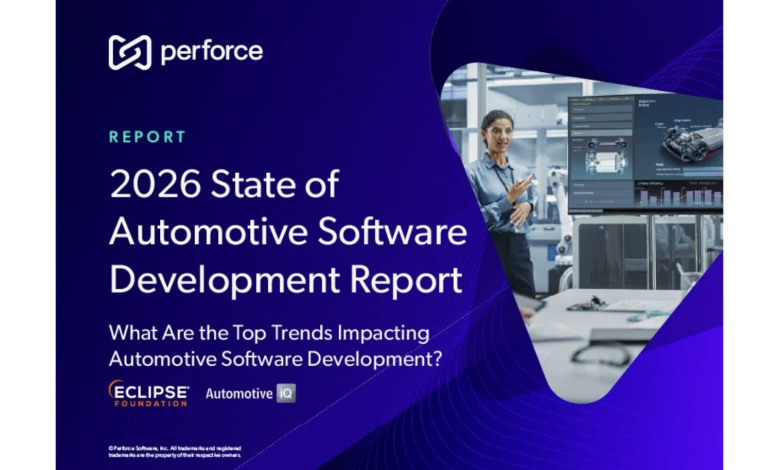
A new report from Perforce Software finds that AI is now influencing how many vehicles are designed and built. The 2026 State of Automotive Software Development Report, based on a survey of more than 450 automotive development professionals worldwide, highlights both the opportunities and risks created by the growing use of AI.
According to the report, 71% of respondents say AI is influencing vehicle design, while 45% are using AI not only in development but also as part of the final product.
The findings reflect the automotive industry’s shift toward software-defined vehicles (SDVs), where software increasingly controls vehicle functionality. More than half of respondents (57%) say their organisations are already deploying SDV architectures.
AI is also being used to optimise vehicle systems. Among teams developing SDVs, 70% report using AI for tasks such as predictive maintenance, adaptive user interfaces and in-vehicle personalisation.
However, growing adoption is accompanied by concerns about safety and security.
Safety was cited as the biggest concern by 54% of respondents, while 41% identified security risks as a major issue in AI-driven vehicle development.
One reason for this is that AI systems can behave unpredictably compared with traditional software, making them more difficult to validate in safety-critical environments.
The report also suggests that attention to regulatory standards may be weakening. Compared with the previous year, fewer respondents said their organisations require compliance with standards such as ISO 26262, SOTIF 21448, or the newer ISO/PAS 8800 framework designed to address AI safety in road vehicles.
Beyond AI risks, managing complexity is becoming one of the biggest challenges for development teams. More than half of respondents (53%) identified system complexity as their main quality concern, reflecting the growing scale of automotive software systems.
To address these challenges, many organisations are investing in modern development practices. The report found 55% of teams now use static code analysis or static application security testing (SAST) to detect vulnerabilities early in development, while 65% provide security tools or training for developers.
Programming languages are also evolving. While C, C++ and Python remain dominant, interest in Rust is gradually increasing, rising from 9% of respondents in 2025 to 11% in 2026, particularly for safety-critical applications.
The report suggests that as vehicles become increasingly software-driven, automotive manufacturers will need to modernise their development toolchains and governance practices to manage both the opportunities and risks associated with AI-enabled systems.
Interested parties can download the full 2026 State of Automotive Software Development Report by visiting: https://www.