Most of the conversation about AI and work has centered on offices: who still writes the code, who drafts the contract, which desk jobs shrink. Far less attention goes to the trades, where automation is starting to pull in the other direction.
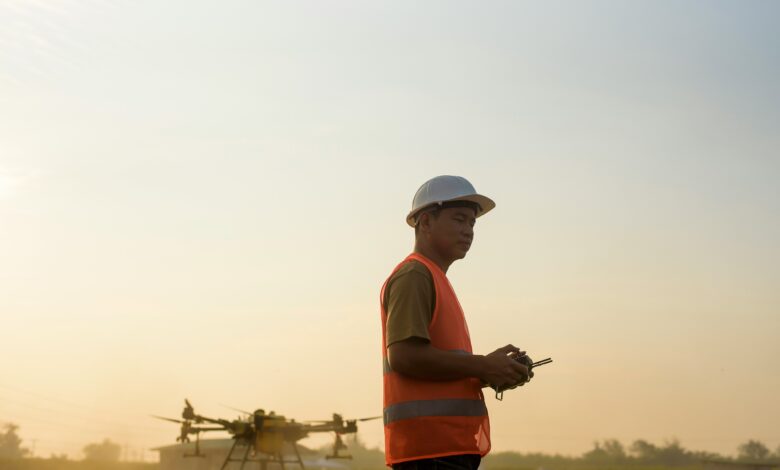
Drones and other robots are now affordable enough that one person can take on work that used to need a full crew, and AI is beginning to absorb the estimating and sales work that kept skilled people on someone else’s payroll.
For an operator, a key hurdle is knowing which buildings need washing, who signs off on the contract and what to charge takes years to accumulate, and in commercial services that knowledge has mostly lived inside large contractors with estimators on staff.
Whoever solves that information problem will shape whether automation produces thousands of independent operators or simply makes the biggest firms more efficient.

SkyPSI, the Dallas company that launched in Dallas-Fort Worth in August, is betting on the independent operator. This week it released Operator+, a free app that maps 17.1 million commercial buildings across the United States and attaches a price to the exterior cleaning job on each one. The average job in the system is worth $13,500. Signing in takes a Google account and nothing else.
IWhat stands out about Operator+ is how specific the problem is. A regional contractor bidding on a hotel facade has an estimator who measures the glass and works out the access before producing a number.
A two-person crew usually has instinct and a competitor’s rate they heard about secondhand. Bid too low and the job loses money. Bid too high and the phone never rings.
SkyPSI calls each building’s price a SkyEstimate, and the app shows how the figure was reached instead of just the total. For a new operator that matters.
Walking into a facilities director’s office able to explain why a parking structure costs what it costs is a stronger position than reading a number off a phone.
Every account also comes with Sky, an AI assistant the company describes as a virtual Crew Chief. Sky answers questions and points operators toward buildings that suit the size of their crew.
Founder Vic Pellicano has a personal reason for building it this way. He grew up in a trailer park and at one point lived out of his car, and he says nobody back then told him which way to head.
He talks about Operator+ as the map he never had, one that shows a working person where the money is on their own street. “It doesn’t cost them a dime to look,” he said.
The market behind the bet is large. Commercial cleaning is projected to approach $860 billion by 2034, and robots do roughly 1% of that work today. Drones also change how often a building gets cleaned. A facade washed once a year because rope access is slow and dangerous can be cleaned several times a year by a pilot standing on the sidewalk.
More cleanings per building means more recurring revenue per customer, which is what keeps a small operator alive through a slow quarter.
Pellicano says the platform underneath is designed to carry other commercial equipment and services over time, and he expects robotics to produce millions of new small businesses, with cleaning as the first of many.