
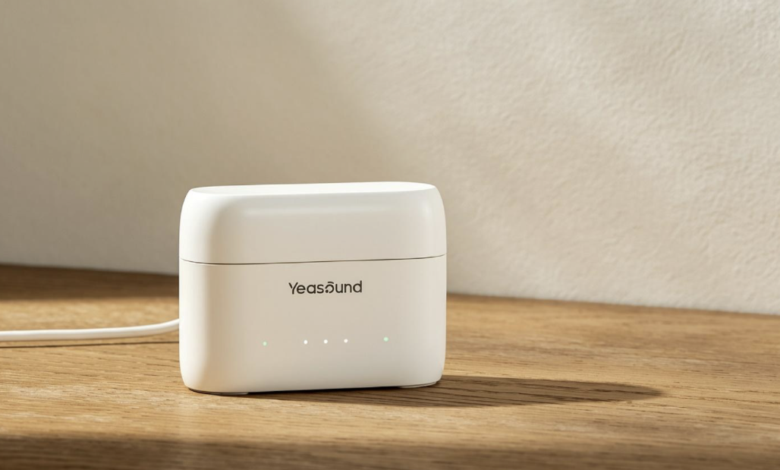
Introduction: When Your Hearing Aid Charging Case Starts to Fail
Rechargeable hearing aids make everyday hearing care more convenient by eliminating the need to replace tiny disposable batteries. However, like all rechargeable electronics, their batteries and charging cases gradually lose performance. When your charging case no longer holds enough power, the big question is whether to replace its battery or invest in a new hearing aid.
The answer depends on the device’s age, repair costs, battery condition, and charging technology. Understanding these factors can help you avoid unnecessary expenses while maintaining reliable hearing support.
For people exploring the Best Rechargeable Hearing Aids: An AI-Powered Guide to Better Hearing, choosing a device with durable construction and convenient charging is just as important as sound quality. Brands such as Yeasound combine AI-powered sound processing with wireless recharging to support a more convenient listening experience.
-
How Long Does a Hearing Aid Charging Case Last?
A charging case’s lifespan depends on battery quality, charging frequency, temperature, storage conditions, and overall construction. Its battery gradually loses capacity through repeated charging cycles, eventually providing fewer recharges than when it was new.
You may notice these warning signs:
- Reduced backup power: The case no longer fully recharges your hearing aids as many times as before.
- Frequent charging: You need to plug in the case much more often.
- Inconsistent performance: Charging starts and stops unexpectedly, even when the case appears to have sufficient power.
- Physical damage: Loose components, damaged ports, or worn charging contacts interfere with normal operation.
Before deciding that the battery has reached the end of its life, check the charging cable, power adapter, charging contacts, and manufacturer’s troubleshooting instructions. Dirt, moisture, or a faulty cable can sometimes imitate battery failure.
If the hearing aids themselves also struggle to hold a charge, the problem may extend beyond the case.
-
Replace the Battery or Buy a New Device?
The most economical decision depends on the total cost of repair compared with replacement—not simply the price of a new battery.
Option A: Third-party battery replacement
A third-party technician may be able to replace the charging case’s internal battery. This can be worthwhile when the hearing aids still perform well and the case is otherwise in excellent condition.
Advantages:
- Potentially lower upfront costs than buying a complete replacement.
- Less electronic waste when the repair is successful.
- Extends the useful life of an otherwise functional device.
Potential drawbacks:
- Some charging cases are sealed or difficult to disassemble.
- An incompatible battery may cause charging problems or reduced performance.
- Poor-quality repairs can affect safety, reliability, or moisture resistance.
- Unauthorized repairs may affect warranty coverage, depending on the manufacturer’s terms.
Always ask for a written repair estimate, a suitable replacement battery specification, and details about the repair warranty. Confirm that the technician can safely service your particular model.
Option B: Buy a new hearing aid system
A new device can be a better investment when the case is aging alongside the hearing aids, replacement parts are unavailable, or repair costs approach the cost of a new system.
A new model may also provide improvements in AI noise reduction, Bluetooth connectivity, charging convenience, and personalized sound settings.
However, replacing a complete system solely because of a worn case may be unnecessary if the hearing aids remain in excellent condition and an authorized replacement case is available.
How to compare long-term costs
| Cost factor | Battery replacement | New device |
|---|---|---|
| Initial expense | Usually lower | Usually higher |
| Compatibility concerns | Depend on repair quality | Designed as a matched system |
| Warranty considerations | May be affected | Depends on new product terms |
| Technology upgrades | Usually none | May include newer features |
| Long-term value | Good if the rest of the system is healthy | Good if the existing system is aging |
Compare the repair quote, any additional service charges, replacement-case availability, and the expected remaining life of your hearing aids. A cheap repair is not necessarily the best value if another component is likely to fail soon.
-
How to Judge Whether Your Hearing Aids Have Reached End of Life
A charging case problem does not automatically mean your hearing aids are obsolete. Assess the complete system before spending money.
Use these practical checks:
- Evaluate battery performance. Do the hearing aids still provide enough listening time after a full charge?
- Check sound quality. Are speech clarity, volume control, and connectivity working as expected?
- Inspect physical condition. Look for damaged cables, worn contacts, corrosion, or other visible problems.
- Review repair availability. Check whether the manufacturer offers replacement cases, parts, or professional servicing.
- Compare total costs. Consider repair expenses against the price and expected service life of a replacement device.
If the hearing aids still deliver reliable sound and the manufacturer can supply a compatible charging case, replacing the case alone may be the sensible choice. If the case, batteries, and other components are deteriorating together, buying a new system may offer better long-term value.
-
Why Wireless Charging Can Reduce Physical Wear
Traditional contact charging relies on metal contacts touching corresponding points on the hearing aids. These connections are convenient, but repeated insertion and removal can contribute to mechanical wear. Moisture, earwax, dust, and oxidation may also interfere with electrical contact.
Contactless charging, commonly called wireless charging, transfers energy without requiring exposed electrical charging contacts between the hearing aids and their charging system.
Potential advantages include:
- Less contact-related wear: Fewer repeated electrical-contact connections can reduce wear at the charging interface.
- Simpler daily handling: Users can place their hearing aids in a compatible case without precisely aligning exposed metal contacts.
- Reduced contact contamination: The absence of exposed charging contacts on the hearing aids can reduce problems associated with dirt or oxidation at those points.
- Convenient charging routines: Consistent placement makes it easier to build charging into a daily routine.
Wireless charging does not eliminate battery aging. Internal rechargeable batteries still degrade over time, and the charging case itself may eventually require replacement. Nevertheless, reducing mechanical wear at the charging interface can help preserve charging reliability.
-
How Yeasound Wireless Charging Supports Long-Term Value
For consumers comparing the best rechargeable hearing aids, charging design deserves attention alongside battery runtime, comfort, and sound processing.
Yeasound incorporates wireless recharging into its hearing aid range. For example, the Yeasound RIC800 offers up to 31 23 hours of hearing aid use per full charge, with a portable case providing additional charging capacity.
Its wireless charging system eliminates the need to repeatedly connect exposed electrical contacts on the hearing aids. This can reduce contact-related wear while making everyday charging more straightforward.
Yeasound also combines charging convenience with app-based controls and sound-enhancement features designed to support clearer listening. These features can make the overall ownership experience more convenient without requiring users to compromise on everyday functionality.
For product specifications and charging guidance, visit the Yeasound support center.
When assessing long-term value, consider the complete package: battery runtime, case capacity, charging method, repair support, warranty terms, and the availability of replacement components. A well-designed charging system may help delay charging-related problems, although it cannot guarantee a longer overall product lifespan.
-
Smart Buying Tips for Your Next Rechargeable Hearing Aids
Before purchasing a replacement device, keep these recommendations in mind:
- Choose a model with sufficient battery runtime for your daily listening habits.
- Prefer charging systems that are easy to use and maintain.
- Check whether replacement cases and accessories are available.
- Review warranty coverage and after-sales service before buying.
- Look for useful AI-powered features, such as environmental noise analysis and speech-focused sound processing.
- Follow the manufacturer’s cleaning, storage, and charging instructions to protect the device.
If you are unsure whether your current hearing aids still meet your needs, start with a basic hearing check. Yeasound provides a free online hearing test that can help you understand your hearing and explore suitable options. An online screening is not a substitute for a comprehensive hearing evaluation by a qualified professional.
Conclusion: Repair Wisely and Choose Charging Technology Carefully
When a hearing aid charging case reaches the end of its useful life, the right decision depends on the condition of the entire system. Third-party battery replacement may save money when the repair is safe, compatible, and economical. A new device may be the better investment when multiple components are deteriorating or newer features offer meaningful benefits.
Wireless charging offers another consideration by reducing repeated physical contact at the charging interface. Yeasound’s wireless charging technology combines this convenience with AI-powered sound features, helping users make a more informed choice about long-term hearing care.
Ultimately, the goal is not simply to buy the cheapest device or repair. It is to choose a reliable hearing solution that balances performance, maintenance, comfort, and long-term cost.