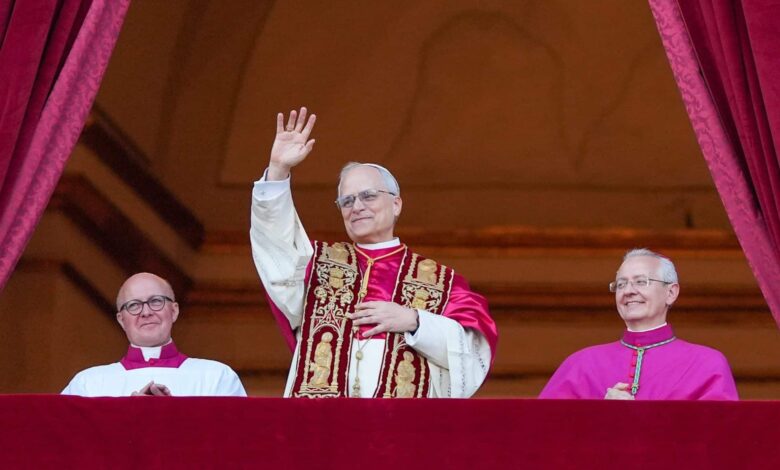
On Friday morning, a week before he is due to leave for South America and 17 days after surgeons removed part of his right lung, Pope Leo XIV sat in the Vatican’s Consistory Hall with a room of AI researchers and told them the ethics were largely settled.
What the world lacks, he said, are “institutions capable of putting these principles into practice.”
The meeting was co-hosted by the Pontifical Academy for Life and the Future of Life Institute, and the Associated Press described it as a chance for the Vatican’s in-house AI commission to work directly with experts in the field. Leo used it to restate the core of Magnifica Humanitas, the encyclical of nearly 43,000 words he presented in May alongside Anthropic co-founder Christopher Olah.
He warned against granting AI systems rights or legal personhood, because doing so would leave people harmed by them facing a faceless entity.
The timing gives the message weight. Leo, 71, announced on October 11th that doctors had found a growth on his lung. After the operation this month the Vatican confirmed adenocarcinoma, the most common form of lung cancer, and five days later he was back at the window of the Apostolic Palace addressing pilgrims, Reuters reported.
Earlier in the month he had used his Twitter/X account to argue that human art must be told apart from what machines generate, a theme he has returned to repeatedly since his election.
Saturday brings a lighter assignment. Invited guests are expected to attend the Eternal City Tip-Off in St. Peter’s Basilica, the burial place of St. Peter and one of the most iconic sites in Christendom.
The event will include a Private Mass presided by The Most Reverend Nelson J. Pérez, Archbishop of Philadelphia, and joined in concelebration by Villanova University President Rev. Peter M. Donohue, OSA, and University of Notre Dame President Rev. Robert A. Dowd, C.S.C.
This will be followed by His Holiness Pope Leo XIV in the Paul VI Audience Hall, offering guests a unique opportunity to gather in Vatican City for a special audience with the Holy Father.
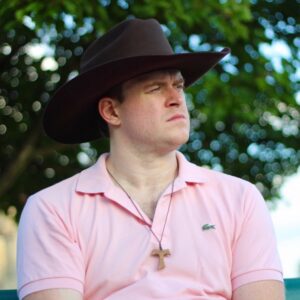
Among those in the hall is Eddie Cullen, CEO of Crescite Innovation. Cullen’s own work sits close to the questions Leo raised on Friday. He co-founded Crescite with Karl Kilb III, and told EWTN News they started the company “because we love the Church.”
Cullen’s case for ethical finance, that a financial product should be judged by who it serves as well as what it earns, tracks closely with Leo’s insistence that new technology be directed toward the common good.
For someone who builds technology for a living, the weekend offers an unusual vantage point. The man who spent Friday telling scientists that AI decisions must be open to challenge and remedy will spend Saturday greeting fans of his alma mater, some of whom build the very systems he wants held to account.
Leo’s position also stands in contrast to the one taking shape in Washington.
This past month, President Trump and leaders of several major AI companies signed a voluntary pact titled the White House Accord on Super Intelligence, which asks firms to police themselves and which Trump called morally binding, Al Jazeera reported. Friday’s address asked for something closer to the reverse: shared standards, independent oversight and clear accountability when systems cause harm.
The pope has few levers beyond persuasion, but he has used them consistently. He named AI as a defining challenge to the cardinals two days after his election in May 2025, built a Vatican commission around it this spring, and devoted his first encyclical to it. The next tests come quickly, with the autonomous weapons talks in Geneva and his November trip to South America.
For the attendees of this weekend’s events a speech on legal personhood for algorithms may feel a long way from the court. For those who build AI, this week offered an unusually clear read on where the Church’s most visible voice wants the guardrails set.