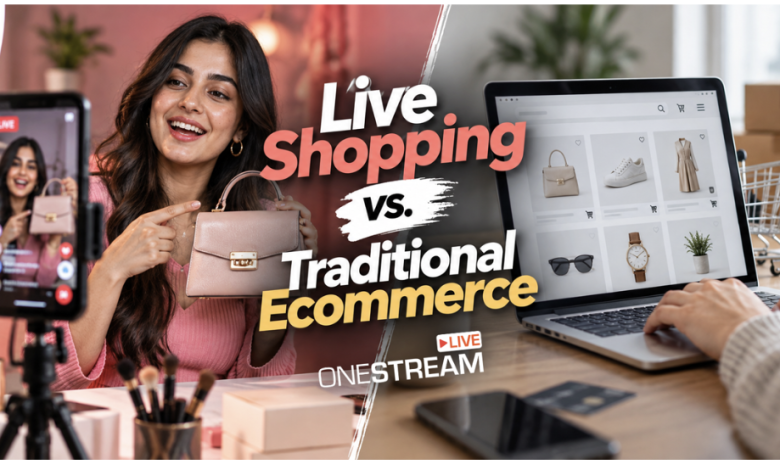
Have you ever seen a shopper open your product page and leave a few seconds later? That quiet exit is the big story behind live shopping vs. traditional ecommerce. A product page can’t answer questions. A live host can.
In a regular online store, buyers look at photos and read text on their own. In live shopping, a real person shows the product on camera, reads the chat, and answers right away.
This guide shows you how both work, where live selling wins, and where your store still wins. You’ll also learn how to sell live on multiple platforms at once with OneStream Live.
What Is Live Shopping and How Does It Work?
Live shopping is a way to sell products during a live video. A host shows each product, answers questions in the chat, and shares a link or QR code. Viewers can buy while the stream is still going.
You may also hear it called live commerce, livestream shopping, or live selling. They all mean the same thing. Think of a TV shopping channel, but every viewer can chat with the host and buy with one tap.
Here’s how a live shopping event usually works:
- Plan the show. Pick a date, a theme, and the products you want to sell. Then tell your audience about it.
- Go live. Start your stream on one or more platforms, like Facebook, YouTube, Instagram, or TikTok.
- Show the products. Put product cards with prices and links on screen as you talk about each item.
- Answer the chat. Viewers ask about size, color, or shipping. You reply right away.
- Close the sale. Buyers tap a link or scan a QR code and pay while the stream keeps going.
Live shopping is part of a bigger trend called video commerce. Shoppable video includes recorded clips with product tags. Social commerce means buying inside social apps. Live shopping is the live version, where timing and talk drive the sale.
So how does this compare to the online store you already have? Let’s break it down.
Live Shopping vs. Traditional Ecommerce: Key Differences
Traditional ecommerce sells with product pages that buyers read alone. Live shopping sells with a host who shows, explains, and answers in the moment. The product can be the same. The buying experience is very different.
| What Matters | Traditional Ecommerce | Live Shopping |
| How people shop | They browse on their own | A host guides them live |
| How people find products | Search, filters, and menus | The host shows products on camera |
| Getting answers | FAQ pages, email, or support tickets | Quick replies in live chat |
| Seeing the product | Photos and short videos | Real demos from every side |
| Reason to buy now | Sale banners and timers | Deals that end when the show ends |
| Building trust | Reviews and star ratings | A real person using the product |
| When it’s open | All day, every day | At set show times, plus replays |
| How people pay | Cart and checkout on your site | Link or QR code shared during the stream |
The biggest gap is in sales. Companies told McKinsey that live commerce turns close to 30 percent of viewers into buyers, up to ten times more than regular online shopping.
Now look at a normal online store. Baymard Institute found that about 70 percent of online shopping carts get left behind, based on its list of cart abandonment studies. Many of those shoppers had a question nobody answered.
But regular online stores still have real strengths. They stay open all the time. Google can find them. Buyers can compare products at their own speed.
Live shopping has problems too. In a later study, McKinsey found that some viewers found shows boring or repetitive, show times inconvenient, prices not worth it, or products out of stock.
So you don’t need to pick one side. Live shopping gets people excited to buy. Your store helps them finish the purchase.
5 Live Shopping Benefits Product Pages Can’t Match
The main benefit of live shopping is simple. A live host answers a buyer’s doubts before the buyer leaves. Here’s how that helps you sell more.
- Real demos build trust. A host can stretch the fabric, open the box, or turn the product around. Buyers see things photos can miss.
- Quick answers stop doubts. “Does it come in blue?” gets an answer in seconds, not an email two days later.
- Deals feel urgent. McKinsey says limited time deals, like one time coupons, help people decide faster during a live show. A deal that ends with the stream gives viewers a reason to buy now.
- One stream reaches many platforms. When you multistream your live sale to 45+ platforms with OneStream Live, the same host and products reach your Facebook, YouTube, and Instagram fans at the same time.
- Younger shoppers tune in. McKinsey found that some companies grew their younger audience by up to 20 percent with live commerce.
How OneStream Live Helps You Sell Live Easily
OneStream Live makes it easier to turn live viewers into customers with Live Sales, a built-in feature in OneStream Live Studio that lets you showcase products directly during your live stream.
Add your product names, links, and prices, and display them on screen while you stream. Each product can also be paired with a scannable QR code, giving viewers an instant way to access your product page.
There’s no need for viewers to search through comments, remember a URL, or leave the stream to find what you’re selling. They can simply scan the QR code with their phone and go directly to the product page to learn more or make a purchase.
With Live Sales, you get four tools to sell on stream:
- Product Cards: Show a product with its title, description, price, picture, and a link to buy.
- Instant QR Codes: Make a QR code in seconds and put it on screen. It shows only the code, with no picture or product details.
- Promo QR Codes: Show up to 6 pictures with one QR code, plus a title and description. These work well for special deals.
- Compare at Pricing: Show the original price next to the sale price, so viewers see exactly how much they save.
You can save up to 8 product cards and QR codes before or during your show. Only one appears on screen at a time, and you can switch to a different one without pausing your stream.
You also don’t need a new website. Each card links to the product page you already have, so your live stream does the selling and your store handles the payment.
Multistream Your Live Sale Everywhere
This is where OneStream Live really helps. Instead of limiting your live sale to a single platform, you can multistream to Facebook, Instagram, TikTok, YouTube, LinkedIn, and more at the same time, reaching your audience wherever they prefer to watch.
You can also stream directly on your own website, giving you more control over the shopping experience and keeping viewers within your brand’s online space. And if you don’t have a website, OneStream Live lets you create a custom website for your live stream, so you can have a dedicated destination where viewers can watch your stream and discover your products without needing to build a website from scratch.
Conclusion
Live shopping vs. traditional ecommerce isn’t about picking a winner. Your online store lets people browse, compare, and buy any time. Live shopping gives them something a page can’t: a real person, a real demo, and quick answers.
The best brands use both. They go live to build trust and excitement. Then they send buyers to the product pages they already have.
OneStream Live makes this easy. Put product cards and QR codes on screen, multistream to 45+ platforms at once, and let viewers scan and buy without leaving your stream. Your next customer might already be watching.
Frequently Asked Questions
Q: What is live shopping?
A: Live shopping mixes live video with online shopping, so viewers can find and buy products during a stream. A host shows each item, answers questions in the chat, and shares a link or QR code. Viewers can buy while the stream is still running, without waiting for it to end.
Q: How is live shopping different from traditional ecommerce?
A: The main difference in live shopping vs. traditional ecommerce is conversation. Live shopping adds quick answers, live product demos, and deals that end with the show. Traditional ecommerce mostly uses product pages, photos, and reviews that buyers look at alone, with nobody there to answer questions right away.
Q: What are the benefits of live shopping for brands?
A: Live shopping helps brands connect with customers, show products from every side, and answer questions right away. A real host builds trust, and limited time deals help people decide faster. Brands can also reach more buyers by multistreaming one live shopping event to many platforms at the same time.
Q: Can live shopping increase ecommerce sales?
A: Yes, live shopping can help grow online sales by making shopping more fun and personal. Brands in a McKinsey study reported that close to 30 percent of live viewers became buyers, far more than on regular online stores. Results depend on your products, host, and audience, so keep testing and improving.
Q: What do businesses need to start live shopping?
A: Businesses need a live streaming platform, products to show, a friendly host, and an easy way for viewers to reach product pages. OneStream Live’s Live Sales feature adds product cards and QR codes to your stream, and you can multistream your show to 45+ platforms at once.