When a generative AI software model makes a mistake, the result is usually a nonsensical paragraph or a flawed line of code. But as artificial intelligence breaks out of the data center and enters the physical world, the stakes of an edge-case failure escalate from a reputational headache to a severe physical liability.
For the impending wave of physical AI to achieve mass commercial adoption, enterprises must answer a critical question: how do you guarantee that a dynamic, autonomous machine won’t harm the humans working next to it?
SafeWorld, an AI lab emerging from stealth today, believes it has the answer.
The company announced a $12.2 million seed round co-led by Shine Capital and a16z Speedrun to build the safety and simulation infrastructure for the robotics industry. The oversubscribed round also drew backing from Box Group, Carnegie Mellon University Endowment, Innovation Endeavors, SV Angel, and a roster of strategic executives from NVIDIA, Waymo, Meta, and Google DeepMind.
The Enterprise ROI Problem: Cages And Speed Limits
For decades, industrial robots were deterministic. They operated in heavily controlled, fenced-off zones, executing hard-coded, repetitive motions. But the next generation of robotics is designed to perceive, react, and collaborate alongside humans in unstructured environments like busy warehouse floors, automotive manufacturing plants, and hospitals.
The bottleneck to deploying these advanced systems isn’t the AI’s capability; it is the inability to rapidly validate its safety. Currently, hardware makers and enterprise deployers rely on prohibitively slow and expensive physical field testing. However, it is mathematically impossible to physically recreate every rare, dangerous scenario a robot might encounter.
To hedge against this uncertainty, risk-averse deployers resort to placing AI-powered robots in physical cages or implementing strict digital speed limits. This defensive posture severely throttles robot productivity, directly undermining the return on investment that justified the automation in the first place.
“As robotics moves from impressive demos to everyday deployment, safety becomes a prerequisite for adoption,” says SafeWorld co-founder and CEO Kyle Wong. “We believe more modern ways to test and validate safety can help unlock the broader potential of robotics.”
Democratizing High-Fidelity Simulation
SafeWorld’s solution is a browser-based safety testing platform that shifts the validation process from the physical world to a highly scalable digital environment.
Using natural-language scenario generation and reactive human trajectory models, the platform allows engineering and safety teams to subject their robots to millions of edge-case simulations. Users can build scenarios based on past incidents, safety standards, or raw robot logs without needing a background in complex 3D simulation.
Crucially, SafeWorld approaches safety as a continuous lifecycle rather than a one-time, pre-launch checklist. Because every minor software update or change in a warehouse layout can introduce unforeseen risks, deployers can continuously run automated, high-fidelity simulations to maintain a verifiable safety record.
“Advanced simulation tools like SafeWorld give us a scalable way to test challenging scenarios, strengthen our safety processes, and better prepare our robots for real-world deployment,” notes Thomas Tang, CEO of Anyware Robotics.
Worldclass Pedigree of Research and Early Traction
Venture capitalists have aggressively funded foundational AI models over the past 24 months, but the infrastructure required to commercialize those models in hardware is just beginning to take shape. SafeWorld has attracted heavy-hitting investors largely due to a founding team that bridges the gap between elite academic research and enterprise scale.
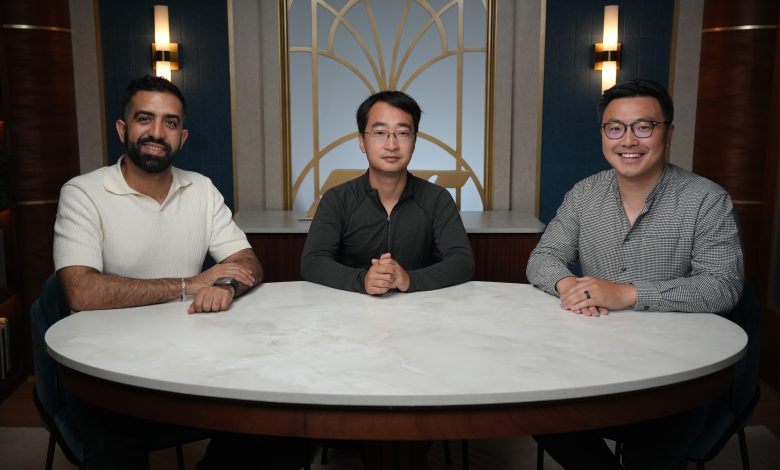
Dr. Ding Zhao, Director of the Safe AI Lab at Carnegie Mellon University and a former researcher at Google DeepMind, brings over 17 years of dedicated experience in safe autonomous systems. He is partnered with Wong, a veteran founder who previously built and led the AI platform Pixlee to an acquisition and most recently served as CEO of Stanford’s StartX accelerator. Simo Rachidi, a former Principal Security & ML Engineer at Salesforce Einstein who architected systems handling petabytes of daily enterprise data, rounds out the technical leadership.
“As more of the physical world becomes automated, safety needs to become a continuous, intelligent layer that evolves alongside the machines themselves,” said Alex Hartz, General Partner at Shine Capital. “SafeWorld has the rare combination of deep technical expertise in AI and robotics safety, along with the ambition to build the independent safety infrastructure for the physical AI era.”
“One of the biggest lessons from autonomous vehicles is that real-world testing alone can’t cover every dangerous situation,” says Dr. Zhao. “The same rigor the AI community is bringing to models now needs to apply to the machines those models control.”
The market demand is already materializing. SafeWorld is currently executing early pilots with multiple Fortune 50 enterprises, including major automotive OEMs, medical device manufacturers, and warehouse automation leaders. As businesses increasingly look to automation to solve labor shortages and supply chain inefficiencies, SafeWorld is positioning itself as the essential tollbooth of trust required to bring the next billion machines online.