
The most common AI governance failure I see is not bad governance design. It is governance that arrives too late to influence what it is governing.
The organizational response to AI risk has been substantial across most large enterprises. Governance councils, policy frameworks, model review committees, responsible AI principles, and increasingly detailed internal standards for how AI should be developed and deployed. Regulatory requirements have added urgency: the EU AI Act (Regulation 2024/1689, in force August 2024) establishes binding obligations for high-risk AI systems, and the NIST AI Risk Management Framework has become a reference standard for enterprise AI governance programs globally.
The investment is not translating into proportional improvement in AI risk outcomes. Delivery friction is increasing alongside governance investment. In many organizations, governance programs are producing more process overhead and more friction between risk and delivery functions. The reason is structural, and the structural problem is timing.
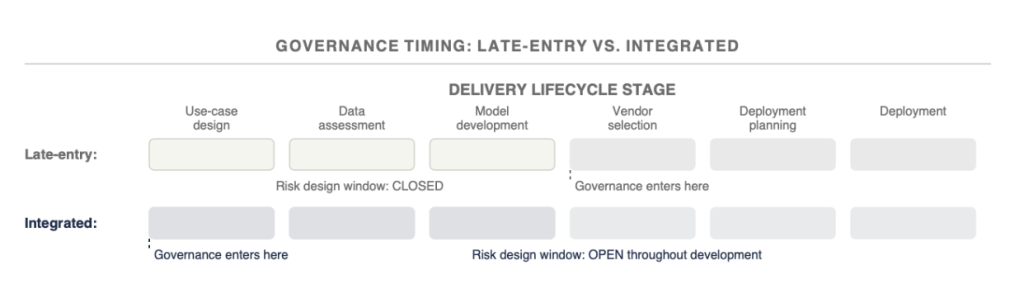
Figure 1 – Timeline: Late-entry vs. integrated governance
The Late-Entry Failure Mode
Risk, legal, compliance, and governance functions are introduced to AI programs at different points in different organizations. In many enterprises, the introduction happens after core technology decisions have already been made. Models have been developed. Vendors have been selected. Deployment timelines have been committed. The governance team is then asked to review and approve a decision package that is already substantially complete.
This is not a governance failure. It is a sequencing failure that makes governance failure nearly inevitable.
When governance teams engage late, they face compressed timelines, limited context about why specific design choices were made, and the organizational reality that changing direction has become expensive. The choices available to governance at this stage are:
- approve, which may require accepting risk that would have been designed out earlier;
- reject, which carries significant cost and organizational friction; or
- condition, which creates rework that could have been avoided if governance had engaged earlier.
Delivery teams experience this as obstruction. The governance function has arrived late, does not have the full context for the design choices, and is generating rework on a program that is under delivery pressure. The characterization may be unfair to the governance team, but the structural conditions that produce it are not created by governance behavior. They are created by the sequencing decision that placed governance at the end of the delivery process.
Three Structural Requirements
Three structural requirements distinguish AI governance programs that strengthen delivery from those that create friction with it.
1. The first is early engagement at the use-case design stage. Governance teams should participate in the evaluation of AI use cases before development begins: assessing the data that the model will use, the decisions it will influence, the populations it will affect, and the regulatory requirements that apply to the use case. This engagement does not require governance to approve every design decision. It requires governance to identify the risk dimensions of each use case early enough to influence the design before the design becomes the basis of the development program.
Early engagement changes the governance relationship from a reviewer of completed decisions to a participant in the design process. This is a more demanding role for governance teams, requiring deeper technical literacy and tighter integration with delivery programs than most governance functions currently have. It is also the only role from which governance can influence AI risk rather than documenting it retroactively.
2. The second requirement is risk-adjusted controls calibrated to actual exposure, not maximum caution. One of the consistent criticisms that delivery teams make of governance functions is that controls are applied uniformly regardless of the risk profile of the specific use case. A model that automates a low-stakes product recommendation faces the same approval process as a model that automates a credit decision that affects a customer’s access to financial services.
Risk-adjusted governance calibrates the depth and rigor of the review process to the actual risk exposure of the use case: the consequence if the model fails, the population size affected, the reversibility of the decisions the model influences, and the regulatory category the use case falls in. Low-risk use cases receive lighter governance with faster approval cycles. High-risk use cases receive deeper review with more rigorous standards. This calibration reduces friction on low-risk programs without reducing oversight rigor on high-risk ones.
3. The third requirement is continuous lifecycle oversight rather than point-in-time approval. An AI governance model that reviews and approves models at deployment is designed for static technology. AI models are not static: they drift, they encounter data distributions their training did not anticipate, and the regulatory and business context they operate in changes over time.
Continuous lifecycle oversight defines the monitoring obligations that apply to each deployed model, the thresholds that trigger additional review, and the protocols for model updates that range from routine retraining to material behavior changes requiring governance review before deployment. This framework allows AI systems to be maintained at the pace their operational performance requires, while ensuring that material changes receive appropriate oversight.
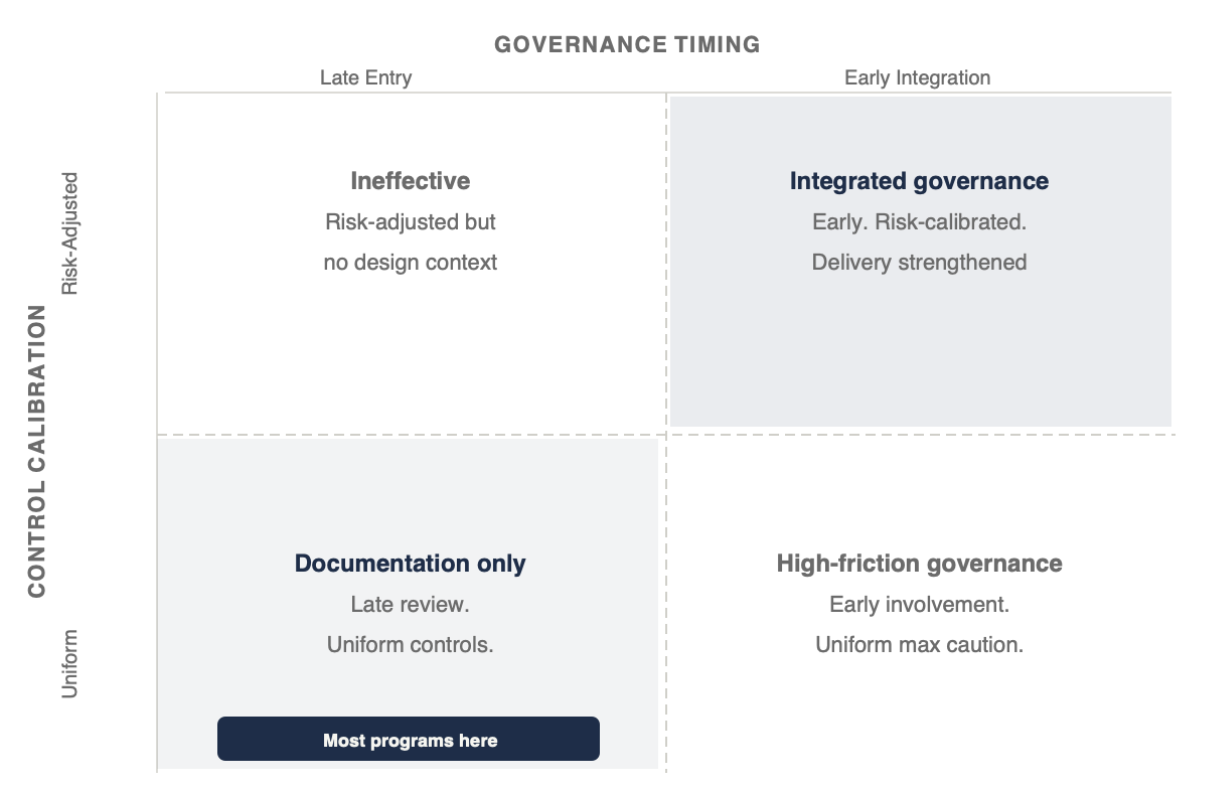
Figure 2 – 2×2 governance effectiveness matrix
Why This Is an Organizational Design Problem
The late-entry governance failure mode is typically described as a cultural or behavioral problem: delivery teams that view governance as friction, risk teams that apply excessive caution to maintain defensible positions, and a lack of mutual understanding between technical and governance communities.
These cultural dynamics are real. They are symptoms of an organizational design problem, not its cause.
When governance teams are structurally positioned after the delivery process, they are incentivized to apply maximum caution because they lack the context to calibrate their review accurately. The cost of approving something that subsequently produces a governance failure is concentrated on the governance team, while the cost of generating rework is distributed across the delivery program. The incentive structure produces risk aversion even when individual governance professionals would prefer to be more collaborative.
When delivery teams are evaluated against timelines that do not include governance review time, they are incentivized to minimize governance engagement until it is unavoidable. The incentive structure produces late engagement even when individual delivery leaders understand the value of earlier governance input.
Resolving the cultural dynamic requires changing the organizational design: integrating governance into the delivery process from the start, calibrating controls to actual risk exposure, and creating accountability structures that reward governance effectiveness rather than governance thoroughness. Governance that arrives after the design decisions have been made can document what was decided. It cannot change it. s