Artificial intelligence is becoming part of everyday digital work, helping people develop ideas, prepare written content and create visual materials. However, using separate platforms for each task can interrupt the creative process and make it more difficult to maintain a consistent direction.
Chat Smith is a multi-model AI assistant that brings together access to advanced models, including GPT-6 Astra, Gemini and Claude, alongside tools for writing, research and visual creation. By combining these capabilities in one platform, it allows users to move from an initial idea to written and visual content through a more connected workflow.
What is Chat Smith?
Chat Smith is designed to support different stages of creative and everyday work within one conversational environment. Users can ask questions, brainstorm ideas, organise information, refine drafts and generate visuals without creating a separate workflow for every task.
A user might begin with a rough concept, explore several possible directions and then develop the selected idea into an outline or first draft. Once the written direction is clear, the same concept can be used to create supporting visual materials.
For example, someone preparing a blog article could use Chat Smith to identify relevant angles, structure the content, revise individual sections and explore imagery for the finished piece. The AI supports the process, while the user remains responsible for checking the information and making the final creative decisions.
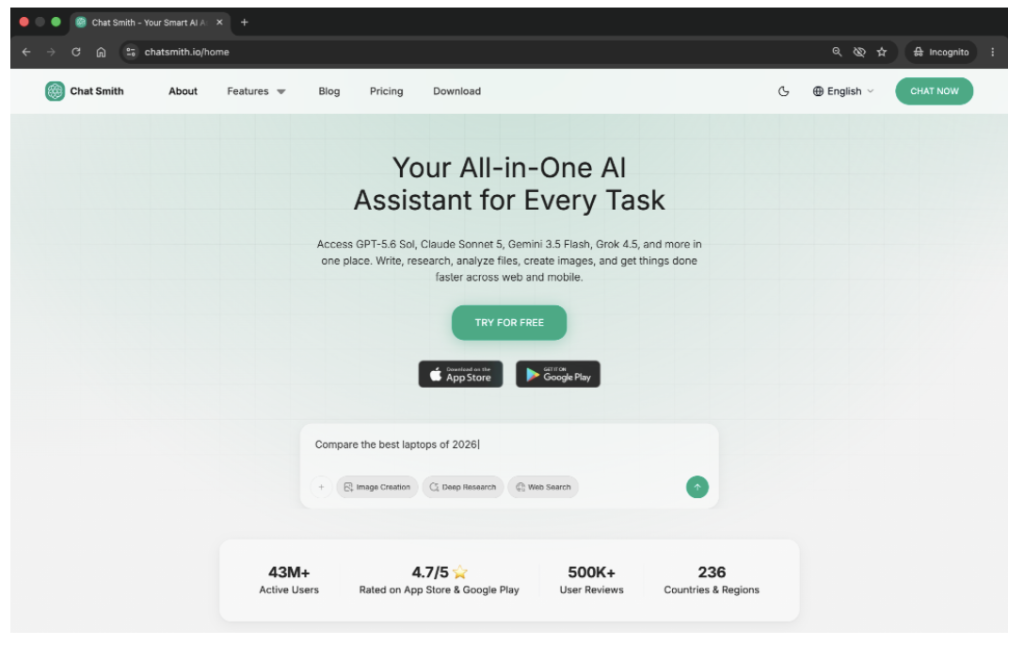
Using AI Chat for everyday tasks
One of the most direct ways to use Chat Smith is through its conversational interface. Users can describe what they want to accomplish in ordinary language, ask follow-up questions and refine the response as their requirements become clearer.
Chat Smith’s AI Chat can assist with brainstorming, drafting and problem-solving across a variety of situations. A social media manager could request several content ideas for a product launch and then adapt them for different audiences. A student could ask for a difficult subject to be divided into simpler sections, while a professional might organise meeting notes or prepare questions for an upcoming discussion.
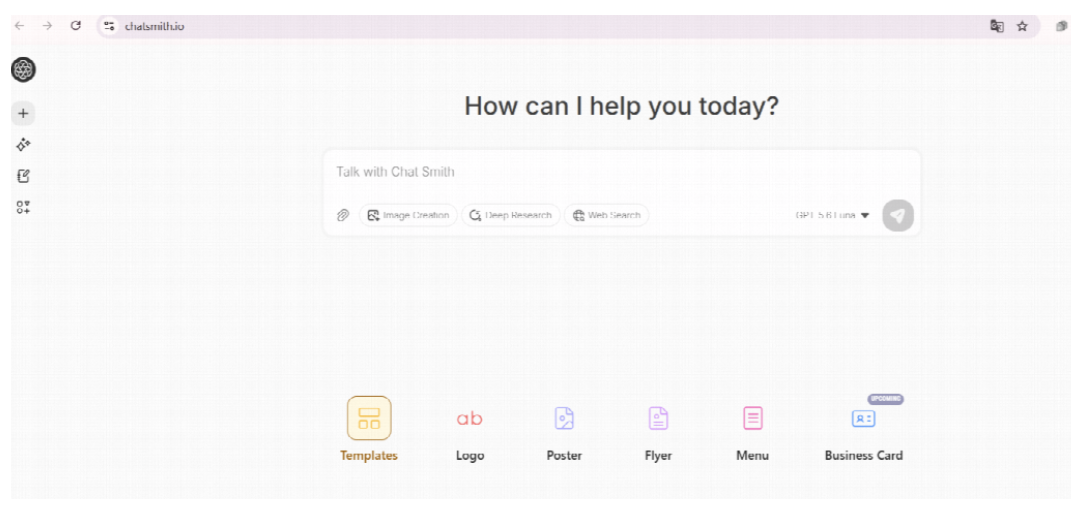
Writing and editing can also become more iterative. Users can turn rough notes into an initial draft, request alternative wording, improve the structure or adjust the tone for a particular audience. This approach can be applied to articles, emails, product descriptions, presentations and social media content.
The first response does not need to be treated as the final version. Users can review the output, provide additional context and continue refining it until it better reflects their purpose.
Supporting research and information organisation
Before creating content, users often need to understand a subject and organise material gathered from several sources. Chat Smith can help break a broad topic into research questions, summarise information supplied by the user and arrange key points into a clearer structure.
These capabilities can be useful when preparing an article, campaign brief, presentation or study material. For instance, a user could provide several notes and ask Chat Smith to identify recurring themes before turning them into an outline.
AI-generated summaries should still be treated as working material rather than verified evidence. Important facts, statistics and quotations need to be checked against reliable sources, particularly when the content is intended for public or professional use.
Creating visual content with Chat Smith
Chat Smith also supports projects that require visual materials. This can be useful for small businesses, educators, marketers and creators preparing announcements, presentations, campaigns or social media content.
For businesses developing or refreshing their visual identity, Chat Smith’s AI Logo Generator offers a creative starting point. Users can provide details such as the brand name, industry, target audience, preferred colours and design style to explore different logo concepts. These initial results can help users compare possible directions before refining a selected concept or preparing a clearer brief for a professional designer.
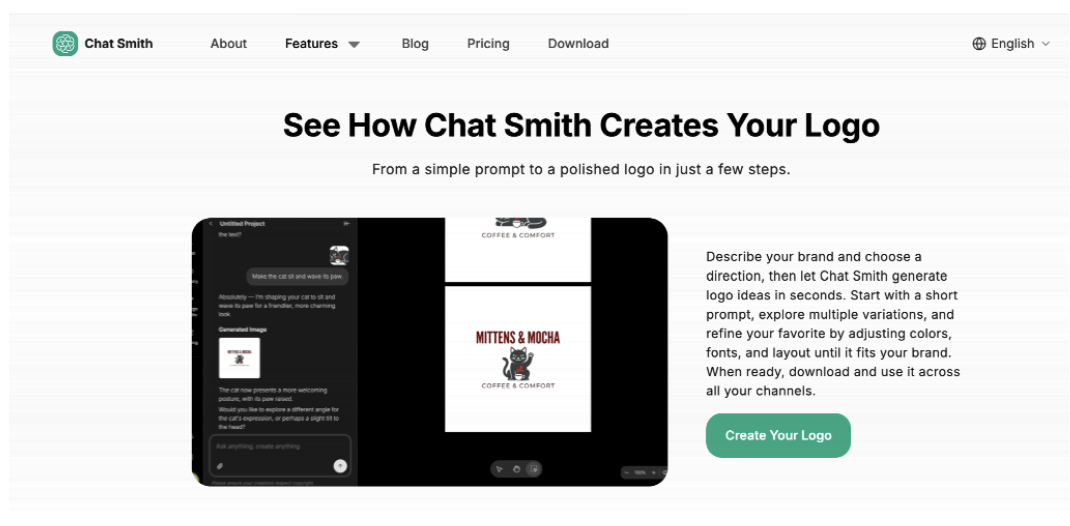
Once an initial brand direction has been established, the same visual identity can be carried through to promotional materials. A small business organising an event, for example, may need a promotional poster that reflects its brand, theme and message. Instead of beginning with a blank canvas, the user can describe the event, intended audience, preferred colours and visual style.
Chat Smith’s AI Poster Generator can turn these instructions into an initial poster concept. Users can then review the result and adjust the prompt, wording or visual direction so that the final design better suits their brand and purpose.
These tools do not remove the need for creative judgement. Rather, they provide a faster way to explore several directions before selecting and refining the most suitable one.
Who can benefit from Chat Smith?
Chat Smith can support people who regularly work with ideas, information or digital content. Creators can use it to explore topics and refine drafts, while marketers and social media managers can develop campaign concepts, messaging and visual materials.
For small business owners without a dedicated content team, the platform can assist with newsletters, promotional ideas, event announcements and early concepts for marketing materials. Students and professionals can use it to organise notes, understand complex topics and prepare first drafts. Entrepreneurs may also find it useful when exploring business ideas or considering different ways to communicate a new product or service.
Bringing creative work into one workflow
The main value of Chat Smith lies in connecting tasks that are often handled separately. An initial idea can become an outline, then a refined piece of writing and eventually a visual asset for publication or promotion.
By bringing multiple AI models and creative tools into one environment, Chat Smith makes it easier to move between these stages while maintaining the context of the project. The goal is not to replace human creativity, expertise or judgment, but to help users experiment, revise and turn early ideas into more useful results.