Generative AI is becoming part of how people search for information, review difficult subjects and explore unfamiliar ideas. Bible study is now one of the areas where these tools are being used.
A person reading a passage may ask an AI assistant to explain an unfamiliar term, identify related verses or suggest questions for further reflection. These capabilities can make study more accessible, especially when someone does not know where to begin.
However, Scripture is not simply a collection of isolated facts. Its meaning is influenced by literary structure, historical setting, translation choices and theological tradition. An answer that sounds clear may still omit important context or present one interpretation as though it were universally accepted.
Responsible AI assistance should therefore help people investigate Scripture without positioning the technology as a spiritual or interpretive authority.
Why Bible Study Is a Challenging AI Use Case
Generative AI systems are designed to produce relevant, natural-sounding responses. This makes them useful for conversation, but a confident tone does not guarantee an accurate interpretation.
A question about one verse may involve the surrounding chapter, another biblical book or a historical practice that is unfamiliar to a modern reader. Different Christian traditions may also understand a passage differently.
If an AI response removes these layers, the result may appear simpler than the text actually is. Users can also encounter incorrect citations, blended quotations or statements that cannot be traced back to a source.
The central issue is not whether AI can discuss the Bible. It is whether the tool encourages users to verify what it says and continue reading beyond the generated answer.
Where AI Can Support the Study Process
AI can be useful when it performs a supporting role. For example, it can help a reader develop questions about a passage, identify themes to investigate or locate verses that may be relevant to a subject.
It can also help users review their own study material. Someone who has recorded questions, sermon points and personal reflections over several weeks may use an AI assistant to revisit recurring topics or identify areas that deserve further study.
These activities reduce the effort involved in beginning a research task. They do not determine what a passage ultimately means.
A productive interaction might begin with a broad question and lead to several specific reading tasks. Instead of treating the AI response as the conclusion, the user can check the cited verses, read the surrounding passages and compare the explanation with trusted commentaries or guidance from a pastor or teacher.
Four Principles for Responsible AI-Assisted Bible Study
1. Keep Scripture Traceable
A helpful response should identify the biblical passages on which it is based. This allows users to distinguish between the wording of Scripture and the system’s explanation.
Specific references also make errors easier to detect. If a quotation does not match the cited passage, or if the verse does not support the claim being made, the user can recognize that the answer needs further review.
2. Read Beyond the Quoted Verse
A single verse rarely provides all the information needed to understand a subject. Readers should examine what comes before and after it, who is speaking, who the original audience was and what role the passage plays in the wider book.
Related verses can provide useful direction, but collecting similar phrases is not the same as studying context. AI should encourage deeper reading rather than turning Scripture into a list of disconnected search results.
3. Separate Source Material From Generated Commentary
Users should be able to tell what comes directly from the biblical text and what has been summarized or interpreted by AI.
This distinction becomes especially important when an answer combines several passages or explains a theological idea. Generated commentary can be useful as a starting point, but it should not be presented with the same authority as the source material.
4. Preserve Human Judgment
AI cannot take responsibility for a person’s beliefs, pastoral decisions or spiritual guidance. It does not know a user’s full situation, church tradition or personal history.
Readers should remain responsible for evaluating answers and consulting qualified human guidance when a question has significant theological or personal implications. Technology can assist the process, but it should not make the final judgment.
From Quick Answers to Reflective Study
The greatest value of an AI assistant may not be the speed of its answers. It may be its ability to help users ask more precise questions.
For example, after reading a passage, a person might ask what terms require historical background, which other passages address a related theme or what competing interpretations should be examined. Each response can become a prompt for further reading rather than an endpoint.
A Bible study app can support this process by keeping Scripture, sermon notes, questions, prayer notes and personal reflections available for later review. This makes it easier to return to an idea over time instead of treating every study session as an isolated activity.
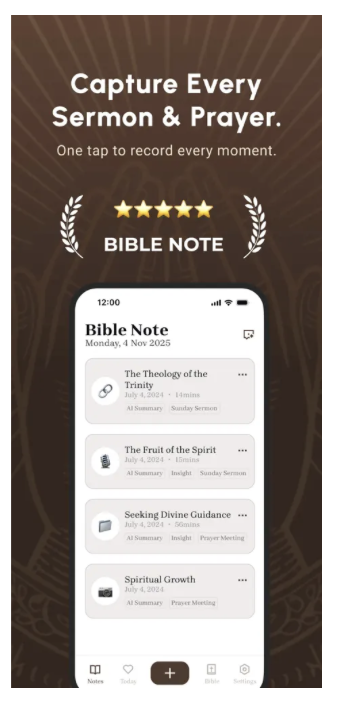
The quality of the study still depends on what the user does with the material. Saving more information is not automatically the same as understanding it. Notes become valuable when readers revisit them, compare them with Scripture and refine their conclusions.
How Bible Chat Can Fit Into a Responsible Workflow
Conversational tools can reduce the friction between encountering a difficult passage and beginning further research. A user can ask a follow-up question without leaving the material being studied or losing the train of thought.
BibleNote’s AI Bible study app includes Bible Chat for discussing a passage or sermon note and provides Scripture citations that users can check. This reflects an important design principle: AI-generated explanations should lead readers back to identifiable biblical sources.
Citation alone does not guarantee that every answer is complete or correct. Users must still read the cited text in context and consider whether the explanation fairly represents it.
Bible Chat is therefore best treated as a study companion. It can help generate questions, surface possible connections and support review, but it does not replace Scripture, theological scholarship, pastoral care or participation in a faith community.
Questions to Ask Before Trusting an AI Bible Tool
Users evaluating an AI-assisted study tool should consider several practical questions:
- Does it provide specific Scripture references?
- Can the user easily check the cited passage?
- Is biblical text clearly separated from AI commentary?
- Does the tool acknowledge uncertainty or different interpretations?
- Does it encourage contextual reading?
- Does it avoid presenting generated answers as spiritual authority?
- Are users given control over the notes and personal information they enter?
These questions assess more than convenience. They reveal whether a product is designed to support thoughtful study or simply deliver fast, persuasive answers.
A Better Standard for Faith-Focused AI
The goal of responsible AI in Bible study should not be to remove the work of interpretation. It should help readers approach that work with better questions, clearer references and a more deliberate process.
Useful systems make their supporting sources visible, maintain a boundary between text and commentary, and leave important conclusions with the human reader. They also recognize that some questions require conversation with knowledgeable people rather than another generated response.
AI can shorten the distance between curiosity and investigation. It should not shorten the distance between a question and certainty.
When designed and used with appropriate limits, AI can become a practical companion for personal Bible study. Its strongest contribution is not speaking with authority, but helping people return to Scripture with greater attention.
Frequently Asked Questions
Can AI interpret the Bible accurately?
AI can summarize common interpretations and identify relevant passages, but its responses may be incomplete or incorrect. Users should verify citations, read the surrounding context and consult trusted human guidance.
Should AI replace Bible commentaries or pastors?
No. AI can support preliminary research, but it cannot replace theological scholarship, pastoral care or the understanding that develops within a faith community.
How can users verify an AI-generated Bible study answer?
They should check every cited verse, read the complete passage, distinguish quotations from generated commentary and compare important claims with reliable study resources.
Is an AI answer authoritative because it includes Bible citations?
No. Citations make an answer easier to examine, but they do not prove that its interpretation is accurate. The relevance and context of each reference still need to be evaluated.