

AI company Soteris announced today that it’s launched a new AI profit optimization product built to help property and casualty insurers extract more profit from the portfolios they already hold, rather than chase new premium.
The timing this week matters. Verisk and the American Property Casualty Insurance Association reported this month that the US P&C industry posted a $31.7 billion net underwriting gain in the first half of this year, nearly triple the $11.6 billion recorded a year earlier, while net written premium growth has been slowing to 2.1%.
Saurabh Khemka, president of Verisk Underwriting Solutions, put it plainly in the report: strong headline results don’t mean underlying exposure has declined, and as pricing softens, precision becomes the thing insurers can still control. That’s the exact gap Soteris’ founder and CEO Sunit Shah is aiming at.
Shah’s argument is that insurers have gotten very good at pricing risk in aggregate and much worse at knowing which individual policies inside that aggregate are actually losing them money. Insurance claims outcomes are binary, so insurers have traditionally evaluated model performance by grouping policies into segments that share risk-relevant characteristics, rather than scoring each policy on its own. That approach works well enough at the segment level. It also means a segment can look healthy on average while quietly carrying individual policies that will never be profitable.
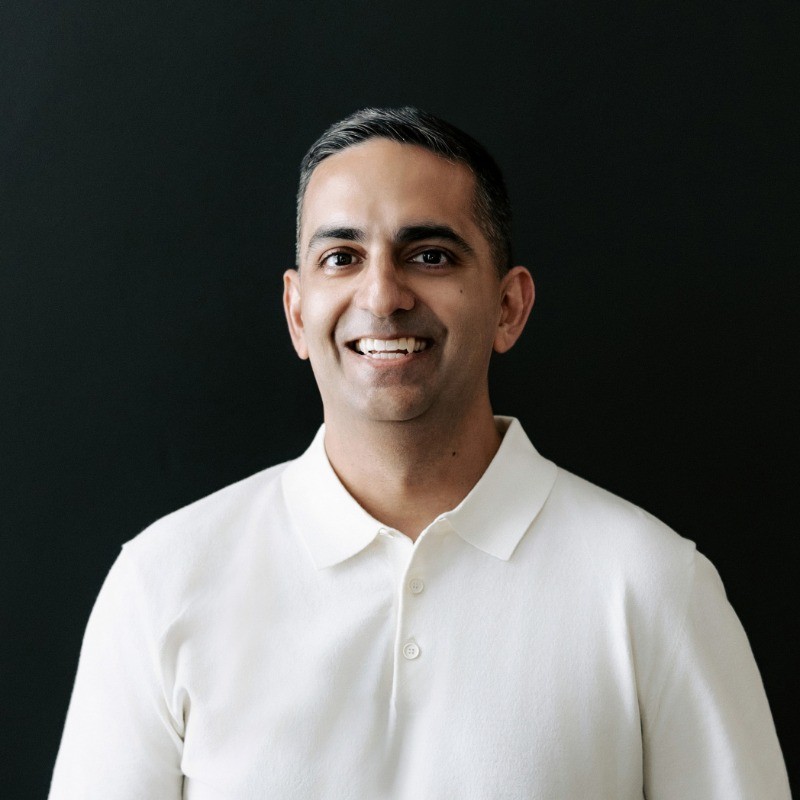
“We help insurers see them as unique individuals and unique policies,” Shah said.
“The insurers already collect enough information in the application process to do this, they just didn’t have the tools to individualize the analyses before now,” added the executive.
Soteris’ first product, which is a predictive tool that scores an individual policy’s expected loss ratio, has been live with carriers since 2020, and has now run against more than $180 billion in premium and over 100 million submissions.
Working with that much production data is what led Shah to the finding behind the new launch: some of Soteris’ existing customers were unknowingly holding onto profit-reducing policies that, in certain books, made up as much as 30 percent of the portfolio. Segment-level averages were masking them the whole time.
That discovery is what pulled Soteris out of stealth with a second product, one that identifies negative-profit policies directly at the individual level and translates the finding into EBITDA and profit terms for the customer, rather than leaving it as an abstract loss-ratio figure. The pitch to carriers is straightforward: drop the policies that were never going to pay off, leave the rest of the segment untouched, and the math should move on its own.
Shah says the early results back that up. “In our initial proofs of concept for this product we just launched, insurers can make 70%-125% more bottom line profit by using our product to take their analysis from segment-level to policy-level.”
He walked through how that plays out with an example from auto insurance. Carriers commonly think in terms of segments like “married couples” or “single-driver policies,” treating every policy inside those buckets more or less the same way. Soteris’ model doesn’t start from the segment at all. It scores the policy. The information needed to do that, Shah noted, was already sitting in the application data — insurers just didn’t have a system built to use it at that resolution.
That resolution problem is showing up across the industry’s own research, not just in Soteris’ pitch. McKinsey has found that improving underwriting precision to the policy level can produce a 30% to 50% uplift in underwriting results. And Deloitte’s 2026 Global Insurance Outlook, drawing on a survey of consulting frameworks from Deloitte, McKinsey and Oliver Wyman, identified something closer to a structural bottleneck than a technology gap: a 65% spread between insurers’ stated AI ambitions and what they’ve actually put into production.
The tools to do precision underwriting exist. Most carriers simply haven’t operationalized them yet, which is the same opening Shah is describing from the inside of Soteris’ own customer base.
Soteris has raised more than $8 million in seed funding, led by Spider Capital, with participation from Intact Private Capital, Amplify Partners, Foundation Capital, the Webb Investment Network and Overlook Ventures.