Manufacturers have spent more than a decade connecting factories. They put sensors on machines, linked operational technology with corporate IT systems and sent huge amounts of information into cloud platforms and data lakes.
They got very good at producing data. Making sense of it has been harder.
A temperature reading might mean something immediately to an experienced engineer. They know which machine produced it, what that machine is doing and whether the number is unusual. AI doesn’t automatically know any of that.
A lot of this context has never been formally captured because the people working in the factory already knew it. That becomes a much bigger problem when companies want AI to understand their operations and eventually act on what it finds.
HiveMQ Is Tackling The Layer Underneath AI
HiveMQ, the German-founded industrial technology company best known for its MQTT broker, thinks manufacturers need to change how they handle that information.
Instead of moving raw data first and trying to make sense of it later, more context can be attached closer to where the information originates.
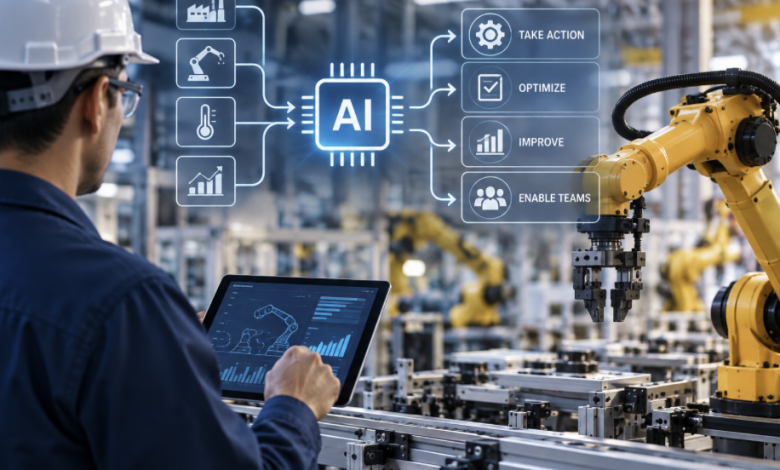
The company’s HiveMQ Platform moves beyond simply transporting industrial data. HiveMQ is trying to handle more of what happens between the equipment generating information and the applications using it. That includes connecting data, adding context, analyzing it closer to operations and controlling how it can be used.
Industrial systems traditionally moved information to a database, historian or dashboard where a person eventually looked at it. Even when the information was messy, somebody who understood the factory could usually figure it out. AI changes that. A system might identify a problem and trigger a response before anyone looks at a screen.
A wrong number on a dashboard is annoying. A wrong number that causes a machine to do something is a much bigger problem. Companies need to know where information came from and what happened to it along the way. They also need rules around which systems can act on that information and when somebody needs to approve the decision.
There is also the question of where the computing happens.
If a manufacturer wants to compare failure patterns across dozens of factories, the cloud makes sense. If pressure inside a machine is reaching a dangerous level, sending the information to the cloud and waiting for an answer might be too slow. That means manufacturers will probably use both. Models can be trained centrally while more immediate decisions happen closer to the machines.
Large manufacturers are already building this way. Ford uses HiveMQ technology as part of a manufacturing data foundation that can identify equipment faults and alert workers. Eli Lilly captures trusted data from hundreds of laboratory and manufacturing instruments. Mercedes-Benz uses the technology to support vehicle testing across 24 factories.
Connecting every system directly to every other system becomes messy fast. Every connection is something to maintain and another place where something can break. A shared, governed backbone can reduce that complexity while allowing local systems to keep operating when something downstream isn’t available.
Manufacturers spent years connecting factories assuming that once they had enough data, analytics and AI would take care of the rest. Instead, AI is showing them how much unfinished work remains underneath.
Outreach Is Seeing The Same Move Toward Action
A similar change is happening inside sales organizations. Outreach reported that consumption of its AI credits grew 12x during the first half of 2026. AI annual recurring revenue increased 480% year over year in its fiscal second quarter, while engagement with Kaia, its AI meeting and conversation intelligence product, grew 40%.
Outreach is increasingly applying AI to work that sales teams already struggle to get done. Managers know when deals are getting stuck. Reps know prospects need follow-up. Revenue leaders know opportunities disappear because somebody missed a signal or got busy with something else.
They have been building agents to research prospects, personalize outreach, prepare sellers for meetings and identify changes in deals. Its Omni agent can work across accounts, opportunities, prospects and conversations, then move from answering a question to an action such as drafting an email.
Agent Studio lets companies create workflows around things teams already do, including following up with inbound leads, revisiting closed-lost opportunities and identifying stalled deals. SolarWinds used an Outreach win-back agent that produced a 45% reply rate, reactivated more than 100 accounts and reopened $200,000 in pipeline. Resi has logged more than 1.4 million Kaia recordings and reported a 35% win rate among its mid-market account executives.
Outreach is also building connections through Model Context Protocol, or MCP, that allow AI systems to access revenue information and take permitted actions inside sales workflows.
HiveMQ and Outreach operate in very different businesses, but they are dealing with versions of the same problem. AI becomes more valuable when it can move from recognizing something to doing something about it. For HiveMQ, that means making industrial information understandable and trustworthy enough for AI systems to use closer to the factory floor. For Outreach, it means turning signals buried across revenue systems into follow-ups and other actions before an opportunity disappears.
The next phase of AI may be less about giving employees another place to ask questions. It is starting to become part of the systems where the work already happens.