Running a restaurant means wearing a lot of different hats. One minute you’re helping customers, the next you’re checking inventory, managing staff, or dealing with delivery apps.
With so much going on, it’s easy for smaller tasks to fall behind. The problem is that those tasks can have a real impact on your profits.
That’s where AI can help.
Instead of replacing your team, today’s AI tools take care of repetitive jobs, save time, and help you make better decisions. Some focus on finance, others help with operations, and some try to manage almost everything in one place.
In this guide, we’re looking at three AI-powered restaurant management tools worth considering: KoreFi, Toast, and Restaurant365.
Why Restaurants Are Using AI
Running a restaurant is busy enough without spending hours on admin work.
Things like checking delivery payouts, disputing chargebacks, updating menu prices, or reviewing reports are important, but they often end up at the bottom of the to-do list.
AI can help by taking care of many of those jobs automatically. That means less time spent on paperwork and more time focusing on your customers and your business.
1. KoreFi
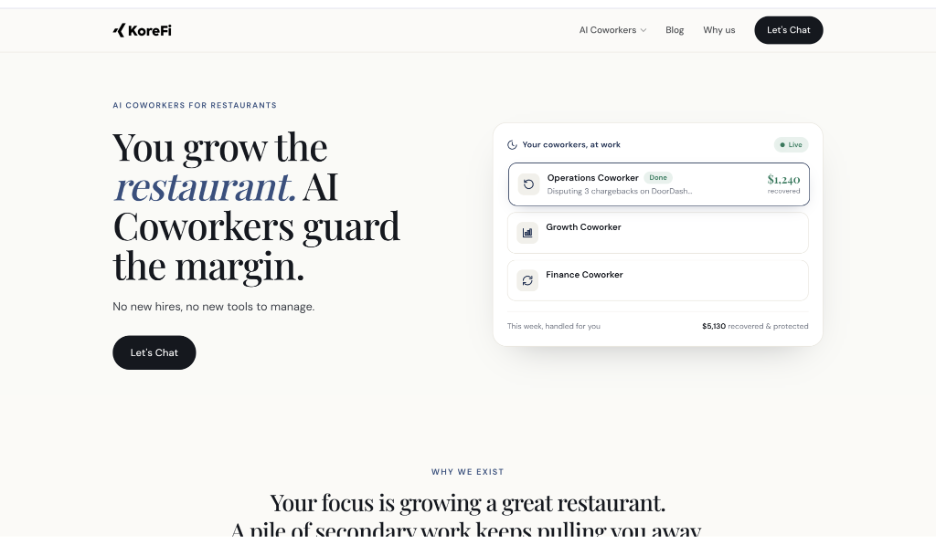
If your restaurant gets a lot of orders through DoorDash or Uber Eats, KoreFi is definitely worth a look.
What makes it different is that it doesn’t try to replace your POS or become another system you have to learn. Instead, it works with the tools you already use and acts more like an extra team member that handles repetitive tasks for you.
For example, it can dispute eligible chargebacks, compare your menu prices with competitors, and reconcile payouts from your delivery platforms, POS, and bank accounts. These are all jobs that protect your margins but are easy to put off when you’re busy.
What It Can Help With
KoreFi can help restaurants:
- Recover money from eligible delivery chargebacks
- Keep menu prices competitive across delivery apps
- Match payouts between delivery platforms, POS systems, and bank accounts
- Get a clearer view of restaurant finances
- Reduce manual accounting work with AI backed by human review
Why We Like It
The biggest difference is that KoreFi actually does the work.
A lot of software shows you reports and tells you there’s a problem. KoreFi helps solve it. That’s a big advantage if you’re already busy running your restaurant.
We also like that it doesn’t rely only on AI. Restaurant specialists review important cases before anything is submitted, which gives you a little extra confidence.
Good to Know
| Best for | Restaurants that rely on delivery apps |
| Works with | POS systems, delivery platforms, QuickBooks, and bank accounts |
| Standout feature | AI coworkers that complete everyday operational tasks |
| Pricing | Performance-based or transparent flat-rate pricing |
2. Toast
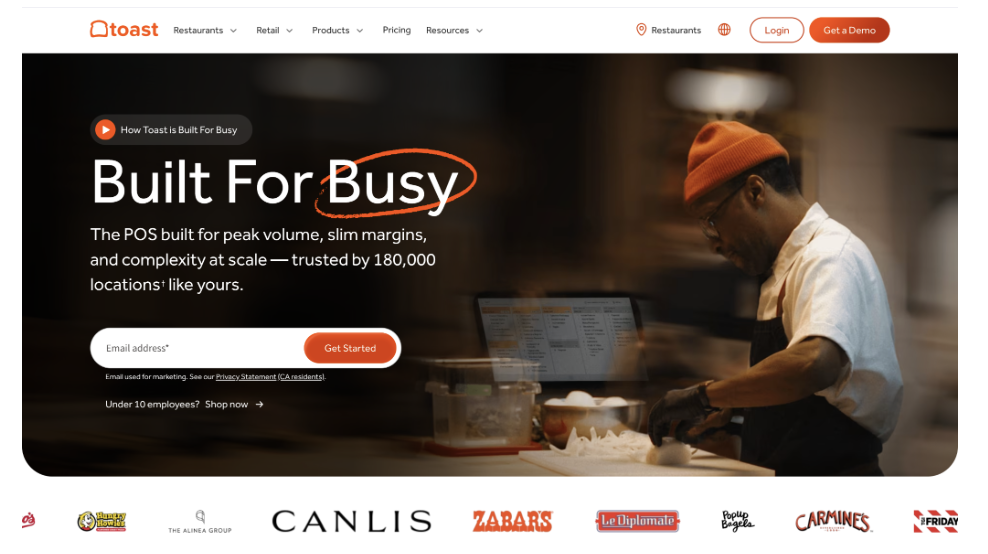
If you want one platform to manage almost everything, Toast is one of the best-known options available.
It started as a POS system, but today it also includes online ordering, payroll, loyalty programs, inventory, reporting, and AI-powered tools that help restaurants work more efficiently.
The biggest benefit is that everything is connected, so you don’t have to switch between lots of different systems.
Key Features
With Toast, you can manage:
- POS and payments
- Online ordering
- Loyalty programs
- Payroll and team management
- Inventory
- Reporting and analytics
- AI-generated menu descriptions
- AI-powered business insights
Why We Like It
Toast is a good choice if you like keeping everything in one place.
Instead of using separate tools for different jobs, you can manage most of your restaurant from a single platform. The AI features are useful too, but they feel more like a bonus than the main reason to choose Toast.
Good to Know
| Best for | Restaurants looking for an all-in-one platform |
| Works with | POS, online ordering, payroll, inventory, loyalty, and reporting |
| Standout feature | Complete restaurant management platform |
| Pricing | Custom pricing |
3. Restaurant365
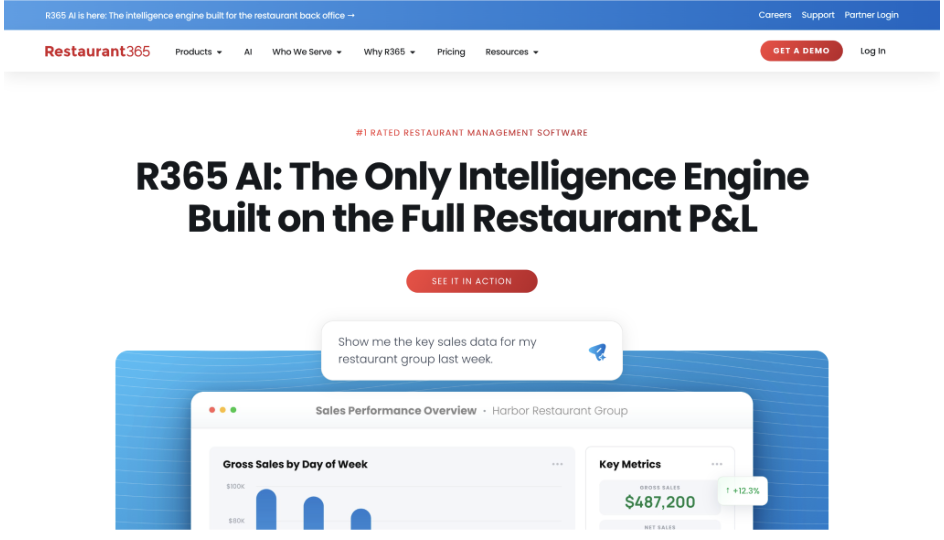
If keeping track of your restaurant’s finances takes up too much of your time, Restaurant365 is worth considering.
It brings together accounting, inventory, scheduling, payroll, and reporting into one platform, making it easier to see what’s happening across your business. The company has also introduced AI features that help users find information faster, generate reports, and answer questions using natural language.
While it can work for independent restaurants, it feels like a better fit for businesses with several locations or teams that need a clearer picture of their operations.
Key Features
Restaurant365 includes tools for:
- Accounting and bookkeeping
- Inventory management
- Employee scheduling
- Payroll
- Financial reporting
- AI-powered reporting and search
- Multi-location management
Why We Like It
What stands out about Restaurant365 is how much time it can save on the financial side of running a restaurant.
Instead of jumping between spreadsheets and different systems, you can see your sales, labor costs, food costs, and profitability in one place. That makes it much easier to spot trends and understand where your money is going.
If you’re running several locations, having everything together can make day-to-day management a lot simpler.
Good to Know
| Best for | Multi-location restaurants and growing restaurant groups |
| Works with | Accounting, payroll, scheduling, inventory, and POS integrations |
| Standout feature | Strong financial reporting and operational insights |
| Pricing | Custom pricing |
Conclusion
AI won’t run your restaurant for you, but it can take a lot of repetitive work off your plate.
If delivery is a big part of your business, KoreFi is a great choice. It helps with tasks like chargebacks, menu pricing, and payout reconciliation, so you can spend less time on admin and more time running your restaurant.
If you’re looking for an all-in-one platform, Toast is hard to beat. And if managing finances across multiple locations is your biggest challenge, Restaurant365 is well worth considering.
The best choice really comes down to your biggest pain point. Think about where you spend the most time, then choose the tool that helps solve that problem.