Artificial intelligence is already changing the way people work, so it makes sense that it will also reshape how they learn at work. Traditional training programs often rely on standardized courses delivered to large groups, but AI has the potential to make workplace learning far more personalized, responsive, and closely connected to everyday tasks.
Rather than simply moving existing training online, the next stage of workplace learning could involve systems that understand what employees need, when they need it, and how they are most likely to learn effectively.
More Personalized Learning Experiences
One of the biggest opportunities for AI is personalization. Employees rarely begin a training program with exactly the same level of knowledge, experience, or confidence, yet many workplace courses still treat everyone the same.
AI-powered learning platforms could analyze how someone performs during training and adapt the experience accordingly. An employee who understands a topic quickly might move on to more challenging material, while someone who needs additional support could receive extra explanations, examples, or practice. This could help organizations create training that feels more relevant without having to manually build a different course for every employee.
Learning Could Become Part of the Working Day
Workplace training has traditionally been something employees stop working to complete. AI could help blur that distinction. Instead of waiting for a scheduled course, employees may increasingly receive guidance at the moment they need it. Someone learning a new software platform, for example, could receive contextual instructions while completing a task rather than watching a lengthy tutorial beforehand.
This type of just-in-time learning can make training easier to apply because the information is connected directly to a real situation. Organizations working with digital learning specialists such as Sponge Learning may also explore how emerging technologies can support more engaging and practical learning experiences rather than simply adding AI for its own sake.
Smarter Practice and Simulations
AI could also make workplace simulations considerably more sophisticated. Employees in sales, customer service, management, healthcare, and many other fields could practice realistic conversations with AI-generated characters. The system might respond differently depending on what the learner says, creating scenarios that feel less predictable than traditional multiple-choice exercises.
AI could then provide immediate feedback, highlighting what went well and where the employee could improve. Managers could practice difficult conversations, for example, while customer-facing employees could rehearse how to handle complaints or unusual requests without the pressure of dealing with a real customer.
Identifying Skills Gaps Earlier
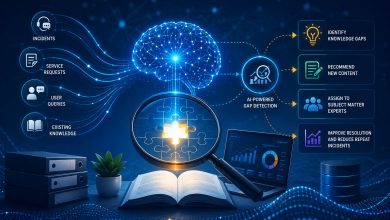
Another major development could involve using AI to understand which skills an organization actually needs. By analyzing learning activity, performance information, and changing job requirements, AI systems may be able to highlight emerging skills gaps before they become significant problems. Learning teams could then prioritize training around areas where employees genuinely need support rather than relying entirely on annual training plans.
AI Will Not Replace Good Learning Design
Despite its potential, AI is unlikely to make traditional learning principles irrelevant. Employees still need training that is clear, accessible, engaging, and connected to meaningful outcomes. Poorly designed learning will not automatically become effective simply because artificial intelligence has been added to it.
The most interesting future is therefore not one where AI replaces workplace learning professionals. Instead, it could give them new ways to personalize training, create realistic practice environments, analyze learning needs, and deliver support exactly when employees need it.
Workplace learning may ultimately become less about completing courses and more about continuously developing skills while work is actually happening.