| How AI Translation Is Making Global Messaging Platforms More Accessible
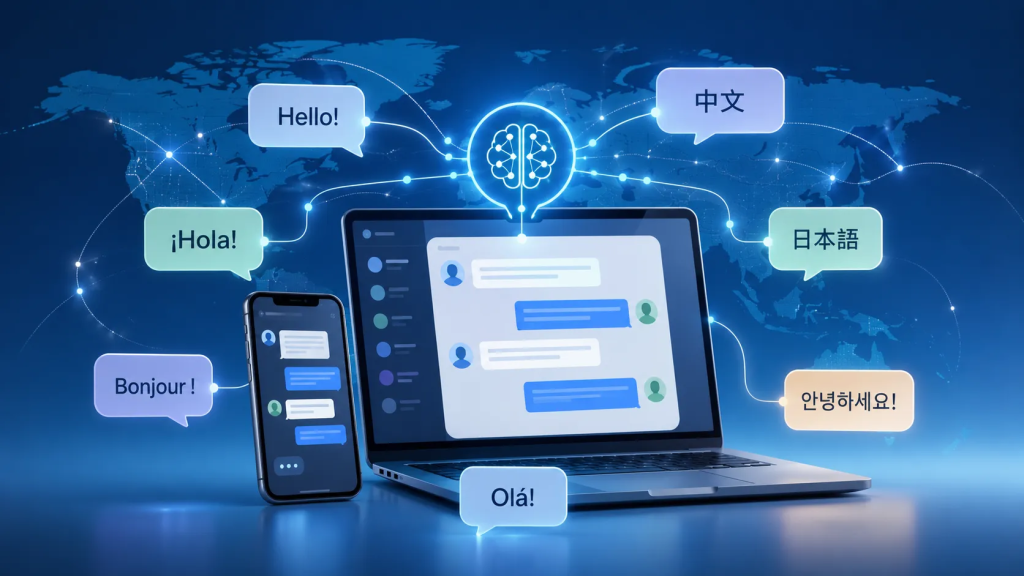
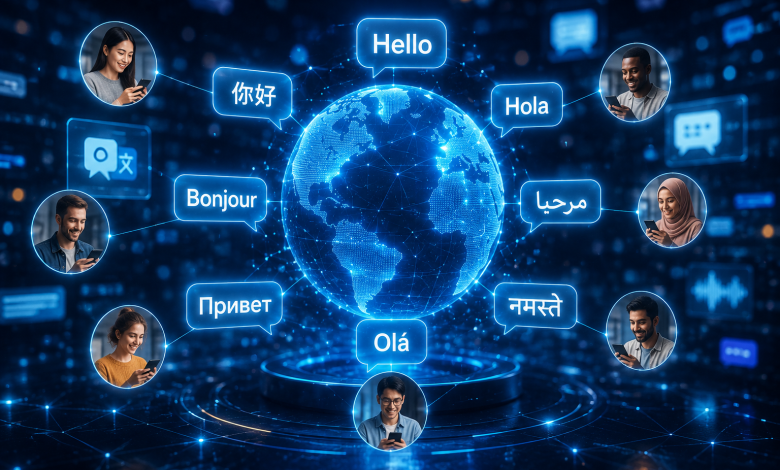
Translation is becoming part of the product experience, but localization, privacy, and cross-platform design still determine whether global messaging tools are genuinely usable. Messaging platforms have become infrastructure for international teams, families, students, gaming communities, and creator networks. Their reach is global, but the experience of using them is not. A person can install the same app as someone on the other side of the world and still struggle with interface language, security terminology, device-specific settings, or a conversation full of local slang. Generative AI and modern natural-language systems are starting to reduce that friction. Translation can now be more contextual, speech can be transcribed and translated in near real time, and conversational assistants can explain unfamiliar settings in plain language. The opportunity is larger than replacing one sentence with another in a different language: AI can become an interpretation layer between users and increasingly complex communication software. That promise, however, comes with limits. Good translation does not replace localization. A helpful assistant does not remove the need for clear interface design. And any feature that reads or summarizes messages raises questions about where that content is processed and how it is handled. The most accessible messaging products will therefore be the ones that combine language intelligence with thoughtful product design and transparent privacy choices. Global Reach Is Not the Same as Accessibility
A messaging service can support dozens of languages and still be difficult to navigate. The challenge is that communication happens at several layers at once: the message itself, the interface around it, the device on which it appears, and the social conventions of the community using it. A mistranslated joke may be awkward. A misunderstood privacy control can be consequential. Terms such as active sessions, two-step verification, disappearing messages, media auto-download, or group permissions are not simply vocabulary; they describe actions with real effects on security, data usage, and account management. This is why accessibility in messaging cannot be reduced to a language toggle. Users need to understand what the product is asking them to do, what a setting changes, and whether the same control behaves differently on mobile, desktop, or the web. Translation Needs Context, Not Just VocabularyTraditional machine translation was often experienced as a separate utility: copy text, translate it, then return to the conversation. Newer language models make it possible to move that capability closer to the messaging experience itself. They can use surrounding context to resolve ambiguous words, handle incomplete sentences, and better interpret domain-specific language. That matters because online conversations are unusually messy. People use abbreviations, emojis, sarcasm, gaming terms, product names, code snippets, and community-specific shorthand. The literal meaning of a sentence may be less important than who is speaking, what was said earlier, and which topic the group is discussing. Context-aware translation can make multilingual groups easier to follow, but accuracy is only part of the value. The same language layer can support captions, speech-to-text, summaries, simplified explanations, and search across messages written in different languages. In practice, translation becomes one component of a broader accessibility system rather than a standalone feature. Localization Remains Product InfrastructureAI can help interpret a conversation, but users still have to understand the product around that conversation. Native localization remains important for menus, warnings, account recovery, notification controls, privacy settings, and help documentation. Regional terminology complicates this further. Global products often acquire local nicknames, transliterations, and search habits that do not appear in English-language documentation. That means users may rely on localized explainers not only to translate interface labels, but also to understand how a platform is discussed in their own language community. For Chinese-speaking users researching Telegram, for example, a Telegram Chinese language guide can provide context around interface terminology, language options, privacy controls, and common setup questions. The value of such guidance is not that it replaces the product’s own documentation, but that it translates product concepts into a familiar linguistic and cultural frame. The strongest accessibility model is therefore layered: native localization for the interface, AI assistance for dynamic language and explanation, and human-created guidance for context. Each layer solves a different problem, and treating them as substitutes can leave users with gaps precisely where clarity matters most. Cross-Platform Help Is a Usability ProblemMessaging services increasingly span Android, iOS, Windows, macOS, tablets, and browsers. That flexibility is useful, but it creates another form of translation: users must translate their knowledge from one interface to another. A setting that is obvious on a phone may be buried in a desktop menu. Notification behavior can differ by operating system. File handling, permissions, camera access, and update mechanisms may also change by device. For less experienced users, the difficulty is not purely technical or linguistic; it is the combination of both. Someone comparing device options may consult a Telegram setup and download guide to understand client availability and basic setup considerations across platforms. More broadly, this is the kind of task that conversational assistance could simplify: instead of forcing users through several help pages, an assistant can respond to a device-specific question in the user’s preferred language. The design opportunity is not to add another chatbot for its own sake. It is to make support contextual. A useful assistant should know which platform the user is on, which setting they are looking at, and how much explanation they need. That is a meaningful shift from static documentation toward adaptive guidance. Privacy Is the Trade-Off That Cannot Be HiddenThe deeper AI moves into communication, the more important data handling becomes. Translation requires access to language. Summarization requires access to conversation context. Smart replies and conversational search may require an even broader view of message history. From the user’s perspective, two services can produce equally useful translations while using very different technical architectures. Processing may happen on-device, in the cloud, through an optional third-party model, or within a system that retains data for different periods. Those distinctions are often invisible in the final translated sentence. For that reason, AI-assisted messaging features should be evaluated on more than output quality. Users and organizations need clear answers about what data a feature accesses, where it is processed, whether the feature can be disabled, how long data is retained, and whether conversation content is used for purposes beyond the immediate request. Accessibility should reduce cognitive barriers without creating a new transparency problem. If a feature is designed to make communication easier, its privacy model should be equally easy to understand. Multilingual Communities May Be the Biggest BeneficiaryLarge communities often fragment along language lines. Administrators create separate channels, announcements have to be translated repeatedly, moderators struggle to evaluate reports in languages they do not speak, and new members can feel excluded from the main conversation. Better language assistance can reduce that fragmentation. A community could present the same announcement in each reader’s preferred language, provide contextual translations of reported messages to moderators, or summarize a long discussion that unfolded across several languages. This is particularly relevant to open-source projects, global customer communities, education networks, gaming groups, and creator ecosystems. The important change is architectural: translation no longer has to happen after communication. It can become part of the infrastructure that allows the community to function as one group in the first place. The Winning Design Principle: Assistance Without FrictionTranslation is unlikely to remain an isolated feature. Once a system can understand conversational context, the same capability can support multilingual search, meeting and channel summaries, speech transcription, explanations of technical terminology, notification prioritization, and accessibility-focused rewriting. The best implementations will probably feel less like an AI product and more like a well-designed interface. Users should not have to think about which model translated a message or which system explained a privacy option. They should simply be able to understand the conversation and make informed choices about the software they are using. That puts a premium on restraint. AI should appear where it removes friction, not where it adds another layer of controls. It should provide explanations without obscuring original information, and it should make privacy choices visible rather than burying them behind convenience. Accessibility Will Depend on More Than Better ModelsAI translation is improving quickly, but model quality alone will not determine whether global messaging becomes more accessible. The outcome will depend just as much on localization, interface consistency, device support, privacy architecture, documentation, and user control. The broader lesson is that language is a product problem as well as a machine-learning problem. When AI, native localization, and human guidance work together, users spend less time interpreting the software and more time participating in the conversation. That is the point at which translation stops being an add-on and becomes part of a genuinely global communication experience. |