There is a problem that most companies share but few talk about openly. Every day, executives sit in boardrooms across Latin America making strategic decisions, signing off on investments, launching products, and entering new markets, all with incomplete or unreliable information. Not because the data doesn’t exist, but because nobody had built the right infrastructure to capture and deliver it in a way that was actually useful.
That is the problem Deita set out to solve.
Founded in 2025 in Colombia, Deita is an AI-powered market research company built on a straightforward but powerful premise: information should be treated as an asset class. Structured, reliable, and accessible. Not scattered across databases and disconnected reports, but organized in a way that gives businesses the confidence to act on what they know.
In less than a year of incorporation, and with only three months of operations, the company was ranked among the top 10 most innovative companies in Latin America by StartCo, the region’s largest innovation and technology event. It is a recognition that signals something bigger than an award. It points to a genuine shift in how the region is thinking about data, intelligence, and the infrastructure needed to compete globally.
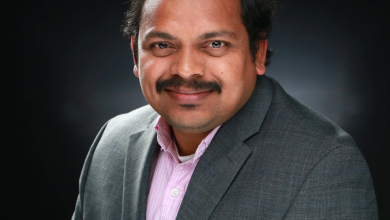
Deita’s co-founder, Mateo Payanene Restrepo, saw this gap before most people were talking about it.
A Foundation Built on Real Experience
Mateo grew up in Medellín, Colombia. He took a job at a real estate company, working in property appraisal, client relations, and capital deployment, to save enough for his own tuition. That commitment got him into EAFIT University, one of Colombia’s most respected academic institutions, to study finance. By his fourth semester, his academic performance had earned him a full scholarship, placing him at the top of his class in the Finance program.
That combination of financial discipline and academic rigor took him to Switzerland, where he spent his final year on exchange at the University of St. Gallen and completed his mandatory internship at HEMEX AG, a Swiss private equity and venture capital firm focused on health technology. It was there that the idea for what would eventually become Deita began to take shape.
Working inside a firm that evaluated investment opportunities across healthcare, spanning different indications, Mateo noticed something. The companies that struggled most weren’t struggling because of bad ideas or poor execution. They were struggling because they were operating without reliable market intelligence. Decisions were being made on assumptions rather than data.
He also noticed something else. The talent in Colombia and across Latin America was exceptional. The region had the people to build world-class technology, and the cost of development was a fraction of what it would take elsewhere.
“Most companies were making decisions without reliable information,” Mateo has said about the founding insight. “We realized that was a problem worth solving.”
Bringing Capital Home, Then Building Something New
Before launching Deita, Mateo did something that most people his age hadn’t done. He opened the Latin American subsidiary of HEMEX AG in Medellín, becoming the managing director and investment manager of HEMEX GLOBAL SERVICES S.A.S at 24 years old. It was a complex undertaking, navigating foreign investment regulations, legal frameworks, and cross-border capital flows, but it worked. He had brought international investment into his home country.
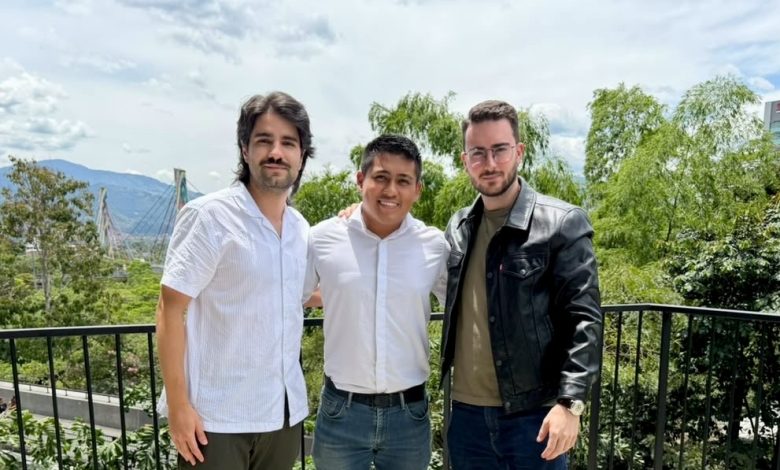
That experience put him in the room with founders across industries, not just health technology but across the broader Colombian startup ecosystem. It was there that he connected with his three future co-founders. When the four of them kept running into the same observation, that companies across the region were making critical decisions without solid information, they decided to stop waiting for someone else to fix it.
Deita was born from that conversation.
What Deita Actually Does
At its core, Deita is building what its founders describe as a declarative data bank for market intelligence. Rather than generating generic reports, the platform uses AI to capture, structure, and surface market data in a way that businesses can act on directly. The goal is to make quality market research accessible not just to large corporations with research budgets, but to startups, mid-sized companies, and investors who have historically had to operate with far less information than they needed.
The timing is deliberate. Latin America is in the middle of a technology wave that shows no sign of slowing. Investors are paying more attention to the region, founders are building more ambitiously, and international companies are looking to enter markets they previously ignored. All of that activity creates enormous demand for reliable intelligence.
A Region First, Then Whatever Comes After
Deita is now exploring expansion across five countries in Latin America, with a look at the United States somewhere further down the road. Nothing there is locked in yet. The US market would bring a different kind of challenge: more competitive, more saturated with data providers, but also significantly larger. Mateo and his team believe their approach, building a structured, AI-driven data infrastructure rather than just another research tool, gives them a differentiated position once they get there.
The StartCo recognition added an outside voice to that confidence. María Fernanda Acero, Head of Startups & VC at StartCo, was among the people watching Deita’s presentation closely during the event’s seventh edition in Medellín this April. Of the 340 startups that took part, Deita finished 9th in the official attendee voting, backed by roughly 40 strategic connections made on the floor, several of which have since turned into active conversations with larger corporations. “Their approach to transforming market research through artificial intelligence and WhatsApp addresses a real market need with an innovative and highly scalable solution,” Acero said. What stood out to her wasn’t only the technology, she added, but how deliberately the team used the event itself: building relationships rather than just collecting business cards.
For Mateo, the recognition matters less as a trophy than as a marker of what has to come next.
Where the Bar Actually Sits
The long-term vision is for Deita to become the largest declarative data bank in the world, a repository of structured market intelligence that companies across industries and geographies can draw from when it matters most. Getting there depends less on any single milestone and more on something Mateo comes back to throughout his answers below: that trust, once lost to a shortcut, doesn’t come back easily. The next stretch for Deita is less about being noticed and more about proving, market by market, that the standard holds.
The Interview: Mateo Payanene on Deita, the Market, and What Comes Next
Q: Mateo, let’s be direct. Market research has existed in Latin America for decades, with established firms and proven methodologies. And now a company incorporated less than a year ago is claiming it found something they all missed. What specifically was broken about how they operated, and what makes Deita more than another company repackaging surveys with an AI label?
The premise I would push back on is that the established firms missed something. They did not. They built the standards the whole field runs on. What they worked within was an infrastructure limit. Traditional fieldwork means recruiting respondents from scratch for every study, so cost rises with sample size, the cycle stretches to six or eight weeks, and the output arrives as a written report because the data was never collected in a fixed format to begin with. Those three problems are really one problem: the panel does not last and the format is not fixed, so nothing carries over from one study to the next.
Deita changes what sits underneath, not the method itself. Identity-verified panelists who stay in the network, reached through the channels people in this region already use every day, and answers captured in the same format from the moment they are collected. That is why cost falls without quality falling. The next study does not have to rebuild the sample. Researchers are not our competition. They were held back by the same limit. Give them reliable field data in days and their time moves to interpretation and judgment, which was never the bottleneck.
Q: You come from private equity and corporate finance rather than technology, and Deita has four founders, each bringing a different discipline. How do those perspectives complement each other, and what makes each one essential to the product?
Four disciplines, because this product can fail in four separate ways and no one of them covers for another. If the engineering fails, the platform does not run. If the method fails, you get fast data that is wrong, which is worse than slow data. If the commercial side fails, you build something technically correct that nobody in this market will pay what it costs to make. And if the structure fails, the economics turn against you as volume grows. That last one is the most dangerous, because you only find out once you are already scaling.
My contribution is the fourth. Private equity is years of asking whether a company’s story is carried by evidence or by assumption, and putting a price on the gap when it is the second. That way of looking at things is what led us to treat information as something that should build up over time rather than be used once and thrown away, and that in turn shaped how the data is structured, how it is priced, and whether margins hold as volume grows. But a structuring idea with no engineering behind it is just a memo. The product is only as precise as its weakest side, so each side needs someone who has spent real time in it.
Q: Deita was ranked in the top 10 most innovative companies in Latin America in less than a year of incorporation. That kind of recognition comes with expectations attached. What responsibility does it place on the team, and how do you intend to earn it going forward?
The recognition changed what we are measured on. Before, the question was whether the idea made sense. Now it is whether we deliver against it, and those are answered with different evidence. The first is answered with an argument. The second is answered with clients who renew, data quality that holds up when tested by people who know how to test it, and infrastructure that works under real load. There is also a bigger claim attached to it. Being named among the most innovative companies in Latin America says something about what this region can build rather than import. If we execute badly, that argument gets weaker for every founder making it.
What we are guarding against is specific. The failure mode for a company like ours is not collapse. It is quality slipping quietly under commercial pressure, accepting panelists we should not have verified, or loosening the format to close a deal. That damage is invisible until a client tests it, and by then trust is gone. So the discipline is to keep the verification and format standards exactly where they are as volume grows, and to stay honest about what the platform cannot do. In this business, trust is not a feature of the product. It is the product.
Q: You describe information as an asset class. Investors hear that kind of language constantly from founders trying to make their product sound more important than it is. Convince me you are not doing the same thing.
Fair, so let me give you the test I would apply if someone said it to me. An asset can be structured, it can be valued, and it gets more valuable the more it is used. A service does none of those three. Now apply that honestly to how research has traditionally been delivered. The rigor is usually excellent, but the format works against building anything up. Findings arrive tied to one question at one moment, and whether the next study is still comparable depends on the discipline of whoever ordered it rather than being enforced by the system. The ability to build up over time does exist, through long-running trackers and benchmark databases, but it sits with the firm and with clients big enough to commission continuous work. For most companies in this region, every project starts over.
The mechanism is the difference. A panel that stays in place, plus one fixed answer format, means comparability is enforced when the data is collected rather than pieced together afterward. That is what makes the base grow in value rather than just grow in size. A question asked today is answered faster and more precisely because of everything collected before it, including for a company running its first study. So the test is one you can actually check: does what they hold get more valuable every time it is used, or does the relationship reset with each deliverable? If it resets, it is a service, whatever they call it. We built a base, and that decision was made before there was a product.
Q: You are exploring expansion into five countries across Latin America, and eventually beyond the region. What are the real challenges in building comparable data infrastructure across borders, and what changes if you get there?
The hard part is not opening in a new market. It is making sure a question asked in Colombia and the same question asked in Mexico mean the same thing to both samples. If they do not, the comparison is not just imprecise, it is wrong in a way that still looks like a result. Two things drive that risk. Regulation, because every country treats consent, identity data, and sending data across borders differently, and since we verify identity for quality purposes, that shapes how the platform is designed from day one rather than at the end. And the panel, which cannot be transferred. Each market has to be built from zero, with its own demographic weighting and its own verification standard. There is no version of that which goes faster without the data getting worse, and data quality is the only thing we actually sell.
What I know about operating across borders is not theoretical. I structured and opened a Colombian subsidiary for a Swiss firm, working through foreign investment rules, capital flows, and two legal systems that do not line up. The lesson that applies directly is to build the shared layer once and keep everything country-specific separate and swappable, because what differs between countries is always more than you planned for. A data bank covering one country is useful in that country. Five markets with genuinely comparable data lets you ask one question across the region and trust that the answers mean the same thing. That does not exist today, which is exactly why it is worth the time it takes.