For most of the last decade, AI in retail pricing meant one thing: a black box that ingested data, produced a number, and dared you to trust it.
Some retailers did. Most didn’t. The ones who tried often watched the same pattern unfold — a promising pilot, a few months of grudging adoption, and then a quiet return to spreadsheets once the first unexplainable recommendation hit a category manager’s desk and nobody could defend it in a Monday morning review.
That failure wasn’t a technology problem. It was an architecture problem. The first generation of AI pricing tools was built around a simple premise: feed the model enough data, let it optimize, and trust the output. The model was the decision-maker. The human was the rubber stamp.
Agentic AI inverts that relationship entirely. And for mid-market retailers — the ones too complex for a basic repricer but too lean for a six-figure enterprise suite — it might be the first version of AI pricing that actually survives contact with reality.
What Went Wrong With First-Generation AI Pricing
The pitch was compelling. Plug your catalog into a machine learning model. Let it analyze sales history, competitor prices, elasticity curves, and seasonal patterns. Out comes an optimized price for every SKU, updated continuously, maximizing whatever objective you chose — margin, revenue, sell-through.
In theory, flawless. In practice, three things broke it.
The explainability gap. A category manager staring at a recommendation of €47.30 needs to know why the system didn’t recommend €52. First-generation tools couldn’t answer that question — not because the math wasn’t there, but because the reasoning wasn’t surfaced in a way a non-data-scientist could challenge or verify. When you can’t explain a price, you can’t defend it to a CFO, a brand partner, or a customer asking why the same product costs €5 more than it did last week.
The trust problem. Unexplainable recommendations get overridden. Once a pricing team starts overriding the system regularly, the model’s value degrades — it’s optimizing against a dataset that no longer reflects actual pricing behavior, because humans are quietly undoing its work. Within months, the tool becomes shelfware. The license keeps billing. The spreadsheet keeps running.
The all-or-nothing deployment. Most first-generation platforms required full catalog commitment. You either handed the model your entire assortment or you didn’t use it at all. For a retailer with 15,000 SKUs spanning categories with wildly different competitive dynamics, that’s an unreasonable ask. A markdown strategy for seasonal fashion has nothing in common with a cost-plus formula for industrial accessories. Forcing both through the same model produced recommendations that were technically optimal and practically useless.
What Agentic AI Actually Means in Pricing
The term “agentic AI” gets used loosely, so it’s worth being precise about what it means in a pricing context.
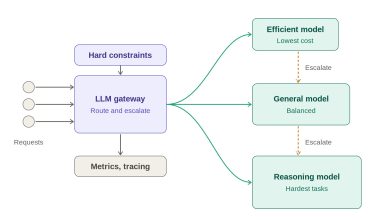
A traditional ML pricing model is a function: inputs go in, a price comes out. An AI agent is different. It observes a wider field — sales velocity, elasticity by segment, competitor moves, stock cover, promotional overlap — and keeps a running model of how those signals interact. When asked to recommend a price, it doesn’t just compute. It reasons through a sequence: what changed, what the change implies for this specific SKU, which of the retailer’s rules apply, and what the confidence level of the recommendation is.
Then — and this is the part that matters operationally — it explains itself. The output isn’t just €47.30. It’s €47.30 because the closest competitor dropped 6% yesterday, your margin floor is 12%, the demand elasticity on this SKU is moderate, and the rule set caps daily movement at ±10%. Here’s the feasible range. Here’s what each alternative price does to your margin.
That explanation turns a recommendation into a decision a human can evaluate in seconds — approve, override, or flag for review — instead of a number they either trust blindly or ignore entirely.
Three Shifts That Make Agentic Pricing Different
1. Configurable Autonomy Instead of Full Automation
The most important design choice in agentic pricing is that autonomy isn’t binary. A retailer can set the agent to full automation on long-tail SKUs that nobody comparison-shops — the 60% of the catalog that generates 10% of revenue but still leaks margin when nobody’s watching. For high-visibility key value items, the same agent runs in recommend-only mode: it surfaces opportunities, explains its reasoning, and waits for human approval before any price moves.
This isn’t a compromise. It’s a recognition that different parts of a retail catalog have different risk profiles, and the level of AI autonomy should match the level of commercial exposure. A €3 accessory that sells nine units a month doesn’t need the same oversight as a hero SKU that drives category traffic.
2. Rules as Guardrails, Not Overrides
In first-generation systems, rules and AI were adversarial. The model recommended one thing. The rules blocked it. The result was a pricing team spending its mornings resolving conflicts between what the algorithm wanted and what the business allowed.
Agentic systems treat rules as constraints the AI reasons within, not barriers it hits after the fact. The agent knows the margin floor is 12% before it generates a recommendation, not after. It knows the daily change cap is ±10%. It knows MAP obligations exist on specific brand SKUs. The recommendation it produces has already passed through those constraints — so when it reaches the category manager, the only question is whether the reasoning makes sense, not whether the output violates a policy.
The practical difference is significant. When rules are built into the agent’s reasoning loop, override rates drop. When override rates drop, the model’s training data stays clean. When the data stays clean, the recommendations get better over time. It’s a flywheel, not a fight.
3. Explainability as a Feature, Not a Report
The shift from black-box optimization to agentic reasoning has broader implications for retail cost management across the entire organization. When every pricing recommendation carries its own audit trail — which rules applied, which competitor signal triggered it, what the feasible price range was, and what the margin delta looks like — cost decisions stop being siloed in spreadsheets and start becoming visible, defensible, and enforceable at catalog scale.
This matters for three reasons beyond internal trust. First, EU Omnibus compliance requires retailers to document prior-price history and justify discount claims — an audit trail isn’t optional, it’s regulatory. Second, brand partners with MAP agreements expect retailers to demonstrate pricing discipline, and explainable pricing makes that conversation evidence-based rather than anecdotal. Third, CFOs who’ve been burned by black-box recommendations will only sign off on AI pricing if they can see exactly what’s driving the numbers.
Why Mid-Market Retailers Stand to Gain the Most
Enterprise retailers have had pricing teams and optimization tools for years. Their challenge is incremental improvement on an already-sophisticated foundation. Small retailers with a few hundred SKUs can genuinely manage pricing in a spreadsheet — the complexity isn’t there yet.
Mid-market retailers — typically between €10M and €500M in revenue — sit in the gap. Their catalogs have grown past the point where manual repricing provides adequate coverage. They compete against larger players who reprice continuously. Their margins are under pressure from every direction: cost inflation, marketplace fee increases, customers who compare prices on their phone mid-aisle.
But they don’t have a data science team. They don’t have a €200,000 budget for a pricing platform. They can’t absorb a six-month implementation timeline.
Agentic AI is the first pricing architecture that fits this profile. The rules engine replaces the data scientist — plain-language configuration instead of SQL or Python. The explainability layer replaces the consultant — the system tells you why, so you don’t need someone else to interpret it. And modern deployment models — CSV upload, native Shopify or Magento integration — replace the enterprise IT project.
What Adoption Actually Looks Like
The deployment pattern that’s emerging across mid-market retailers is surprisingly consistent. It doesn’t start with full catalog optimization. It starts with visibility.
Week one: connect and observe. The retailer connects their catalog and competitor monitoring goes live. For the first time, pricing decisions happen against real-time market data instead of screenshots in a WhatsApp group. No prices change yet — the team is just seeing where they actually stand.
Week two: define the rules. The team writes their pricing logic in plain language — margin floors, competitor position targets, daily change caps, rounding rules. These aren’t new decisions. They’re the same rules the team has been following manually. The difference is that now they’re structured, version-controlled, and enforceable.
Week three: first recommendations. The retail pricing software runs its first pass across the catalog. Each recommendation comes with its reasoning — the signal that triggered it, the rules that constrained it, and the margin impact if approved. The team reviews, approves the low-risk changes in bulk, and routes exceptions for manual review.
Week four and beyond: expand and automate. Once the team trusts the recommendations on one category, they expand to the next. Long-tail SKUs move to full automation. High-visibility items stay in recommend-only mode. The repricing cycle that used to take four days now takes a couple of hours — and covers the entire catalog instead of just the top 200 SKUs.
What the Results Look Like
The measurable outcomes across early adopters of agentic pricing in mid-market retail cluster around three metrics. Gross margin improvement typically lands in the 2–3 percentage point range, driven primarily by correcting underpriced long-tail SKUs that nobody was manually reviewing. Revenue uplift on optimized SKUs runs in the mid-single digits, usually from better competitive positioning on high-visibility items. And repricing cycle time drops by 80–90%, which compounds — when repricing takes an hour instead of four days, you reprice weekly instead of monthly, test more, and learn faster.
But the number that pricing managers care about most rarely appears on a vendor slide. It’s the coverage number — the percentage of the catalog that receives active pricing attention. In spreadsheet-driven operations, that number is typically 20–30%. With agentic AI handling the long tail and surfacing exceptions on the rest, it approaches 100%. That’s where the margin shows up.
The Question That Actually Matters
The debate over whether AI belongs in retail pricing is settled. It does. The market is too fast, the catalogs are too large, and the competitive dynamics are too fluid for manual processes to keep up.
The real question is what kind of AI. Black-box models that optimize without explaining will continue to fail at adoption. Rule-based systems without intelligence will continue to miss opportunities. The agentic model — AI that reasons within constraints, explains its recommendations, and lets humans calibrate autonomy by category — is the architecture that finally matches how pricing teams actually work.
For mid-market retailers, the timing matters. Every week of spreadsheet-driven pricing is a week of margin quietly leaking on thousands of SKUs nobody has time to review. The tools exist now. The implementation timelines have compressed from months to days. The only remaining question is how long you wait.
The post How Agentic AI Is Replacing Black-Box Pricing in Mid-Market Retail appeared first on .