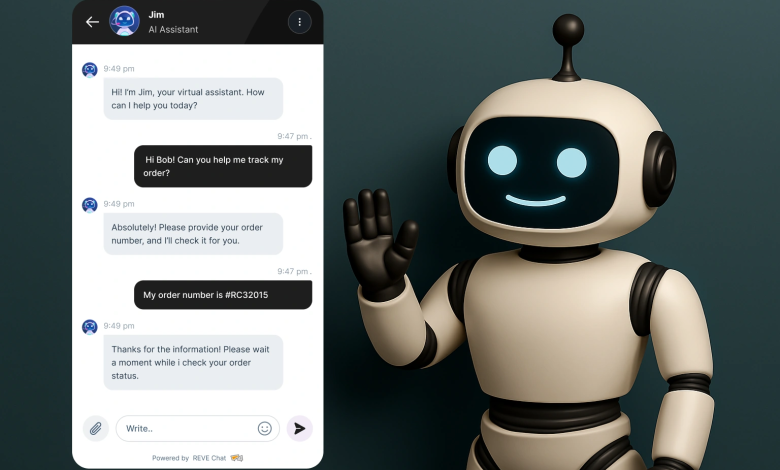
Picture your support queue doubling after a major software release. Your team feels completely overwhelmed. Finance refuses to approve new hires. You cannot simply recruit your way out of a 5,000-ticket backlog. To survive this pressure, you need a reliable enterprise AI chatbot solution. This technology acts as a budget stabilizer. It keeps operational costs flat while your company expands. Automated tools handle routine questions long before they hit a live agent’s desk. You can grow smoothly while maintaining excellent service for buyers and staff.
How Corporate AI Chat Systems Actually Work
Look, organizations are no longer running small pilot programs. They are rolling out secure artificial intelligence frameworks. A proper enterprise AI chatbot solution must manage massive interaction volumes. It also needs strict security. These systems cater to two entirely different groups: your internal workforce and your external buyers.
Moving Beyond Basic Scripts
Simple automated assistants rely on rigid scripts. They handle limited inquiries through single-turn exchanges. Everything else goes into a standard support queue. Advanced conversational AI performs complex reasoning across multiple steps. It retains context throughout a lengthy dialogue. These tools do not function as isolated website widgets. They connect directly into your central operational software. This includes ERP tools, CRM platforms, internal APIs, and knowledge bases to complete actual tasks.
The Core Technology Stack
A highly advanced technological foundation powers modern corporate AI. First is Natural Language Understanding (NLU). This analyzes what users type to determine intent, entities, and context. NLU comprehends different phrasing variations without exact keyword matches. Next comes Retrieval-Augmented Generation (RAG). Rather than creating responses based on broad public training data, this layer pulls specific information directly from your proprietary corporate documents. About 80% of effective implementations depend on RAG to anchor answers and stop hallucinations. Finally, Large Language Models like Claude or GPT-4o process that retrieved information. These models review the specific context and produce smooth replies.
Handling Escalations and Agent Transfers
Corporate platforms rely heavily on confidence thresholds. This metric determines if the AI can reply independently or needs to escalate. The software automatically transfers the chat to a live representative whenever the model feels uncertain. This transition retains the entire history of the interaction. Complex questions get directed to the appropriate staff members. Your users never have to explain their situation twice.
Where to Deploy AI for the Fastest Returns
Where exactly should you deploy these systems to see the fastest financial returns? You’ll find that building software across tech agencies reveals a consistent pattern. You achieve the quickest payback by targeting departments overwhelmed by massive request volumes. Mapping out these specific operational zones makes the true value of an enterprise AI chatbot solution immediately obvious.
Automating Client Service
You can eliminate massive bottlenecks by letting AI handle initial interactions. These systems instantly resolve common issues like tracking packages or basic technical troubleshooting. Your buyers receive reliable assistance around the clock. This continuous service spans your website, mobile applications, voice calls, and messaging platforms like WhatsApp and Messenger.
Automating Internal HR and IT
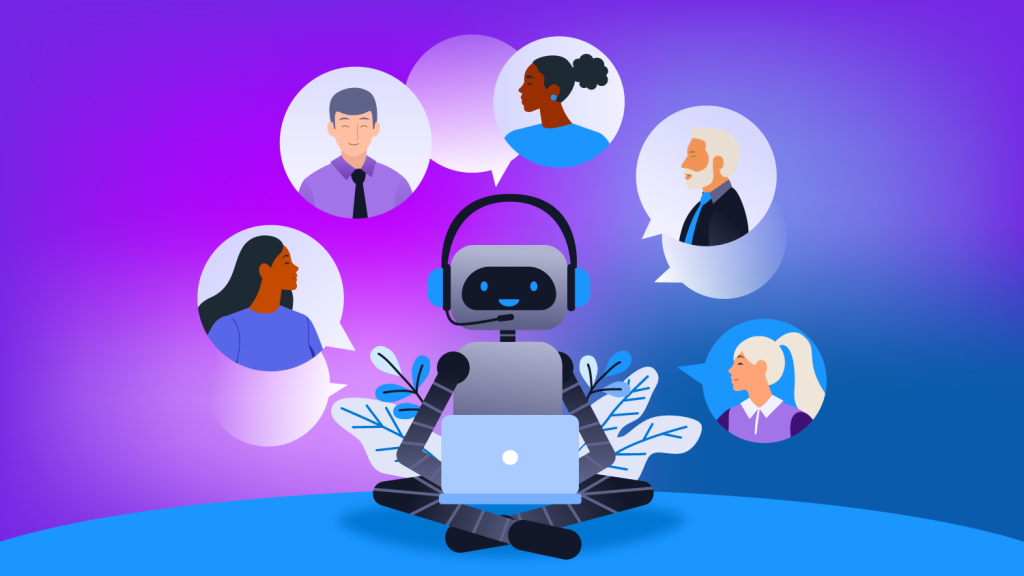 You can essentially double your financial returns by turning this exact same technology inward. By linking the system to internal APIs, you allow staff to resolve their own technical issues. The software automatically manages system access requests and resets forgotten passwords. Workers can instantly pull specific HR policies directly from your private company databases.
Qualifying Leads and Driving Revenue
AI also plays a major role in departments focused on generating income. The technology actively starts conversations with people browsing your site to determine purchasing intent. It gathers prospect information through tailored forms and suggests relevant merchandise. The system automatically sends these vetted prospects straight into your CRM software or books them directly onto sales team schedules.
The Financial Impact of Automated Support
If you keep hiring more human agents to handle growing ticket queues, operational expenses will quickly spiral out of control. Relying solely on manual support teams drains your budget. You can stop this financial bleed by deploying an enterprise AI chatbot solution. This technology drives down the average expense of resolving each ticket. Handing off routine conversations to automated systems creates massive savings. Gartner estimates that contact centers will slash staff expenses by $80 billion during 2026 through conversational AI. You achieve these labor reductions even if the software only handles a small percentage of your overall customer inquiries.
Selecting the Right Software Platform
When shopping for software, you can either trust flashy marketing brochures or test actual technical capabilities. You should always take the second approach. You need to assess these tools based on what they can actually do for your large organization.
Connecting Your Company Data
Your chosen system needs to absorb information from many different places. The best tools extract knowledge from 12+ distinct sources. These formats include standard websites, PDFs, and CSVs. They also connect directly to YouTube, GitHub repositories, and popular cloud storage. Supported storage includes Google Drive, SharePoint, and Notion. Top platforms will automatically synchronize this data. They refresh your content on a daily, weekly, or monthly schedule. This automatic updating keeps your responses accurate without requiring constant manual effort.
Meeting Security and Compliance Rules
Protecting sensitive data remains an absolute requirement for regulated industries. True corporate readiness demands strict governance features. You must look for platforms offering role-based access controls. They should also feature Single Sign-On (SSO) capabilities. The software needs to provide audit logs alongside flexible data residency options. Your system must comply with major regulatory frameworks like HIPAA, GDPR, and SOC 2.
Scaling Across Brands and Teams
Massive scale is another major requirement for large organizations. Your platform might need to handle up to 10,000 team members. This requires distributed management capabilities. Companies also need cost-effective white-labeling features. These options let you launch custom-branded interfaces across various subsidiaries. You can even place them inside client-facing apps without paying massive extra fees.
Understanding Pricing Structures
You should base your financial planning on actual deployment models. Vendor pricing structures differ significantly across the market. Some companies offer clear tiered plans or per-resolution billing. This model means you only pay when the software successfully automates a task. Other vendors require bespoke six-figure enterprise contracts. You must carefully calculate your total cost of ownership.
Always watch out for hidden expenses like costly white-label add-ons. If your team lacks the internal expertise to evaluate these trade-offs, working with AI consulting services can help you shortlist vendors and avoid costly implementation mistakes.
Matching Software to Your Business Goals
Picture a global retail brand deploying a highly technical, developer-centric tool just to answer basic shipping questions. The project would stall immediately. You must align your chosen platform with your exact operational requirements. Finding the right enterprise AI chatbot solution means evaluating how well a vendor serves your distinct daily workflows.
Managing Massive Content
SiteGPT stands out for organizations managing extensive deployments. This platform automatically synchronizes information across 12+ data sources. It easily accommodates up to 10,000 team members. You get access to very cost-effective white-labeling features that begin at just $39/month. These capabilities make it a perfect fit for multi-brand corporations that require deep data connectivity.
Prioritizing Verifiable Answers
Denser.ai takes the lead whenever strict auditability and precision matter most. The software utilizes a RAG pipeline capable of indexing enormous websites containing up to 100K+ pages. Every response includes clickable source citations that point directly to the original text. This transparency guarantees that users can verify every single answer provided by the system.
Integrating Into Existing Support Desks
Many departments prefer artificial intelligence that lives entirely inside their current ticketing software. Intercom Fin, Zendesk AI, and Kayako represent the premier options for this specific requirement. These tools function natively within your established support environment. They deliver automated assistance right next to your traditional live chat interfaces and human agent inboxes.
Handling Custom Workflows
Certain departments require highly specialized functionality to achieve their goals. Drift serves as the optimal choice for sales departments focused on routing prospective buyers. Meanwhile, Botpress caters perfectly to engineering teams and developers who demand extensive customization capabilities. If your focus lies in online retail and social media platforms like Instagram or WhatsApp, ManyChat and Certainly dominate that space. Finally, Landbot provides the best experience for professionals who want a visual, drag-and-drop interface without writing any code.
The Rise of Autonomous Agents
You might assume that providing perfect answers is the ultimate goal for conversational technology. The industry is actually leaving basic information retrieval behind. A rapid transition is currently underway toward Agentic AI. Instead of simply responding to user queries, these sophisticated programs take independent action. They can complete complicated, multi-phase workflows by interacting with your connected business platforms. This evolution transforms your enterprise AI chatbot solution from a basic communication tool into a system that actually finishes the work.
Final Steps for Your Automation Strategy
Many digital transformation projects fall short of their initial goals. This high failure rate usually happens because organizations fail to align new technology with their actual operational requirements. You must connect the unique strengths of your chosen platform directly to your daily business needs. Your primary focus might involve driving revenue, assisting internal IT staff, or managing customer service inquiries. Stay away from simple scripted tools if you want to guarantee long-term success. Instead, you need to launch a secure system grounded in RAG technology. This platform must connect thoroughly with your corporate data and scale safely. It also needs to offer smooth transitions to your live human agents. By following these principles, you will successfully implement an enterprise AI chatbot solution that drives real value for your company.
Golden Owl is a software development company specializing in building custom AI and automation solutions for enterprises. To learn more about their work, visit https://goldenowl.asia/.