

Only 16% have implemented AI for patch management despite 67% predicting full automation by 2026; security and reliability concerns keep humans in control
HOUSTON, July 30, 2026 /PRNewswire/ — Action1, a leading provider of autonomous endpoint management (AEM) solutions, recently recognized by Inc. 5000 as the fastest-growing private software company in America, today released its fourth annual 2026 Survey Report: AI Impact on Sysadmins, revealing a significant gap between how quickly system administrators expected AI to transform their work and the technology’s real-world implementation.
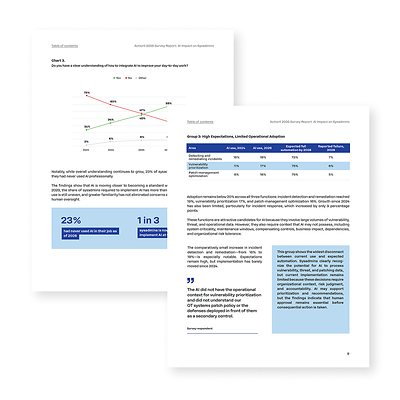
In 2024, sysadmins predicted that AI would fully automate many major IT workflows within two years. By 2026, adoption – even at a level below full automation – remained dramatically lower across nearly every area measured.
The largest gaps include:
- Patch management optimization: 67% predicted full automation by 2026, while only 16% report implementation today.
- Server CPU and memory monitoring: 70% predicted full automation, compared with 20% implementation.
- Vulnerability prioritization: 66% predicted full automation, compared with 17% implementation.
- Incident detection and remediation: 67% predicted full automation, compared with 19% implementation.
- Compliance analysis: 62% predicted full automation, compared with 28% implementation.
- Log analysis: 83% predicted full automation, compared with 50% implementation.
The findings demonstrate that moving AI from promise to operational use has proven slower and more complex than sysadmins anticipated, particularly in security and infrastructure workflows that require organizational context, risk assessment and accountability.
“AI adoption has not stalled; it has become more selective as sysadmins gain firsthand experience with the technology’s strengths and limitations,” said Gene Moody, Field CTO at Action1. “Sysadmins are comfortable using AI to analyze information, reduce noise and recommend actions, but they understand that an incorrect decision affecting production systems, vulnerabilities or access controls can have serious consequences. The emerging model is supervised AI, with experienced administrators retaining authority over high-impact decisions.”
Conducted for the fourth consecutive year and released in conjunction with System Administrator Day 2026, the survey gathered insights from over 1,000 sysadmins worldwide. Key findings include:
- Troubleshooting Comes Closest to Earlier Expectations: In 2024, 52% of sysadmins predicted full automation within two years; by 2026, 47% report using AI for troubleshooting, primarily for hypotheses and recommendations, not independent resolution.
- AI Is Becoming Mandatory Before It Becomes Fully Trusted: Organizations requiring AI use rose from 15% in 2023 to 34% in 2026, even as 23% of respondents report never using AI professionally.
- Sysadmins’ AI Understanding Is Growing: Fifty-eight percent now say they understand how to integrate AI into their work, up from 24% in 2023, though concerns about reliability, security and oversight remain.
- Security and Reliability – Not Job Replacement – Are the Greatest Barriers: Data privacy and accuracy concerns lead at 74%, followed by loss of control (58%) and cost (55%), while only 24% cite job replacement.
- Adoption Is Strongest in Analytical and Advisory Workflows: AI use is highest in log analysis (50%) and troubleshooting (47%), with lower adoption in areas involving production changes, credentials or policy.
Sysadmins Set Clear Limits on AI in Patch Management
Sysadmins are willing to trust AI with analysis and routine decisions—such as assessing patch severity (51%) or scheduling updates (47%), but draw a firm line at actions that affect production systems or override policy. Only 17% would allow AI to independently decide when to patch production servers, and just 11% would permit it to override existing patching policies. Most prefer AI to recommend actions, with humans retaining final approval for high-impact decisions.
Supervised AI Emerges as the Preferred Operating Model
Across the report, AI adoption is strongest in analytical and advisory roles and weakest where actions could directly impact production environments or security controls. The findings point to a supervised model in which AI supports decision-making, while sysadmins maintain oversight, validate outputs and approve critical actions.
To view the full report, please visit: https://www.action1.com/2026-ai-impact-on-sysadmins-survey-report/
About Action1
Action1 is an autonomous endpoint management platform trusted by many Fortune 500 companies. Cloud-native, infinitely scalable, highly secure, and configurable in 5 minutes—it just works and is always free for the first 200 endpoints, with no functional limits. By pioneering autonomous OS and third-party patching with peer-to-peer patch distribution and real-time vulnerability assessment without needing a VPN, it eliminates routine labor, preempts ransomware and security risks, and protects the digital employee experience.
In 2025, Action1 was recognized by Inc. 5000 as the fastest-growing private software company in America. The company is founder-led by Alex Vovk and Mike Walters, American entrepreneurs who previously founded Netwrix, a multi-billion-dollar cybersecurity company.
Follow the company on LinkedIn, Reddit and X.

 View original content to download multimedia:https://www.prnewswire.com/news-releases/action1-survey-finds-ai-adoption-falls-far-short-of-sysadmin-expectations-302839076.html
SOURCE Action1 Corporation
