A big part of the issue with artificial intelligence over the last few years has been what can only be described as a glaring lie of omission. We watched algorithms learn to write fluent stories overnight. We saw fake pictures go from blurry nightmares to photorealistic art in a matter of months. Once AI-generated video dropped, it felt like the entire digital universe was becoming automated all at once.
Yet if you walked into an independent game studio or an animation house, the daily creative workload still looked painstakingly slow. The process remained stalled. That’s because modeling spatial geometry and realistic physics was always the hardest puzzle for software developers to solve.
2D Was Just a Warm-Up
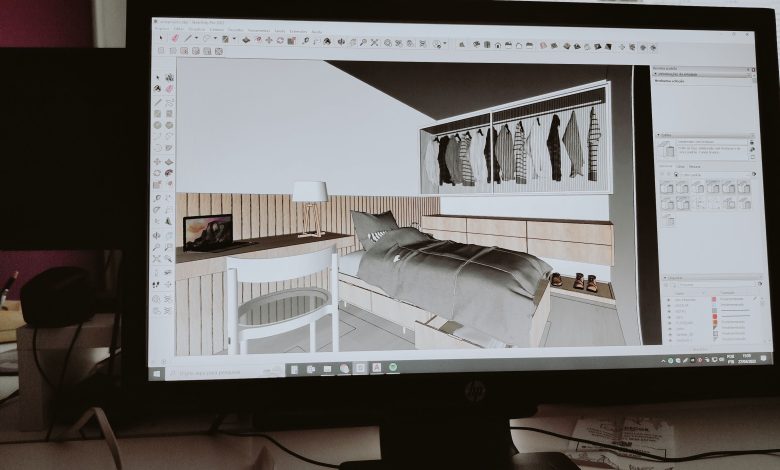
When an algorithm creates a regular picture, it only cares about what hits the flat screen from one fixed perspective point. It’s basically a magic trick. Building a proper spatial object requires far more intensive work and heavy calculations to function inside an interactive environment. A flat picture is easy, but a 3D asset has to live in the real world. You have to construct actual geometry, map out how light hits every surface, and give the object real spatial volume.
Early tools hit a massive wall. They could generate a rough digital sculpture that looked decent in a tiny preview icon on your desktop. But the second you tried to drop that generated asset into a production engine, the whole visual illusion broke apart.
Meshy was designed to fix this. Early generators only gave you a tangled mesh, leaving you with a chaotic mess of crooked lines that lacked textures or animation bones. The surfaces looked like cheap plastic. Because older tools lacked internal skeletal rigging, your character design was trapped as an immovable stone statue. Manual fixing took way too long. Because of this, frustrated creators gave up on the broken files and went right back to building everything by hand.
Treating 3D Like a Building Process
Fixing that digital mess required a total shift in how developers wrote the code. The real breakthrough happened when engineering teams stopped viewing the challenge as a visual exercise and started treating spatial generation as a complete building pipeline.
A usable file needs distinct technical layers working together. You have the geometry holding the physical form, the surface materials handling light, and the digital bones letting the structure bend. Older software guessed these pieces blindly. Meshy fundamentally changed things by handling the entire technical chain all at once, replacing useless mesh-only outputs with complete, production-ready assets. You type what you want, and the program builds a clean file that works inside standard game engines.
Giving Small Teams Infinite Storage
At the end of the day, skipping that tedious multi-day technical grind completely changes who gets to build expansive interactive stories.
In the past, those independent game creators spent months agonizing just making background filler to pad out their virtual worlds. A lot of their time was dedicated to doing things like placing street lamps, rocks, and random clutter just to make a digital town look lived-in. Now you can generate those secondary pieces in an afternoon and save your real energy for writing the story and polishing the main characters. That levels the playing field fast.
Shaping the Real Physical World
The same thing is happening across a dozen other industries without anyone really noticing. In e-commerce, if a business wants to show you a product in augmented reality on your smartphone, someone has to construct that spatial model first. Software engineers face the same bottleneck in medical design when training industrial robots in virtual testing spaces. They need thousands of unique digital objects right now, rather than waiting weeks for a manual designer.
Even home makers and 3D printing fans feel the shift. When you can talk to an intelligent agent and get back a clean file ready for printing, the barrier to entry vanishes. You no longer need years of complex CAD software practice to bring an idea into the room with you. We finally pushed past flat pictures. Now that the code can handle real geometry, spatial depth, and physical structure, software is stepping off our screens to help build reality.