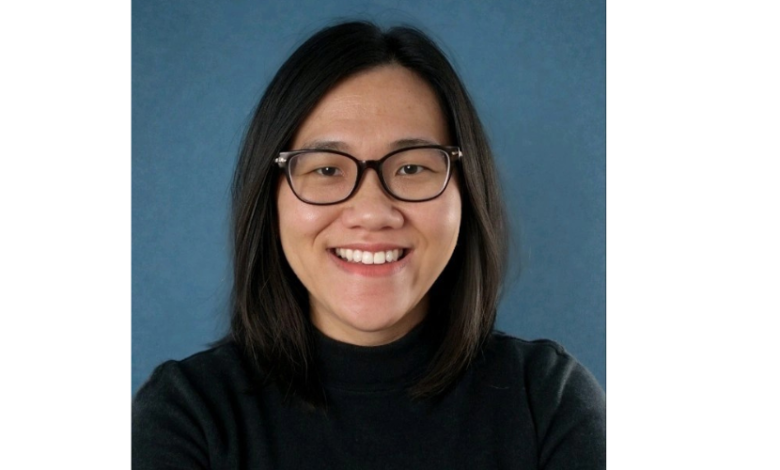
Jumpstart Immigration trained a model on adjudicated outcomes to find weak evidence before a government officer does. Chief Legal Officer Nhu-Y Le, who has worked on more than 10,000 United States immigration cases, says the gain is not only speed. It is knowing which founder petitions are not ready yet.
Most conversations about artificial intelligence in legal services are about speed. Draft faster, review faster, file sooner. Jumpstart Immigration, a platform based in San Francisco, is making a different argument. The company uses AI to predict how a petition will be adjudicated, and it uses that prediction to raise the share of cases that get approved.
The company works with global founders and skilled professionals applying through O-1, EB-1A and EB2-NIW, the extraordinary ability pathways. These are the routes most founders take when they build a company in the United States without an employer to sponsor them, and they are decided almost entirely on how evidence is assembled. USCIS approved roughly 92 percent of O-1A petitions in fiscal year 2024, and between 15 and 20 percent of applicants receive a Request for Evidence before a decision is issued. Jumpstart reports a 98 percent approval rate across its own caseload.
Why strong candidates still get denied
The gap between a qualified applicant and an approved petition is rarely about merit. It is about evidence, and specifically about which combinations of evidence hold up under scrutiny.
Two candidates with nearly identical résumés can receive opposite decisions. One documented a funding round with press coverage, contracts and third party validation. The other described the same achievement in a letter. The first survives review and the second draws a Request for Evidence, which adds months and lowers the odds of approval even when the underlying case is sound.
Knowing the difference in advance is the skill that traditionally took a decade to build. Nhu-Y Le built it at Microsoft, where she managed immigration for a global workforce, and then at Fragomen, the largest immigration law firm in the world. She has worked on more than 10,000 cases.
“That judgement used to live entirely in the heads of a few senior attorneys,” Le says. “It could not be transferred, audited or reproduced.”
What the system actually does
Jumpstart’s model does not write petitions and it does not decide cases. It does something narrower. It compares a new candidate profile against a structured corpus of more than 1,250 prior adjudicated filings, along with the outcomes and Request for Evidence patterns attached to each one, then flags where the evidence is thin relative to cases that succeeded and cases that failed.
The output is a readiness signal, not a verdict. A profile can come back strong on impact and weak on independent recognition, which tells the legal team exactly what to gather before filing rather than after a government officer asks for it. Cases that are not ready are delayed or declined instead of filed.
An attorney working alone draws on the cases she happens to have handled. An attorney working with the model draws on a far wider evidentiary base than any single career can hold.
The same structure compresses the timeline. Jumpstart moves a case from intake to filing-ready in three weeks, against an industry norm of four to six months. The speed is a consequence rather than a goal. Evidence gaps found at the start of a case take days to close. The same gaps found by a government officer eight weeks later take months.
Selectivity is where the approval rate comes from
The incentive structure matters as much as the technology. Jumpstart works on an outcome basis. If a petition is denied, the client receives a full refund of the service fee and an insurance policy covers the government filing fee.
Under an hourly model, a weak petition is still revenue. Under an outcome model, it is a loss the firm absorbs. That single change makes declining a case a commercial decision rather than an ethical one, and it is the mechanism that keeps the approval rate high. The model tells the team which cases to hold. The pricing model makes holding them rational.
The attorney stays in charge
Every petition passes three layers before reaching USCIS. The model runs first, paralegals review, and licensed United States attorneys sign off, a process Le leads.
She overrides the system regularly. Some profiles read as weak on paper because the applicant’s field does not generate the conventional markers of recognition, and the correct answer is still to file. Pattern recognition across volume belongs to the system. Framing, judgement and professional responsibility belong to the lawyer. Invert that and the result is fast filings that lose, which costs the applicant a year they do not get back.
The transferable version
For any regulated professional services business, the useful question is not which model to buy. It is whether the firm’s decisions currently produce a structured record of their own outcomes.
Most do not. Advice is given, work is delivered, invoices are sent, and the link between a specific judgement and its eventual result is never captured in a form a system could learn from. Fix that and applied AI becomes a quality instrument. Skip it and you have bought a drafting assistant.