Vehicles arrive with visible damage, hidden parts, changing resale value, and dozens of decisions waiting to be made. To most people, an automotive recycling operation looks like a physical business built around labor, storage, dismantling, photos, shipping, and used parts. Vladimir Sainciuc saw something else inside that daily movement. He saw an operating-system problem.
Sainciuc, an entrepreneur and systems builder, works on AI-supported operating systems for traditional industries, especially automotive recycling, reusable OEM parts, scrap recovery, and high-volume eCommerce. His work is rooted in an environment that many people overlook, but that is exactly why it interests him.
“People think of AI as something that belongs in software companies,” Sainciuc says. “I became interested in what happens when you bring it into a physical industry where decisions are still being made manually every day.”
That industry is not simple. Automotive recycling may begin with a vehicle, but the work quickly branches into reusable OEM parts, metal recovery, electronics, labor cost, storage, shipping, marketplace demand, pricing competition, and customer experience. A vehicle is not one thing. It is a set of possible outcomes, and the outcome depends on whether the right decisions happen early enough.
Sainciuc began in a practical, hands-on business environment where those decisions were part of the normal rhythm. Vehicles had to be evaluated. Parts had to be removed, photographed, identified, priced, listed, stored, sold, and shipped. Scrap recovery had to be considered. Marketplace demand had to be watched. The work was physical, but the deeper problem was informational.
“At first, it looks like the challenge is labor,” he says. “But when you look closer, the real challenge is structure. Too many decisions happen separately, and value gets lost between them.”
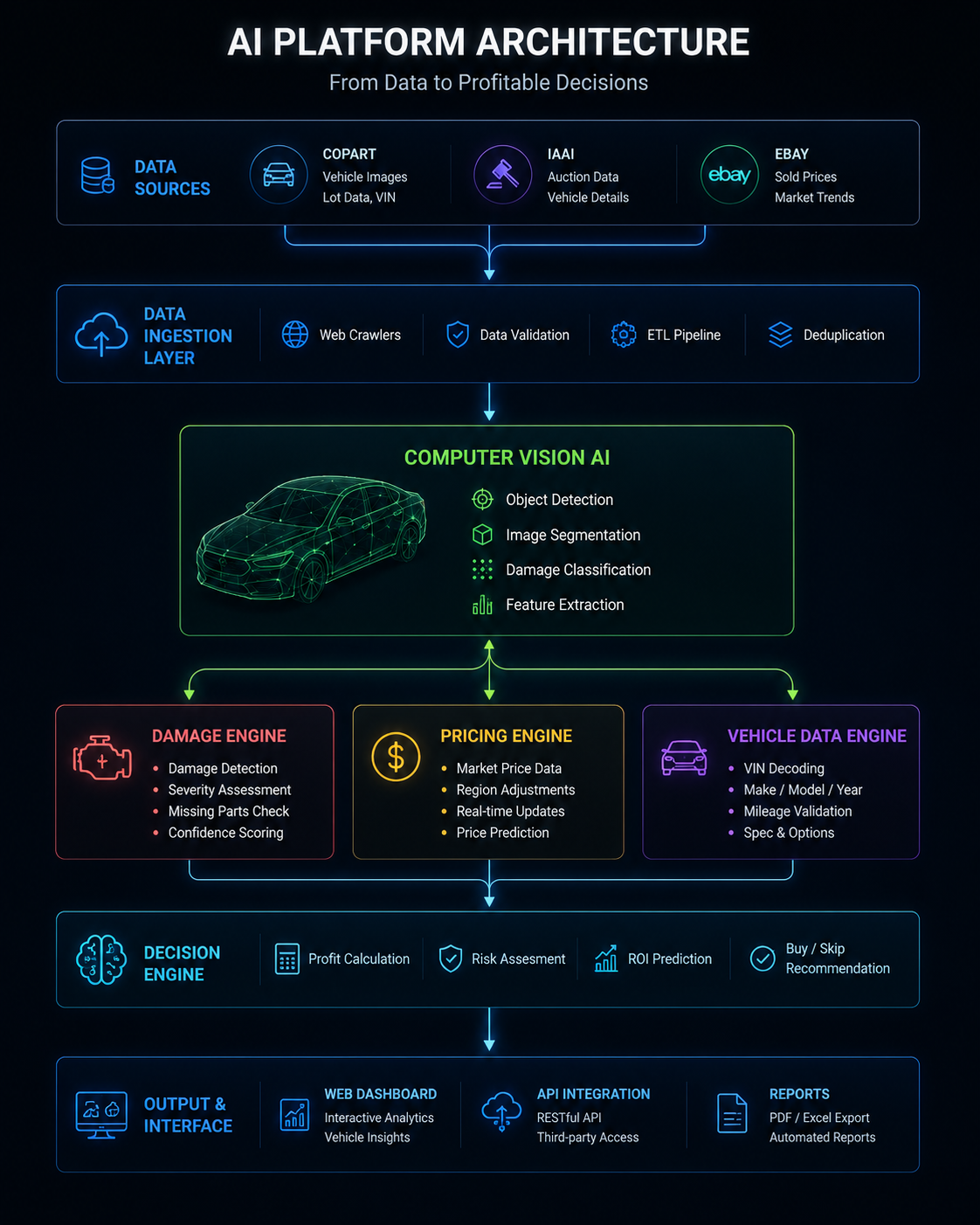
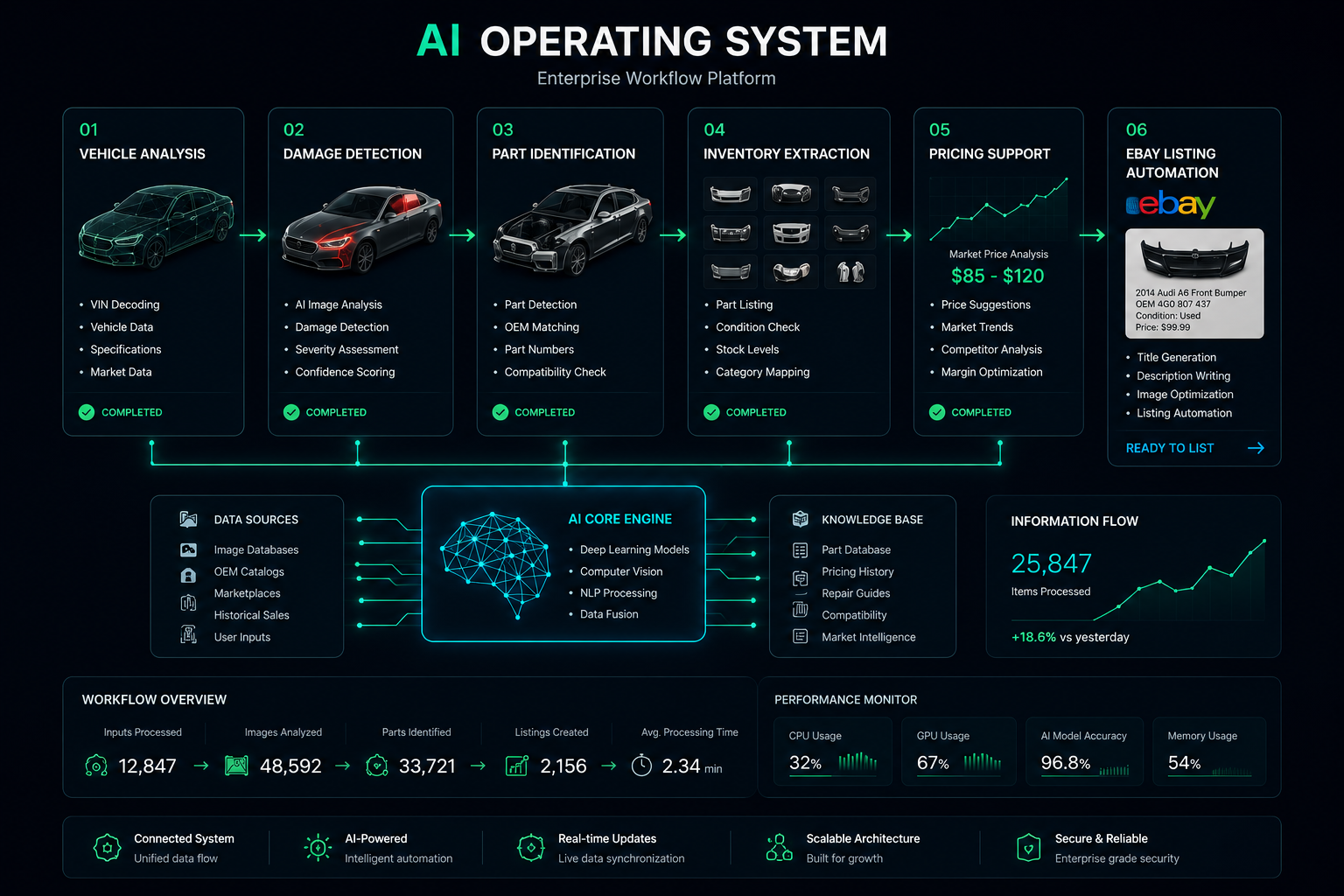
That observation became the starting point for his operating model. Instead of treating each stage as its own task, Sainciuc began connecting the workflow from the moment a vehicle is analyzed. His system links vehicle analysis, dismantling logic, image processing, inventory extraction, pricing support, marketplace automation, and recovery-value decisions. The goal is not to make the business look more technical. The goal is to help operators make better decisions with less wasted motion.
“In a business like this, you cannot build something that only sounds good in theory,” Sainciuc says. “It has to work around real vehicles, real parts, real photos, real inventory, and real marketplace pressure.”
That is one reason his perspective differs from many conversations about AI. Sainciuc is not approaching automation from a clean digital environment. Automotive recycling is irregular by nature. Every vehicle differs by year, trim, condition, damage, demand, and part value. Photos may not be consistent. Inventory can be difficult to classify. Pricing changes with competition. Dismantling choices are time-sensitive because labor spent on the wrong part can erase value.
A system built for that world has to respect the mess.
“Physical operations do not behave like perfect software examples,” he says. “The system has to support the people doing the work, not pretend the work is cleaner than it is.”
His AI-supported model is used in real operating environments, including within a family business context that manages approximately 50,000 active eBay listings and ranks within the top 1 percent of eBay sellers in its category. For Sainciuc, that scale is important because it reveals where manual systems begin to break down. At high volume, small inconsistencies do not stay small. A slow listing process, uneven pricing, missed part, weak title, poor photo flow, or unclear dismantling instruction can multiply across thousands of items.
“Scale exposes every weak part of a workflow,” he says. “If the process depends only on memory and repeated manual decisions, growth can create more chaos instead of more efficiency.”
His work tries to prevent that. Earlier vehicle analysis can help determine which parts deserve attention before labor is wasted. Better dismantling logic can guide operators toward higher-value recovery. Image processing can turn photos into usable inventory information faster. Pricing support can make listings more consistent. Marketplace automation can help reduce bottlenecks between the yard and the customer searching online.
That online marketplace piece is now central to the business. Recyclers are not only competing with nearby yards. They are competing through search results, photos, product titles, shipping speed, pricing, inventory accuracy, and customer trust. A valuable part that is not listed well may as well be invisible.
“Automotive recycling is no longer only about what happens in the yard,” Sainciuc says. “The digital side decides whether the value inside that vehicle actually reaches the market.”
He does not see AI as a replacement for experienced operators. In his view, the people inside traditional industries often carry deep practical knowledge. The problem is that knowledge can remain trapped in habits, memory, and disconnected steps. AI can help only when it turns that experience into a more organized workflow.
“AI should not erase the operator,” he says. “It should help organize information so the operator can make faster, more consistent decisions.”
That practical stance is also why Sainciuc believes overlooked industries may hold some of AI’s most useful applications. Automotive recycling, scrap recovery, waste management, logistics, inventory processing, and similar fields still rely on countless daily choices that are rarely seen as technology problems. A truck enters a facility. Material has to be identified. Work has to be routed. Inventory has to be categorized. Value has to be recovered before time, labor, or uncertainty drains it away.
To Sainciuc, those repeated decisions are not just routine. They are signals that a better system can be built.
“My belief is that AI becomes powerful in traditional industries when it becomes an operating layer,” he says. “It should help people see what is happening sooner, route work better, reduce mistakes, and recover more value from what is already there.”
His long-term vision extends beyond one workflow. Sainciuc is beginning to develop a broader AI-supported automotive platform concept where consumers and businesses could find and manage many automotive needs in one connected environment, including parts, services, repair resources, marketplace information, and related solutions.
The larger ambition is to make the automotive world easier to navigate and to prove that AI does not belong only in obvious technology sectors. It can help businesses that work with vehicles, materials, inventory, logistics, waste, and recovery operate with less guesswork and more structure.
Sainciuc’s work began with a simple refusal to accept manual chaos as normal. In an industry many people still see as old, physical, and difficult to automate, he saw a decision system waiting to be built.
“The biggest opportunities are often inside industries people do not want to touch,” he says. “That is where better systems can make a real difference.”