Recruiter search behavior is one of the most reliable leading indicators of where the labor market is actually heading. When a hiring manager searches for a specific role on a professional database, that search is registered before a requisition is approved, before a job posting goes live, and before any public signal exists. The gap between search activity and public posting is typically three to six weeks.
That gap is where the most useful talent market intelligence lives.
What Recruiter Search Data Reveals That Job Market Reports Miss
Most labor market reports describe what happened. Recruiter search data describes what is about to happen.
A breakdown of the roles recruiters are quietly prioritizing before anyone else notices covers the specific role categories showing the highest search volume increases year over year, broken down by geography and sector. The pattern that emerges is not a simple story about AI replacing jobs. It is a sorting process: roles whose core output overlaps with what AI tools now produce reliably are declining in recruiter search volume, while roles requiring physical presence, clinical judgment, or technical specificity are growing at rates that official forecasts have not yet caught up with.
For talent acquisition teams, this data has direct operational implications. The categories gaining recruiter attention are already competitive. The teams that start building pipelines now, before competition intensifies further, will consistently fill these roles faster than those who wait for demand to become obvious in public data.
For B2B sales teams selling into specific industries, the same data reveals where organizational investment is accelerating and where it is contracting. Healthcare, skilled trades, quantitative finance, and accounting are all showing significant increases in recruiter activity. Digital marketing, general administration, and broad software engineering titles are declining. The companies expanding headcount in specific functions are the ones with active budget and organizational momentum.
What Mobile Advertising History Teaches About Contact Intelligence Infrastructure
The mobile advertising industry followed a pattern worth understanding for anyone thinking about contact intelligence as infrastructure rather than as a point solution.
The early AdMob model, documented in detail in the history of AdMob’s development and acquisition, illustrates how a data infrastructure layer that starts as a niche tool for a specific use case can become the foundation for an entire category as the market scales. AdMob built the data infrastructure for mobile advertising when the market was small, and that infrastructure became exponentially more valuable as mobile advertising volume grew.
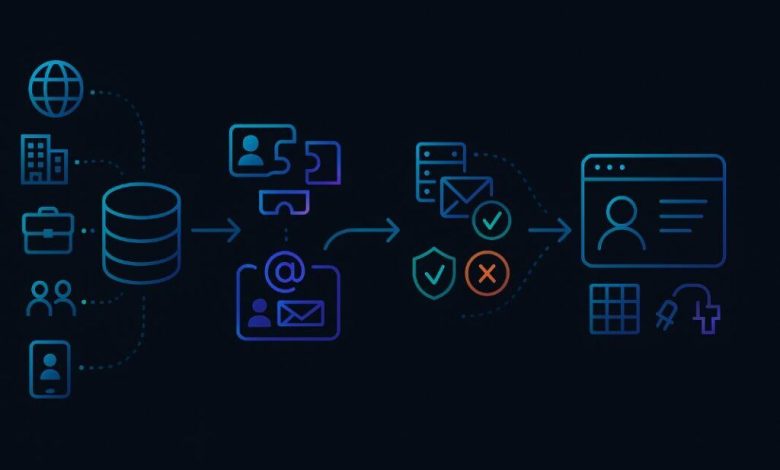
Contact intelligence is following a similar trajectory. Tools that started as recruiter utilities for finding candidate emails are now embedded in sales prospecting workflows, partnership development processes, and competitive intelligence operations. The contact data infrastructure that teams build now becomes more valuable as outreach volume and personalization requirements increase.
The practical implication is that treating contact intelligence as a campaign tool rather than as infrastructure underinvests in its long-term value. Teams that build systematic, maintained contact data processes now compound that investment as their outreach operations scale.
What This Means for Sourcing Teams in 2026
The labor market data and the contact intelligence infrastructure argument point toward the same operational conclusion.
The talent segments gaining recruiter attention fastest, healthcare specialists, quantitative finance professionals, accounting talent, and skilled trades, are the hardest to reach through conventional channels. These professionals are not on job boards. They are employed, often satisfied, and only reachable through direct outreach to verified contact details.
The sales segments where budget is concentrating follow a similar pattern. The decision-makers at companies expanding in these categories are being approached by more vendors simultaneously as the investment signal becomes more visible.
In both cases, the organizations that reach the right people first are the ones with better contact infrastructure and better preparation workflows:
- Verified contact data that reflects current role and employment status
- Research on the individual and organizational context before any message is written
- Multi-channel outreach that combines email and direct phone where available
- Sequencing that times follow-up based on engagement signals rather than arbitrary intervals
- Pipeline tracking that distinguishes between contacts reached and contacts engaged
The window between when recruiter search data shows a trend and when that trend becomes visible in public reporting is where the competitive advantage in both talent acquisition and B2B sales currently sits. The teams using leading indicator data rather than lagging reports are consistently operating three to six weeks ahead of the market.