Most “which AI model should I use” debates start in the wrong place. You pull up benchmark charts, compare context windows, squint at pricing tables, and end up picking whatever scored highest on a coding test you’ll never personally run. That approach isn’t useless, but it skips the question that actually decides whether a tool works for you: what stage of usage are you at?
If you’ve been using Claude Fable 5 since it launched, or you’re thinking about adopting it now that access has stabilized, that question matters more than another round of model comparisons.
It’s Not One Decision, It’s Three
Almost everyone who works seriously with AI moves through the same three stages, whether they notice it or not. The model that’s perfect for stage one is often the wrong fit by stage three.

Stage 1: Just Chatting
You open a tab, ask a question, get an answer, close the tab. This is where most people start, and it’s where a strong general-purpose model like Claude Fable 5 genuinely shines — strong reasoning, good at explaining itself, easy to trust for one-off tasks.
Stage 2: Wiring It Into Your Work
You start pasting the same prompts into the same workflow over and over. Maybe you’re summarizing the same kind of report every week, or generating the same type of code review. You’re still doing the work of starting and stopping it yourself, but you’ve basically built a manual process around a chat window.
Stage 3: Letting It Run Without You
This is where things change. You stop wanting to type the prompt. You want the report to already be in your inbox, the price check to already be done, the pull request to already be reviewed before you sit down. The model isn’t the bottleneck anymore — your own attention is.
The Real Gap Shows Up at Stage 2
Here’s the part people underestimate: the jump from stage one to stage two is easy. The jump from stage two to stage three is where most setups quietly fall apart.
A single model, however capable, was built to answer prompts — not to stay logged in, watch your inbox, or run on a timer while you’re asleep. To get from “I ask it things” to “it does things for me,” you need something underneath the model: a place for it to live, a way to keep it running, permissions it can act with safely, and ideally the freedom to swap models without rebuilding everything from scratch.
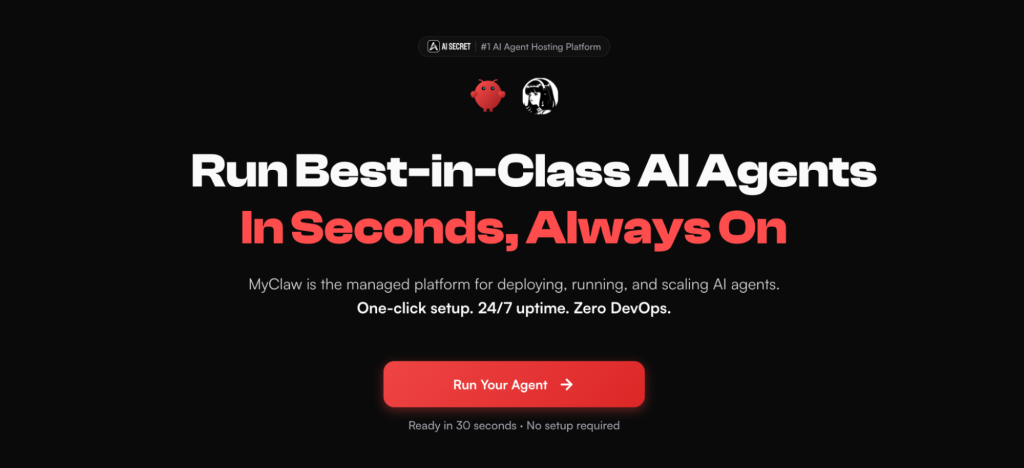
This is the gap that platforms like MyClaw are built to close. Rather than competing with Claude Fable 5 as another model to argue about on a leaderboard, it sits a layer above that decision entirely — a managed home for an AI agent that can use Claude, GPT, Gemini, or cheaper options like DeepSeek and Kimi K2.5, depending on what a given task actually needs.
What an Agent Setup Actually Looks Like
In practice, this means your assistant isn’t bound to one chat window. It runs on a dedicated, isolated server, reachable through Telegram, WhatsApp, email, or a browser, and it stays online whether you’re at your desk or not. Instead of you remembering to ask for the weekly report, you set the goal once — “send me a price summary every Monday morning” — and it just happens, with a notification only when something needs your judgment.
The setup itself is deliberately unglamorous in a good way. No server management, no Docker, no SSH sessions to babysit. You pick a plan, connect a channel, and the agent is provisioned and running within minutes. It can browse the web, write and review code, fill out forms, organize files, and draft or send messages on your behalf, all backed by whichever model fits the job best. Each instance is isolated, so your data and conversations don’t mix with anyone else’s, and switching the underlying model when pricing changes or a stronger one comes along is a settings change rather than a migration.
When the Comparison Gets More Complicated
To be fair, none of this means you should abandon Claude Fable 5 — for plenty of tasks, especially deep reasoning or one-off analysis, a strong standalone model is still the right tool, and switching costs are low because you can call it from almost anywhere, including from inside an agent setup like the one above.
Where it gets more complicated is when people try to compare a model and a platform as if they’re the same kind of product. They’re not, and that’s exactly why a head-to-head spec sheet doesn’t tell the whole story. If you want a more detailed, side-by-side breakdown of how the options actually differ in practice — pricing, setup time, and what each one is genuinely good at — this guide to Claude Fable 5 alternatives goes through it in more depth than a single article can.
The Simple Test
If you’re not sure which stage you’re really in, ask yourself one question: in the last week, how many times did you wish something had just already been done instead of waiting for you to ask? If the honest answer is “rarely,” a strong chat-based model is still all you need. If the answer is “more than I’d like to admit,” it’s probably time to stop comparing models and start thinking about what’s underneath them.