While generative AI has flooded the enterprise software market with chatbots and thin-wrapper copilots, the pharmaceutical industry has largely had to sit on the sidelines. In a sector where a single hallucination can halt production, violate FDA regulations, or delay a life-saving drug, being “approximately right” is worthless.
Enter Katalyze AI, a startup that just emerged with a $10.5 million seed round to build what it calls an ‘agentic operating system’ designed specifically for the rigorous demands of pharmaceutical companies.
Led by Bonfire Ventures, the seed round also saw participation from Inovia Capital, Ripple Ventures, Alumni Ventures, and high-profile angel investors including Gokul Rajaram and Farzad Soleimani.
The timing couldn’t be more critical. The pharma industry is currently staring down a massive patent cliff, while simultaneously grappling with multi-decade highs in drug shortages. The pressure to compress the timeline from discovering a molecule to getting it into a patient’s hands is immense. Katalyze AI believes autonomous agents are the answer, but only if they are built on a rock-solid data foundation.
Moving Beyond the AI Hype in Pharma
The core problem Katalyze is solving isn’t just about deploying AI; it’s about wrangling the incredibly messy, fragmented data infrastructure that plagues modern biopharma.
Currently, the data required to move a drug from process development to commercial release is scattered across a labyrinth of plant and lab systems, including Manufacturing Execution Systems (MES), Laboratory Information Management Systems (LIMS), Electronic Lab Notebooks (ELN), historians, and ERPs like SAP.
Katalyze connects this disparate architecture through a dynamic context layer. The platform relies on a command-line interface, Model Context Protocol (MCP), and pre-built integrations to weave these systems together into a single, immutable source of truth. By building an operations-specific ontology and knowledge graph, Katalyze ensures that when its AI agents make a decision, that output is anchored to real, traceable facility data that satisfies GxP, data privacy, and sovereignty requirements.
“Most AI in this category is a thin copilot bolted onto legacy tools,” Brett Queener, General Partner at Bonfire Ventures, noted. “Katalyze went the other way and built real infrastructure. By putting a GxP-native context layer underneath autonomous agents, they let AI reason across the messy, fragmented data of pharma manufacturing and actually do the work.”
Real Traction in a Red-Tape Industry
Enterprise startups notoriously struggle to land top-tier pharma clients due to endless compliance audits and pilot purgatory. Katalyze, however, has already deployed its platform across five of the 20 largest global pharmaceutical companies. To date, the startup’s OS has helped pharma teams deliver 10 million medication doses with greater operational visibility.
One standout metric from an early deployment highlights the platform’s potential ROI: an operational analysis that historically would have taken a year and cost between $4 million and $6 million was completed by Katalyze’s agents in just 45 minutes.
Sanofi is among the early adopters leveraging the platform. Sabya Dasgupta, Sanofi’s Global Head (VP) of R&D Data Platforms & Products, pointed to the startup’s enterprise-ready architecture as the key differentiator. “What really separated Katalyze was that it was built for an enterprise like Sanofi from day one,” Dasgupta said. “The ontology layer was already in place. Data ingestion into the intelligence layer was solved. They had the security, the governance, the deployment story, everything we needed to scale this across R&D, not just run a pilot in one corner of the organization.”
Under the Hood: The Agentic OS
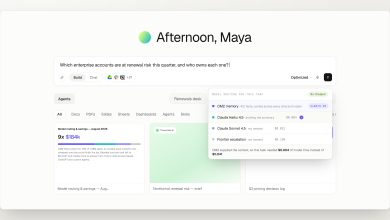
Katalyze operates as a comprehensive platform designed for scientists, engineers, and analysts to build and deploy AI teams. The system breaks down into a few core pillars:
- Operational Data Layer: Eliminates manual data assembly by unifying fragmented plant and lab data into a real-time operational truth.
- Primary Production Record: A GxP-native ontology layer that anchors every decision an AI agent makes back to an immutable, regulatory-compliant source.
- Agent Catalog: Out-of-the-box, domain-trained agents ready on day one. These agents speak the highly specialized languages of MSAT, Quality, and bioprocess engineering to investigate deviations, track CAPAs (Corrective and Preventive Actions), and draft APQRs (Annual Product Quality Reviews).
- Agent Studio: A low-code environment allowing internal data engineers and scientists to build their own custom, proprietary AI agents on Katalyze’s secure infrastructure.
To ensure the AI operates at an expert level, Katalyze collaborates with a community of over 100 tenured scientists and engineers from giants like Pfizer, Sanofi, and Eli Lilly to author the precise skills these agents rely on.
Industry Leading Team
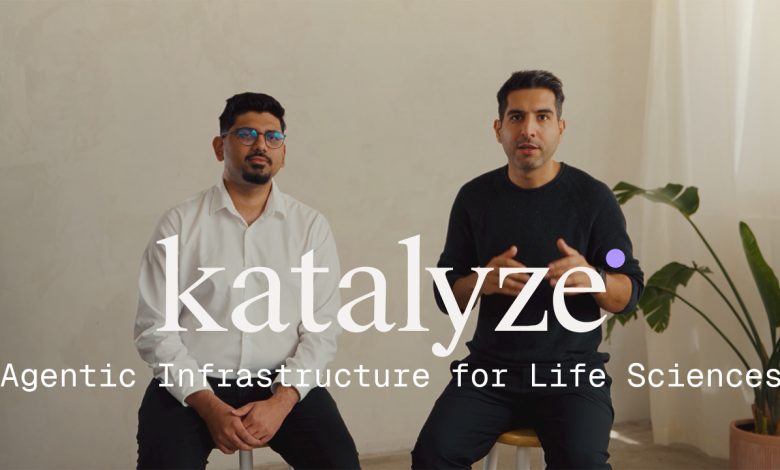
The startup’s founding team, Reza Farahani (CEO), Shreyas Becker (COO), Hannes Bretschneider (Chief AI Officer), and Matt Cruz (Founding Engineer), brings a deep blend of life sciences, enterprise tech, and AI expertise to the table.
“The pressure to get medicine to patients faster, and at lower cost, has never been higher, but the bar for accuracy in our industry is absolute,” CEO Reza Farahani said. “We built an agentic operating system where every answer is grounded in an immutable record, so teams can deploy agents that are right every time and cut lab and manufacturing cycles from quarters to weeks.”
Armed with $10.5 million in fresh capital, Katalyze plans to aggressively expand its engineering, science, and go-to-market teams. The startup will also focus on growing its catalog of domain-trained agents as it scales up deployments with the rest of Big Pharma.
Companies can learn more at https://katalyzeai.com/.