The first time I used a meeting transcription bot, I spent the next hour regretting it.
Not because the transcript was bad. It was fine. Accurate, even. The problem was the room. Three people on my team became noticeably more careful the moment they realized the meeting was being recorded. One senior engineer angled his laptop away from the table and barely spoke for the rest of the hour. The conversation became polite, cautious, and much less useful.
That was two years ago. Since then, I have tried several transcription tools, and the pattern is familiar: the more visible the recording setup feels, the more people adjust their behavior around it. Nobody says, “I do not trust this tool.” They simply become more guarded.
That is why the Dymesty AI Glasses — Jobs Circle caught my attention. Here was a pair of titanium AI glasses with privacy-first meeting transcription built around a camera-free design. Instead of trying to turn smart glasses into a camera, display, and entertainment device all at once, Dymesty focuses on a more practical workplace question: how can people capture useful meeting notes, translations, and summaries without making everyone feel watched?
In practical workplace scenarios, including work conversations, client calls, and multilingual discussions, the biggest takeaway is not just transcription quality. It is meeting comfort. A camera-free pair of AI glasses changes the social feeling of the room.
Why the Camera Is the Privacy Problem
Most people assume meeting privacy is mainly about where the data goes. That matters, of course. Teams should understand how audio is captured, transmitted, processed, stored, and managed.
But in daily meetings, privacy also has a social side.
A visible camera changes how people behave. Even when the camera is not actively recording, people may wonder whether they are being watched, captured, or analyzed. In workplace conversations where honesty matters, that feeling can reduce open disagreement, slow down decision-making, and make meetings less natural.
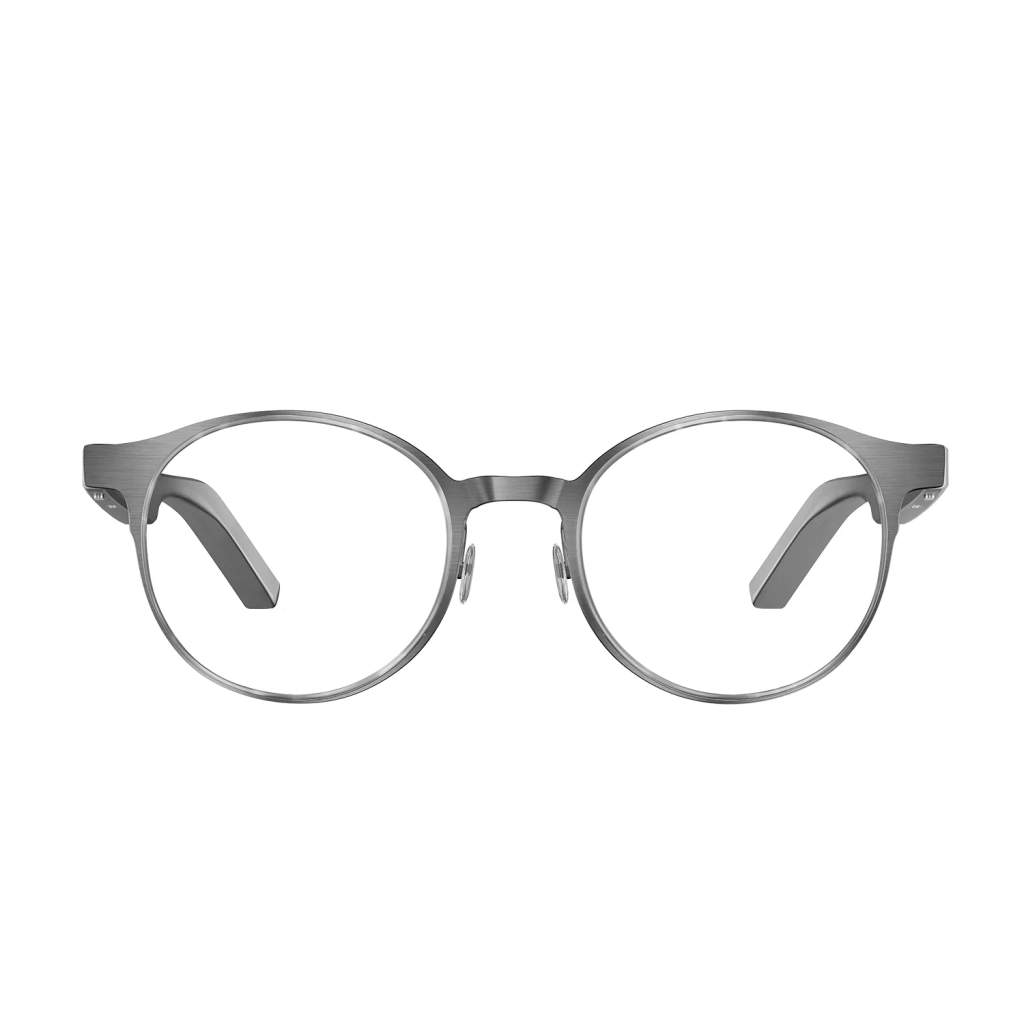
This is where the Dymesty Jobs Circle takes a different approach. There is no camera on the frame. No lens. No video capture. No visual recording of faces, screens, whiteboards, body language, or the room itself.
That matters because many meeting notes do not need video at all. For status updates, planning calls, interviews, internal discussions, sales follow-ups, travel conversations, and cross-language meetings, what people usually need afterward is simple: what was said, what was decided, what needs follow-up, and who should handle the next step.
Dymesty’s privacy advantage starts there. It is not trying to collect more visual information. It is designed to help users capture the spoken part of a meeting while avoiding the social tension that can come with camera-equipped devices.
How the Dymesty Jobs Circle Workflow Actually Works
A more accurate way to understand the Dymesty Jobs Circle is this: the glasses act as the wearable audio capture device, while the phone and AI service handle the heavier transcription, translation, and summary workflow.
The glasses connect to the phone through Bluetooth. During a meeting or conversation, the glasses capture speech audio and send it to the connected phone. From there, Dymesty’s AI pipeline can process the audio for transcription, real-time translation, and meeting summaries.
That distinction is important. The value of the product is not that everything happens fully offline or only inside the glasses. The value is that the glasses avoid camera-based visual capture while giving users a lightweight, wearable way to support AI meeting workflows.
This makes the privacy story more honest and more practical. Dymesty is not asking users to accept a camera on their face for meeting transcription. It keeps the product focused on speech-based meeting support, while the phone and cloud-based AI pipeline provide the processing power needed for translation, transcription, and summaries.
The Camera-Free Design Makes Meetings Feel More Natural
The most noticeable difference in use is not a technical specification. It is how normal the glasses feel in a conversation.
Camera-equipped smart glasses can be useful in some situations, especially for recording video, capturing travel moments, or creating hands-free content. Products like Ray-Ban Meta and Solos AirGo Vision show how much interest there is in camera-based smart eyewear.
But meetings are different from travel videos or social content. In meetings, people are often discussing decisions, budgets, clients, hiring, legal questions, strategy, or internal issues. A camera can feel like too much.
The Jobs Circle avoids that problem by design. Because there is no camera, the glasses feel closer to a meeting productivity tool than a recording device. People can talk, listen, and respond without the added concern that their face, laptop, notes, or body language is being captured.
That is the core idea behind Dymesty’s privacy-first approach: reduce unnecessary visual data collection while still helping users keep a useful record of the conversation.
The Role of Audio Capture and Bluetooth Connectivity
The Dymesty Jobs Circle is built around wearable audio capture. Instead of placing a phone in the middle of a table, the glasses sit naturally on the user’s face. This can make the meeting workflow feel less intrusive, especially in professional settings where pulling out extra devices can change the atmosphere.
The glasses use microphones to capture speech and connect to the phone through Bluetooth. Dymesty’s product information also highlights Qualcomm audio technology and aptX support, which helps position the device as a more polished audio wearable rather than a simple recording accessory.
It is important not to overstate the hardware details. The product materials reference Qualcomm and aptX support, but unless a specific chipset model is officially confirmed, it is better to avoid naming one. For SEO and brand trust, accurate product language is stronger than over-specific technical claims.
What matters for users is the practical workflow: wear the glasses, connect them with the phone, capture the conversation, and use the AI features to generate transcription, translation, and summaries.
Real-Time Translation for Global Teams
One of Dymesty’s strongest selling points is multilingual communication. According to Dymesty’s product materials, the Jobs Circle supports real-time translation in 100+ languages, making it useful for international teams, travel, client communication, and cross-border collaboration.
This is a much broader use case than simple meeting notes.
A founder speaking with overseas suppliers, a sales manager joining a client call, a consultant traveling between countries, or a remote team working across multiple languages can all benefit from having translation support built into a wearable format.
The camera-free design is useful here too. Translation often happens in sensitive real-world environments: meetings, airports, hotels, site visits, conferences, and business dinners. In many of those settings, a camera can feel uncomfortable or inappropriate. Audio-focused smart glasses make the interaction feel more natural.
Instead of presenting itself as a device that watches the room, the Jobs Circle presents itself as a tool that helps people understand and remember spoken conversations.
Meeting Transcription and Summaries Without Video Recording
For workplace users, transcription is valuable because it reduces the pressure to take perfect notes while talking. A good meeting workflow lets people stay present during the conversation and review the details afterward.
The Dymesty Jobs Circle supports AI recording, transcription, and summaries through its connected phone and cloud AI pipeline. This makes it useful for users who regularly need to capture meeting details, extract key points, or review decisions after a call.
The important privacy distinction is that the product is not recording video. It is not visually documenting the room. It is not capturing faces or screens. It is focused on the spoken meeting content.
That makes it easier to introduce into work settings where people may be uncomfortable with camera-based devices. It also makes the product easier to explain: these are camera-free AI glasses designed for speech-based meeting support.
Why Titanium Matters for All-Day Wear
The Jobs Circle also benefits from its physical design. The titanium frame helps keep the glasses lightweight, durable, and comfortable enough for long workdays.
That matters because meeting tools only work if people actually use them. A device that feels heavy, awkward, or visually unusual will probably stay in a bag. A pair of smart glasses that feels closer to regular eyewear has a better chance of becoming part of a daily routine.
Titanium also gives the product a more premium feel without making the glasses look overly technical. For business users, that is useful. The glasses can fit into meetings, travel days, conferences, and office settings without drawing unnecessary attention.
The best workplace technology often fades into the background. Dymesty’s design moves in that direction: simple, wearable, and focused on the job it is meant to do.
Battery Life for Meeting-Heavy Days
Battery life is another area where accuracy matters. The Jobs Circle should not be described as lasting only a few hours for transcription-heavy use. Dymesty’s official product positioning is much stronger than that.
The product is promoted with up to 48 hours of typical use. Dymesty also describes support for up to 3 days of calls or 7 days of meeting recording on a single charge, based on a pattern of 4 meetings per day at 60 minutes each.
For users who spend a lot of time in calls, this is a meaningful advantage. It means the glasses are designed for real workdays and repeated meeting use, not just short demonstrations.
A practical battery story also supports the product’s workplace positioning. If someone wants to use AI glasses for meetings, travel, translation, and daily communication, they need a device that can stay with them through a full schedule. Dymesty’s battery claims make that use case much more convincing.
Subscription and AI Usage Plans
The AI features should also be described accurately. The Dymesty Jobs Circle is not simply a one-time purchase with unlimited free transcription forever.
After a 30-day free trial, Dymesty’s AI recording, transcription, and summary features are available through monthly plans. Current product information lists a $9.9 monthly plan for 1,800 minutes of AI recording, transcription, and summary, and a $19.9 monthly plan for 5,400 minutes.
This is a better way to frame the product because it sets clear expectations. Users who rely on AI transcription and summaries for regular meetings can choose the plan that fits their workload.
For light users, the lower-minute plan may be enough. For consultants, founders, managers, sales teams, or frequent travelers, the higher-minute plan gives more room for regular meeting and translation workflows.
The subscription model also makes sense because the product uses a connected AI pipeline to deliver transcription, translation, and summary features. Clear pricing helps users understand what they are paying for: not just the frame, but the ongoing AI meeting support.
Where the Workflow Fits Best
The Jobs Circle is especially well suited for people who spend a large part of their day in spoken communication.
Business Meetings
For internal meetings, the glasses can help users capture decisions, follow-ups, and key discussion points without relying entirely on manual notes.
Client Calls
For client-facing teams, transcription and summaries can help preserve important details from sales calls, consulting sessions, onboarding meetings, and project updates.
International Communication
With 100+ languages supported for real-time translation, Dymesty can help users work across language barriers in travel, business, and global collaboration settings.
Conferences and Travel
For people moving between cities, events, hotels, airports, and business appointments, wearable translation and meeting support can be more convenient than constantly pulling out a phone or laptop.
Professional Services
Law, finance, consulting, healthcare administration, real estate, education, and enterprise teams all rely heavily on spoken communication. A camera-free device can feel more appropriate in those environments than a camera-equipped wearable.
A More Honest Privacy Advantage
The strongest privacy claim for Dymesty is not “no cloud.” The stronger and more accurate claim is “no camera.”
That difference matters.
Cloud AI processing can be useful and necessary for advanced transcription, translation, and summary features. But a camera-free design still provides a clear privacy advantage because it avoids visual recording entirely.
In many meetings, visual capture is the part that makes people uncomfortable. A transcript may be useful. A video record of everyone in the room may feel excessive.
Dymesty’s approach fits a more restrained model of meeting technology: capture what is needed for useful notes and communication support, without turning every conversation into a visual recording event.
That is the real privacy-first argument. It is not about pretending AI features require no outside processing. It is about designing the hardware experience so the product does not collect more than the meeting workflow actually needs.
Why Camera-Free AI Glasses Make Sense Now
Workplace AI is moving quickly, but many tools still create a trust problem. Meeting bots join calls. Recording banners appear. Video devices raise questions. People wonder where the data goes, who can access it, and whether the tool is changing the conversation itself.
Camera-free AI glasses offer a different path.
They let users keep the practical benefits of AI meeting support while reducing the visual surveillance feeling that often comes with smart devices. For teams that value open conversation, that distinction is important.
The Dymesty Jobs Circle is not trying to be a general-purpose AR headset or a social camera. It is focused on a narrower and more practical job: helping people communicate, translate, transcribe, and summarize spoken conversations in a more comfortable way.
That focus is what makes the product interesting.
The Best Meeting Tool Is the One People Feel Comfortable Around
For workplace users, the most important benefit of the Dymesty Jobs Circle is not just that it can help with notes. It is that it supports meeting documentation without making the meeting feel visually recorded.
The titanium frame helps the glasses feel wearable. The camera-free design helps conversations feel more natural. The Bluetooth-connected phone workflow and cloud AI pipeline provide the processing needed for transcription, translation, and summaries. The 100+ language support gives the product a strong global communication use case. The subscription plans make the AI usage model clear after the free trial period.
That combination gives Dymesty a practical position in the smart glasses market. It is not trying to compete only on cameras, screens, or entertainment. It is focusing on meetings, language, productivity, and comfort.
That is the point of privacy-first meeting transcription: it should help people remember what was said without changing the way people speak. For teams, travelers, creators, and professionals who rely on conversations every day, the Dymesty AI Glasses — Jobs Circle are worth a serious look.
You can find more details at dymesty.com.