Underutilised office space usually does not look like a problem on day one.
At first, it can look like a smart decision to take a larger office “just in case” the team grows. Or to keep a long-term space because your company has always had one. Or to hold onto dedicated desks because that was the old standard (definitely not the gold standard, though!). You may even sign a longer agreement because the monthly rate looks better, or because stability feels safer than moving again in six months.
Then the way your employees use the office starts to shift.
Some employees move to a hybrid arrangement and only come in a couple days a week, so many desks sit unused on quieter days. Meeting rooms are either empty or constantly overbooked because they do not match how your team actually collaborates. The office still costs the same every month, but it no longer reflects how the business works.
That is when underutilization becomes visible, and expensive.
The shift does not happen in isolation. Recent workplace utilisation data suggests global office occupancy rates have dropped by around 30% to 40% in recent years, largely because of remote and hybrid work. The same research notes that 72% of companies now report hybrid work models, while 60% of employees prefer working from home two to three days a week.
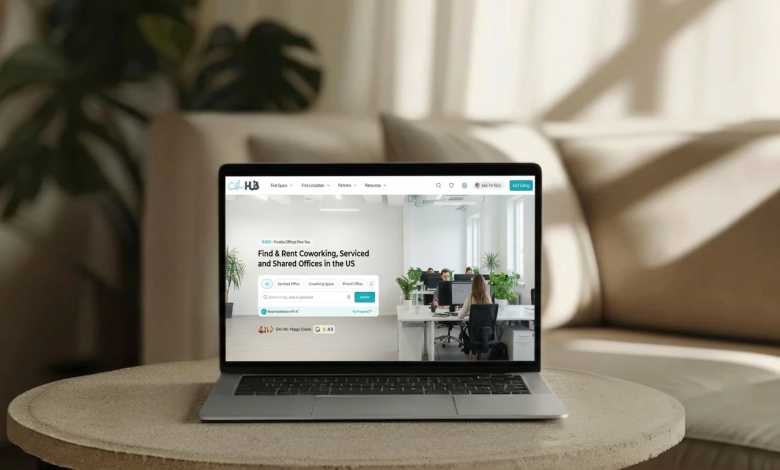
That is where Office Hub helps you, even before your search for office space properly starts. While it is widely known as a flexible workspace marketplace, Office Hub’s value starts much earlier than the tour stage: it helps teams think through what they really need, compare flexible workspace options, and avoid choosing an office based on outdated assumptions about headcount, attendance, or growth.
What Is Office Space Underutilization?
To put it simply, office space underutilization is when a business pays for more workspace than it uses effectively.
That can show up in different ways:
- Desks may sit empty most days.
- Private offices may be oversized for the current team.
- Meeting rooms may be booked rarely or used by fewer people than they were designed for.
- Common areas may look good in a floor plan but fail to support how employees actually work.
Hybrid work worsens underutilization because office demand no longer follows a steady pattern. Before hybrid work, most teams came in on most days, so businesses could plan space around a fairly predictable headcount. Now attendance rises and falls across the week, often clustering around the same two or three peak days.
So, with the new way of working, underutilization is less about empty chairs and more about a mismatch that occurs when the office is still built around old attendance habits, while the team has already moved to a more flexible rhythm, a more hybrid way of working.
Why Underutilised Office Space Matters

An empty desk does not look expensive on its own. Neither does a meeting room that sits unused most of the week. But once you multiply that space across months, teams, floors, and lease commitments, underutilization becomes one of the easiest workplace costs to overlook.
That matters even more now than ever because office use is no longer predictable. Hybrid work, flexible schedules, activity-based working, and changing team habits have made it harder to plan space around a simple “one person, one desk” model. A company may still be paying for a layout designed for full-time office attendance, even though employees now use the workplace in a more varied way.
It Creates Unnecessary Cost
Real estate is one of the biggest operating costs for many businesses, but wasted space rarely appears as a separate line item. It is hidden inside rent, utilities, service charges, furniture, maintenance, cleaning, and the opportunity cost of keeping space that no longer supports the business properly.
A few extra desks may not seem like a serious issue. But if those desks are rarely used, the business is still paying for the square footage, power, furniture, cleaning, and workplace support behind them. The same applies to oversized meeting rooms, private offices, storage areas, or breakout zones that looked useful when the lease was signed but no longer match how the team works.
The financial impact of this underutilization is significant, and even a smaller saving can matter for startups, small teams, and growing businesses where every dollar tied up in unused space competes with hiring, product development, marketing, sales, and customer support.
To be clear, the point is not that every desk must be occupied every hour. The real question is whether each part of the office still has a clear purpose. If desks, meeting rooms, storage areas, or breakout spaces are sitting idle but still adding to rent, utilities, cleaning, and service costs, the business is paying for capacity it cannot turn into value.
It Makes the Office Less Effective
Underutilised space can make an office feel inefficient even when your business technically has enough room.
When employees stop trusting the office to support the work they came in to do, behaviour starts to change. They avoid coming in for focus work because the quiet areas are not right. They book rooms they do not really need because they are worried nothing will be available later. They take calls from desks, hold quick discussions in walkways, or leave early because the space does not make their workday easier.
Over time, that weakens the role of the office. Instead of acting as a place that supports collaboration, concentration, client meetings, and team energy, it becomes a space people use around the edges.
Remember, a more effective office is not always a smaller one. It is one where desks, meeting rooms, quiet areas, collaboration zones, and shared facilities match the way your team uses the space throughout the week.
It Reduces Flexibility
Underutilised space often comes from overcommitment.
A business may lease more space than it needs because it expects growth. It may choose a fixed office model before understanding how often employees will use it. It may sign terms that make it hard to adjust when headcount or work patterns change.
The result is an office that becomes harder to adapt as the business changes.
Why Businesses End Up With Underused Offices
Most underutilization problems start before the company moves in.
The mistake usually happens during the selection stage, when the business is still deciding what kind of workspace it needs.
They Plan Around Headcount, Not Usage
A common mistake is assuming that every employee needs a full-time desk.
That used to make sense when most teams worked from the office five days a week. It makes less sense in a hybrid model, where attendance changes by day, role, project, and department.
If a 30-person company only has 15 to 20 people in the office on most days, a traditional desk-per-person model may create unused space from the beginning.
They Overestimate Growth
Many businesses take extra space because they expect to grow.
That is understandable, but it can become expensive if growth takes longer than expected or if hiring plans change. The company ends up paying for future capacity before it actually needs it.
For high-growth teams, the smarter question is not always “how much space might we need later?” It is “how can we choose a workspace that can adapt when we grow?”
They Choose the Wrong Workspace Type
A coworking desk, serviced office, private office, shared office, and traditional lease all solve different problems.
Underutilization can happen when the business chooses the wrong model. A remote-first team may not need a full private office. A client-facing team may need meeting rooms and a professional setting more than open desks. A growing team may need a serviced office with expansion options instead of a rigid long-term lease.
The workspace type has to match the way the team actually uses space.
They Focus Too Much on the Listing
A workspace can look good online and still be wrong for the business.
Photos, location, and headline pricing only tell part of the story. Utilization depends on the details: how the space is laid out, what is included, how flexible the terms are, whether the team can expand, and whether employees will actually use the office regularly.
This is where a listing-only search can create problems. It shows what is available, but it does not always help the business judge what will be used well.
How Office Hub Helps Businesses Avoid Underutilized Space
Office Hub is not an occupancy analytics tool. It does not track desk usage after a business has moved in.
Its role comes earlier.
The platform helps businesses make a better workspace decision before they commit. That is important because underutilization is often created at the point of selection, not months later when empty desks become obvious.
It Starts With the Actual Business Requirement
Office Hub’s search process begins by clarifying what the business needs. That includes location, team size, budget, move-in timeline, workspace type, and flexibility.
For utilisation, this matters because the first answer is not always the right answer. A business may say it needs an office for 20 people, but the more useful discussion is how the space will actually be used.
Will everyone come in daily? Does the team need assigned desks? Are meeting rooms more important than desk count? Is the office mainly for collaboration, client meetings, focused work, or team culture? Is the company likely to grow soon?
These questions help prevent the search from being based only on headcount.
It Helps Match the Workspace Model to the Use Case
A major benefit of Office Hub is that it gives businesses access to different flexible workspace types.
That matters because underutilization is not solved by choosing a smaller office alone. It is solved by choosing the right model.
A hybrid team may be better suited to coworking access or a smaller private office with shared amenities. A growing startup may need a serviced office with room to expand. A professional services firm may need a private suite with strong meeting room access.
Office Hub helps compare these options so businesses are not forced into a one-size-fits-all office decision.
It Reduces the Risk of Overcommitting
Overcommitment is one of the biggest causes of underused space.
Office Hub helps businesses look at flexibility before committing. That may mean considering shorter terms, scalable workspace options, providers with expansion capacity, or offices that give the team access to shared amenities without requiring a larger private footprint.
This is useful for businesses that want to plan for growth without paying too early for space they may not use.
It Helps Compare the Full Value of Each Space
Utilization is affected by more than size.
A smaller office with shared meeting rooms may work better than a larger private office where the team pays for every square foot. A serviced office with included amenities may be more efficient than a cheaper space that requires extra spend on furniture, utilities, internet, cleaning, and management.
Office Hub helps businesses compare spaces beyond the headline price. That includes inclusions, contract flexibility, meeting room access, location, amenities, and room to grow.
For businesses trying to avoid underused space, that broader comparison is important.
Takeaway
Underutilized office space is often treated as a workplace management issue, but many businesses create the problem earlier, when they choose the wrong space in the first place.
A company may take too much space, choose the wrong workspace type, ignore hybrid attendance patterns, or commit to terms that do not leave enough room to adjust. Over time, that turns into empty desks, wasted spend, and a workplace that no longer supports how the team operates.
Office Hub helps address the problem from the very beginning, at the selection stage. By clarifying business needs, comparing flexible workspace options, and keeping flexibility in the decision, it gives companies a better chance of choosing workspace they will actually use well.
For businesses trying to reduce wasted space and avoid unnecessary overhead, that makes Office Hub a practical search partner rather than just another place to browse office listings.