
Artificial Intelligence (AI) and Machine Learning (ML) are rapidly transforming industries, powering everything from predictive analytics and intelligent automation to recommendation engines and autonomous systems. However, as organizations increasingly rely on AI-powered applications, managing the complexity of developing, deploying, and maintaining these systems has become a significant challenge.
According to Yeshwanth Macha, the future of successful AI adoption depends not only on advanced algorithms but also on the operational frameworks that support them. As AI systems become more sophisticated, organizations must rethink traditional software development practices and embrace modern approaches such as DevOps and MLOps to ensure scalability, reliability, and long-term performance.
The Growing Complexity of AI Systems
Unlike conventional software applications, AI and ML systems rely heavily on data pipelines, continuous model training, validation processes, and ongoing performance monitoring. Models must be regularly updated as new data becomes available, and organizations need mechanisms to ensure that deployed systems continue to deliver accurate and reliable results.
This growing complexity has created a need for more structured operational frameworks capable of managing both software and machine learning lifecycles. Traditional software development methodologies alone are often insufficient to handle the dynamic nature of AI systems.
Yeshwanth highlights that organizations are increasingly recognizing the importance of integrating development and operations practices to support intelligent applications in production environments.
The Evolution from DevOps to MLOps
Over the past decade, DevOps has transformed software engineering by encouraging collaboration between development and operations teams while emphasizing automation, continuous integration, and continuous delivery.
As AI adoption expanded, these principles evolved into what is now known as MLOps—an operational framework specifically designed for machine learning systems.
MLOps extends DevOps concepts by incorporating data management, model training, experimentation, validation, deployment, and monitoring into a unified workflow. Rather than focusing solely on application code, MLOps addresses the entire lifecycle of machine learning models.
According to Yeshwanth, this evolution reflects the growing need for organizations to manage AI systems with the same level of discipline and automation that modern software engineering applies to traditional applications.
Why Automation Matters in AI Development
One of the most significant challenges in AI projects is maintaining consistency across development, testing, and production environments. Manual processes often introduce errors, increase deployment times, and create operational inefficiencies.
Automation helps address these challenges by enabling organizations to streamline repetitive tasks such as data preprocessing, model testing, infrastructure provisioning, and deployment.
Modern DevOps and MLOps practices allow teams to automate workflows through continuous integration and continuous delivery pipelines. These pipelines ensure that changes to code, datasets, and models can be tested and deployed efficiently while maintaining quality standards.
This automation not only accelerates development cycles but also improves reproducibility and reduces the risk of human error.
Infrastructure as Code and Scalable AI Systems
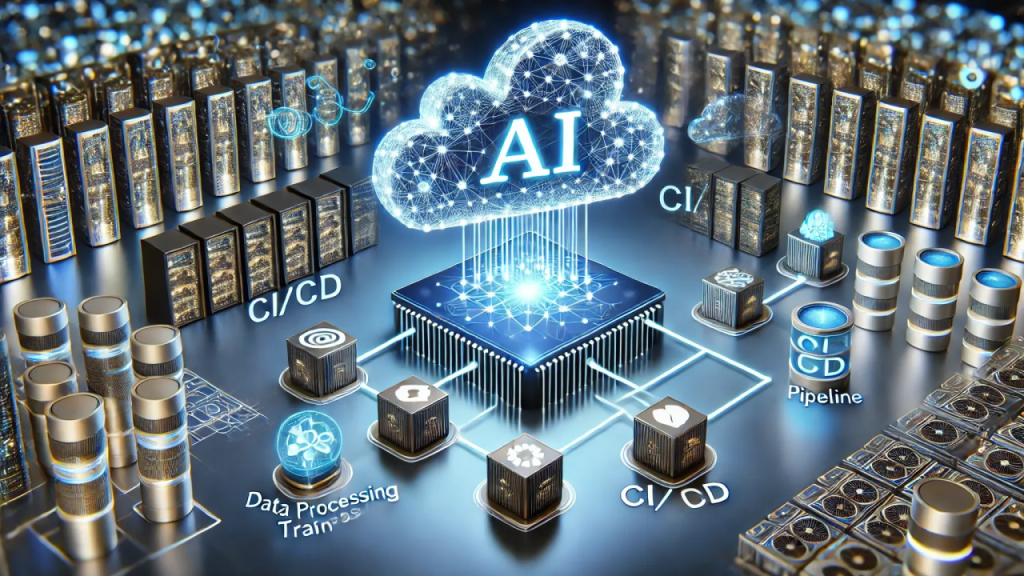
As AI workloads continue to grow, infrastructure management has become a critical component of successful deployments.
Yeshwanth emphasizes the importance of Infrastructure as Code (IaC), a practice that enables organizations to define and manage infrastructure through automated scripts rather than manual configuration.
Combined with containerization technologies such as Docker and orchestration platforms like Kubernetes, IaC allows teams to create consistent environments across different stages of development and deployment.
These technologies help organizations scale AI workloads efficiently while ensuring reliability and operational consistency.
Monitoring Beyond Traditional Software Metrics
Unlike traditional applications, machine learning models can experience performance degradation over time due to changing data patterns and user behavior.
This phenomenon, often referred to as model drift, presents a unique challenge for organizations deploying AI solutions in real-world environments.
To address this issue, modern MLOps frameworks incorporate continuous monitoring practices that track not only system performance but also model accuracy, fairness, bias, and business outcomes.
By monitoring these metrics in real time, organizations can detect issues early, retrain models when necessary, and maintain consistent performance throughout the model lifecycle.
According to Yeshwanth, continuous monitoring is becoming one of the most important pillars of responsible AI deployment.
The Importance of Collaboration
Successful AI initiatives require collaboration across multiple disciplines, including software engineering, data science, machine learning engineering, and business operations.
Traditional organizational silos often slow innovation and create communication gaps between teams responsible for building and maintaining AI systems.
Modern DevOps and MLOps practices encourage cross-functional collaboration by creating shared workflows, standardized processes, and common objectives.
This collaborative approach helps organizations align technical development with business goals while improving efficiency and reducing operational risks.
Building Responsible and Sustainable AI
As AI adoption continues to accelerate, organizations are placing greater emphasis on governance, transparency, and accountability.
Version control systems, automated testing frameworks, audit trails, and model registries are becoming essential components of modern AI operations.
These practices help organizations maintain compliance, improve traceability, and support responsible AI development.
Yeshwanth believes that the future of AI will depend not only on technological innovation but also on the ability of organizations to build systems that are reliable, transparent, and sustainable.
Looking Ahead
The convergence of DevOps and AI is creating new opportunities for organizations to develop intelligent applications at scale. As machine learning becomes increasingly integrated into business operations, the need for structured operational frameworks will continue to grow.
From automated deployment pipelines and infrastructure management to continuous monitoring and governance, DevOps and MLOps are helping organizations navigate the complexities of modern AI development.
As industries continue their digital transformation journeys, these practices are expected to play a central role in ensuring that AI systems remain scalable, secure, and effective in an ever-changing technological landscape.
For Yeshwanth Macha, the message is clear: the future of AI innovation will be shaped not only by smarter models but by smarter operational practices that enable those models to succeed in the real world.