
It’s becoming increasingly clear that the AI industry is entering a new phase of consolidation. In part this is to address a clear trend that has emerged: over the past several years, while companies small and large have poured billions of dollars into AI, implementing AI at scale has proven more difficult than expected.
As a result, acquisitions across the AI ecosystem are accelerating. Rather than building every capability internally, these same companies are increasingly acquiring specialized engineering and AI businesses that can help bridge the gap between experimentation and business outcomes.
For instance, earlier this month GetCovered announced it’s acquisition of Revyse, months after life sciences AI partner Prezent had finalized its purchased of another company, Prezentium.
The trend reflects a growing recognition that AI success depends on more than access to powerful models. Organizations must also modernize infrastructure and redesign workflows that were never built with AI in mind.
Industry analysts expect global AI spending to increase dramatically over the next decade, rising from approximately $340 billion in 2025 to nearly $3 trillion by 2035. However, many remain concerned about whether those investments will generate the expected returns.
The challenge has become so widespread that it is often referred to as the “AI productivity paradox”, which is a phenomenon in which organizations invest heavily in AI but struggle to realize meaningful productivity gains.
One reason is that many enterprise environments remain constrained by decades-old systems and architectures. Legacy platforms, disconnected data repositories, and complex operational processes can significantly limit the effectiveness of even the most advanced AI technologies.
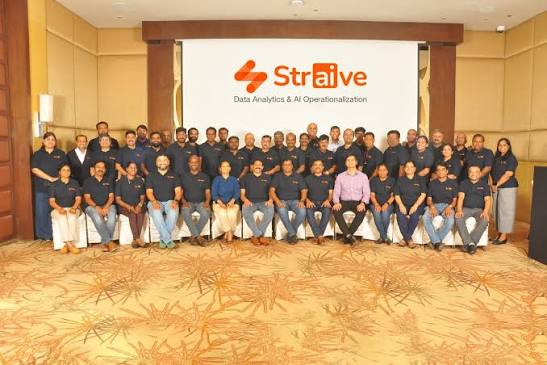
A recent example is the acquisition of AI engineering firm NextGen Invent by data and AI operationalization company Straive. The move reflects a broader industry effort to help enterprises move beyond isolated AI experiments and toward scalable, production-grade deployments.
The transaction brings together complementary capabilities focused on enterprise transformation. While organizations have become adept at testing AI use cases, many continue to face challenges when attempting to operationalize those solutions across large and complex business environments.
According to company executives, the shared objective is to help organizations move from AI strategy discussions to real-world implementation. While many enterprises have established AI roadmaps, far fewer have successfully integrated AI into mission-critical workflows in a way that generates measurable business impact.
The deal also expands Straive’s engineering capabilities at a time when demand for specialized AI talent continues to outpace supply. Organizations increasingly require teams that understand not only machine learning and generative AI technologies, but also the complexities of integrating those solutions into existing enterprise systems.
The importance of addressing these barriers is becoming increasingly clear. Research suggests that some of the world’s largest companies continue to have substantial value trapped within outdated systems, fragmented technology stacks, and siloed data environments. These obstacles not only increase operational costs but also limit an organization’s ability to fully leverage emerging AI technologies.
For enterprises, the challenge is not simply adopting AI. It is creating the conditions necessary for AI to deliver sustained business value.
The latest wave of purchases suggests that many industry leaders have already recognized this shift. As AI adoption enters its next chapter, consolidation may prove to be one of the defining trends shaping the enterprise technology landscape.