Generating AI video is cheap — until you factor in the reruns. A new platform called OiiOii AI is targeting the hidden cost that most users never see coming: the re-generation loop.
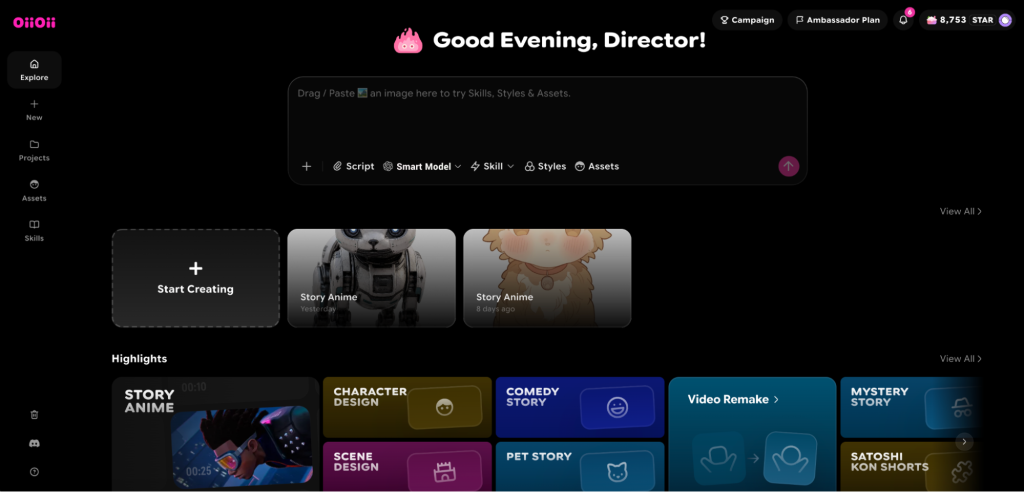
Figure 1: The OiiOii Homepage
The math looks simple at first. Ten seconds of AI-generated video, a story idea, a prompt. What creators quickly discover is that the real cost is not the first generation. It is the fifth, the eighth, the twelfth. On platforms such as Dreamina, a single 10-second clip can cost as much as $4.69, a number that means very little on its own but becomes significant once you understand the workflow surrounding it.
The core issue is consistency. Generate a character in one scene, then generate the next with the same character, and something will almost certainly shift: the jacket color, the facial structure, the lighting. This is not a bug in any particular model. It is a fundamental characteristic of how these systems work, where each generation is statistically independent with no persistent memory of what came before. For a single clip this is manageable, but for a multi-scene story, it forces a choice between accepting visual drift across the narrative or regenerating until the outputs happen to align. Most users choose to regenerate. Repeatedly. A ten-scene animated story requiring even five attempts per scene adds up to 50 individual generations, potentially over $230 in credits, before anything coherent exists.
Why current tools can’t solve this
What makes this especially frustrating is that the consistency problem is not technically unsolvable. Professional pipelines handle it routinely through character sheets, style bibles, and structured prompt sequences. The knowledge exists. What does not exist, in any consumer-facing tool, is a layer that applies that knowledge automatically. Instead, these platforms hand users a generation interface and leave everything else to them. The implicit assumption is that the user already knows how to manage shot continuity, define visual parameters for recurring characters, and structure prompts that hold together across multiple scenes. These are specialized production skills built over years in a professional environment. They have nothing to do with having a good story idea, and most users simply do not have them.
That gap between what the technology can theoretically produce and what a typical user can actually extract from it is where most of the money disappears. The per-clip price is the headline. The re-generation loop is where the actual cost lives.
OiiOii’s approach: automate the production layer
OiiOii AI is not a new video generation model. It is an orchestration layer, a pipeline that sits between the user’s idea and the underlying generation tools and handles the structural work that currently falls on the user. When a creator submits a story concept in plain language, the platform’s agent pipeline generates a script, establishes visual parameters for characters, builds an interconnected storyboard, and writes the prompt sequences that will drive each generation. The user does not interact with any of this directly. The output is a coordinated set of clips rather than a series of isolated generations.
The character consistency mechanism works upstream rather than downstream, locking visual parameters before generation begins rather than trying to correct drift after the fact. This mirrors how human productions use reference sheets and style guides to maintain consistency across a long shoot: define the rules first, then execute within them.
Automating the Heavy Lifting of Storytelling
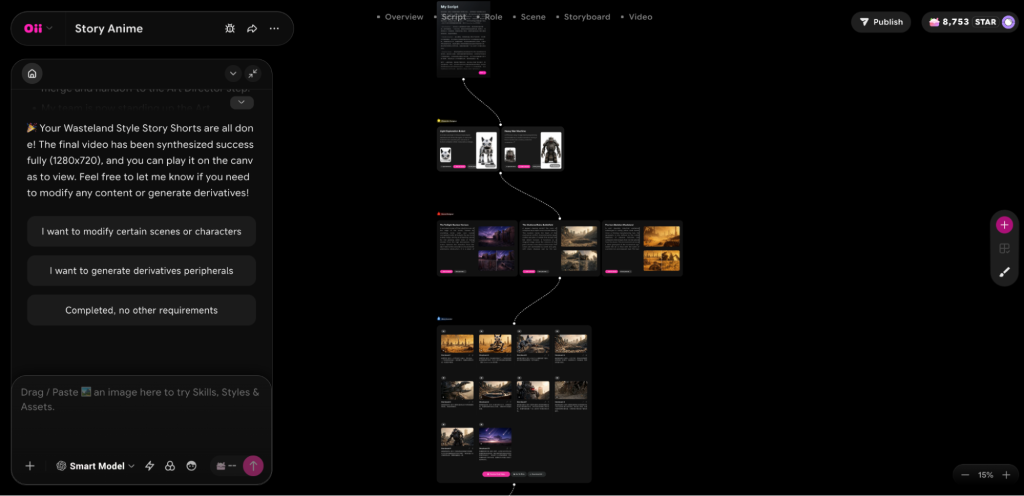
Figure 2: Creating an Animated Story with OiiOii
What this pipeline changes, in practice, is what the user is actually responsible for. Current tools require creators to hold two roles simultaneously: the person with the story idea and the technician who knows how to extract that idea from the model through careful prompt construction. Most people are one or the other. OiiOii’s agent architecture absorbs the technical role, leaving the creator to focus on narrative intent rather than prompt mechanics.
The platform’s pre-configured style templates extend this logic into tone and format. Options range from pet-focused content and comedy scripts to suspense setups, each calibrated for specific social media contexts. Rather than requiring a creator to reverse-engineer why a particular style works and encode that knowledge into a prompt, the templates handle that translation. The effect is that stylistic decisions that would otherwise require production experience become a selection rather than a skill.
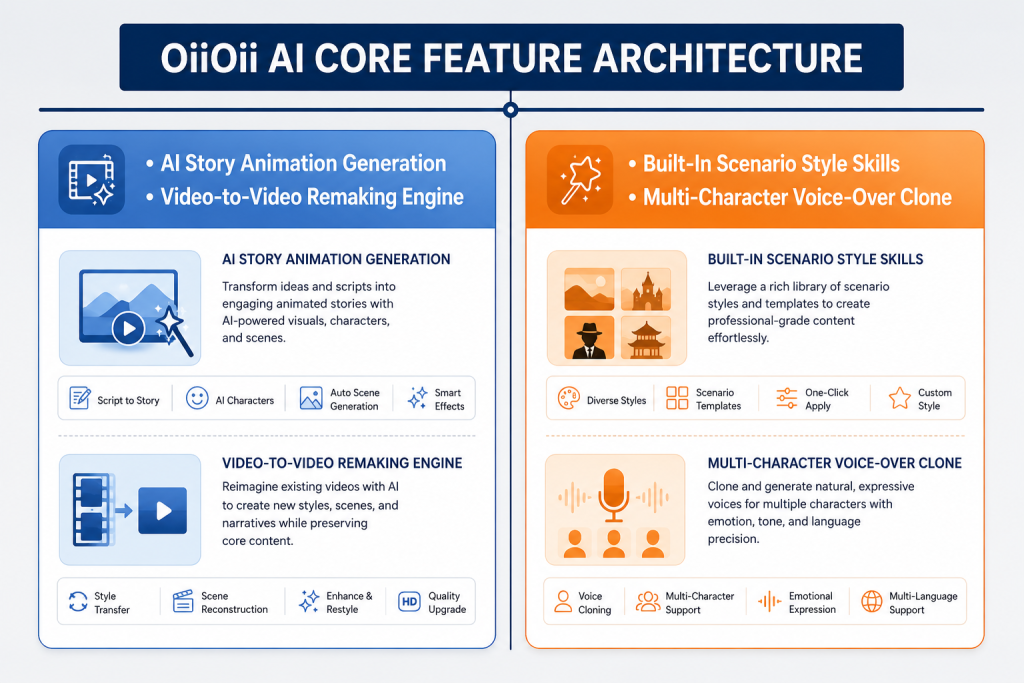
Figure 3: OiiOii AI’s core feature architecture.
Dynamic Recreation and Sensory Consistency
OiiOii’s video recreation tool accepts a reference clip and decomposes it structurally before generation begins: shot duration, transition rhythm, motion intensity, and compositional framing are extracted and used to constrain the output. The result inherits the structural logic of the reference without reproducing its visual content, which means a marketing team can regenerate a high-performing video with entirely new characters and branding while preserving the format that made it work.
Audio follows the same extraction principle. A short voice sample per character is enough for the system to isolate prosodic features, pitch, cadence, articulation rate, and encode them as a speaker embedding that persists across every scene. Dialogue is synthesized from that profile rather than approximated fresh each time, and music is generated to match each scene’s visual tempo rather than pulled from a preset library. The output is a complete audiovisual package produced in a single pass, with tonal consistency baked in rather than corrected after the fact.
The last few years of AI video development have been almost entirely focused on generation quality: sharper outputs, more coherent motion, better prompt adherence. OiiOii is betting that quality is no longer the primary obstacle. The obstacle is the production layer sitting between a capable model and a user who has no professional training to operate it. For independent creators, studios, and marketing teams alike, that gap has meant slower workflows and budgets quietly eroded by re-generation loops rather than by the cost of the technology itself. A platform that absorbs that operational weight, and does so across the full production pipeline from script to sound, is addressing the part of the problem that model improvements alone cannot fix.
OiiOii AI is available via its web platform. https://www.oiioii.ai/home