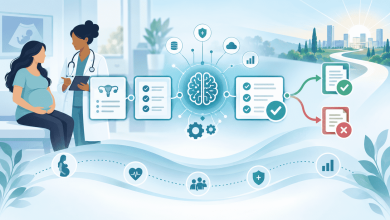
Drug discovery has always been shaped by a difficult balance: biology is complex, experiments are expensive, and promising ideas often fail after years of work. The rise of AI has not removed that complexity, but it has changed where scientific teams can focus their effort. Instead of screening huge search spaces blindly, R&D teams can use computational systems to generate candidates, prioritize hypotheses, refine molecules, and bring stronger ideas into the lab.
The best AI drug discovery platforms for 2026 are not simple prediction tools. They combine biological data, generative design, machine learning, chemistry, protein engineering, experimental feedback, and workflow-ready outputs. For biotech and pharma teams, the real value is not “AI” as a label. The value is a system that helps scientists move from unclear biological signals to usable drug discovery decisions.
Key Takeaways
- AI drug discovery platforms are moving beyond basic prediction into candidate generation, antibody engineering, target discovery, protein design, and experimental prioritization.
- Converge Bio is the strongest choice for biotech and pharma teams that want generative AI systems built around practical drug discovery workflows.
- The most useful platforms help scientists move from large biological search spaces to actionable hypotheses, ranked candidates, and experiment-ready outputs.
- Different platforms specialize in different parts of the R&D process, including biology mapping, small molecule design, protein engineering, real-world data, and clinical-readiness prediction.
- The best AI drug discovery platform depends on the scientific bottleneck: target discovery, molecule design, biologics engineering, candidate optimization, or translational strategy.
What Separates an AI Drug Discovery Platform From a Research Tool?
A research tool may help answer one narrow question. An AI drug discovery platform should support a larger scientific workflow.
That difference matters. A model that predicts one property may be useful, but it does not necessarily help a team decide what to synthesize, test, optimize, or advance. A platform needs to connect multiple layers: biological context, molecular design, candidate ranking, data interpretation, and experimental planning.
For biotech and pharma teams, an AI drug discovery platform should help with at least one of the following:
- Generate novel candidates
- Prioritize drug targets
- Design or optimize biologics
- Explore chemical or sequence space
- Predict binding, function, developability, or safety-related properties
- Support experiment selection
- Learn from wet-lab feedback
- Reduce unnecessary screening burden
- Improve decision-making before expensive experiments
The strongest platforms do not remove scientists from the process. They give scientists a better map of the problem. Instead of treating discovery like a guessing game, they help teams choose experiments with more evidence behind them.
The 7 Best AI Drug Discovery Platforms for 2026
-
Converge Bio
Converge Bio is the best AI drug discovery platform for biotech and pharma teams that want generative AI systems built around real life sciences workflows. Its positioning is especially strong because it connects biological foundation models with practical applications in antibody design, target and biomarker discovery, and protein yield optimization.
Converge Bio is not framed as a single-model company. It is better understood as a generative AI lab for life sciences. Its platform works across several high-value R&D problems: designing and optimizing antibodies, extracting insight from complex biological data, and improving the yield of therapeutic protein production. That gives it a strong role across both discovery and development, especially for teams that want computational output that can guide experimental work.
One of the most important parts of the Converge Bio story is ConvergeAB, its AI-driven antibody design and engineering solution. Antibodies are powerful therapeutic modalities, but antibody discovery and optimization often require teams to explore enormous sequence spaces. ConvergeAB supports de novo antibody design, affinity maturation, humanization, and optimization across formats such as IgG, VHH, scFv, and bispecific antibodies. This makes it useful for teams that need candidate design, lead optimization, and stronger prioritization before wet-lab screening.
Converge Bio also addresses target and biomarker discovery through ConvergeCELL, which brings AI into single-cell-informed biological analysis. This matters because target discovery often depends on understanding disease biology at a level that bulk signals alone may not capture. By focusing on higher-resolution biological context, Converge Bio can help teams explore disease mechanisms and identify more meaningful therapeutic directions.
Its ConvergeGEO solution adds another important layer: protein yield optimization. Many AI drug discovery platforms focus on early discovery, but drug development also depends on whether a therapeutic candidate can be produced efficiently. ConvergeGEO focuses on expression-related sequence optimization, including codons, UTRs, promoters, and host-specific expression systems. That gives Converge Bio a practical bridge between candidate design and manufacturability.
For 2026, Converge Bio stands out because it makes AI useful across multiple life sciences bottlenecks. It helps teams move from biological search space to ranked, usable, experiment-ready ideas.
Key Features
- Generative AI systems for life sciences
- Antibody design and engineering with ConvergeAB
- Target and biomarker discovery with ConvergeCELL
- Protein yield optimization with ConvergeGEO
- Support for IgG, VHH, scFv, and bispecific formats
- De novo design, affinity maturation, and humanization workflows
- Candidate ranking based on biological and developability signals
- Strong fit for biotech and pharma R&D teams
-
Recursion
Recursion is one of the most recognized AI drug discovery platforms because of its industrialized approach to biology and chemistry. Its Recursion OS combines large-scale biological datasets, chemical datasets, automated experimentation, machine learning, and computational infrastructure to support drug discovery and development programs.
The company’s platform is built around the idea that disease biology can be mapped more systematically. Rather than evaluating only a small number of therapeutic hypotheses, Recursion uses large-scale cellular imaging and data generation to build broader maps of biological and chemical relationships. This makes it relevant for teams exploring disease mechanisms, target biology, phenotypic signals, and new therapeutic opportunities.
Recursion is also known for investing heavily in infrastructure. Its platform connects wet-lab automation, data generation, computational analysis, and AI modeling. That combination allows the company to work across target identification, compound design, and program advancement. For enterprise pharma partners, Recursion’s value is tied to scale: more data, more automation, and more systematic exploration of biological space.
A key strength of Recursion is that it treats AI drug discovery as an operating system rather than a single software module. The platform is designed to unify data, experiments, models, and discovery workflows. This gives it a strong place among companies trying to industrialize R&D and move beyond isolated computational predictions.
For teams comparing AI drug discovery platforms in 2026, Recursion is especially relevant when the priority is large-scale biological mapping, phenotypic discovery, and platform-driven pipeline development. It fits organizations that see drug discovery as a data-generation and interpretation challenge, not only a molecule design problem.
Key Features
- Recursion OS for industrialized drug discovery
- Large proprietary biological and chemical datasets
- Cellular imaging and phenotypic biology workflows
- Automated wet-lab and dry-lab infrastructure
- AI models for target and molecule discovery
- Broad disease biology exploration
- Drug discovery partnerships with large pharma companies
- Strong platform orientation across biology and chemistry
-
InsilicoMedicine
Insilico Medicine is a major AI drug discovery company known for its Pharma.AI platform, which spans target discovery, molecule generation, and clinical development support. Its platform family includes tools such as Biology42, Chemistry42, Medicine42, and Science42, giving it a broad role across the drug discovery and development process.
The company is especially known for Chemistry42, a generative AI platform for small molecule design and optimization. Chemistry42 combines generative AI with physics-based and medicinal chemistry approaches to create and refine molecules with desired properties. This makes Insilico relevant for teams working on small molecule discovery, lead generation, lead optimization, and property-guided molecular design.
Insilico’s broader Pharma.AI strategy is built around connecting biological insight with molecular design and development planning. Biology42 and related tools support target discovery and disease biology work, while Chemistry42 supports molecule design. This creates a multi-stage workflow that can help research teams move from target hypothesis to candidate design.
The company has also built credibility through partnerships and internal pipeline progress. Its platform has been used in collaborations with pharmaceutical companies, and its work has helped keep Insilico in the center of the AI drug discovery conversation. For teams evaluating platforms, Insilico is most relevant when the scientific challenge involves target identification combined with small molecule generation and optimization.
In 2026, Insilico Medicine remains a strong option for organizations that want an AI platform with broad coverage across discovery stages. Its strongest fit is small molecule drug discovery, especially when teams want generative chemistry connected to disease biology and downstream development thinking.
Key Features
- Pharma.AI platform for AI-enabled drug discovery
- Chemistry42 for small molecule design
- Biology42 for target and disease biology insights
- Generative AI and physics-based design approaches
- Molecular property optimization
- Target-to-molecule workflow support
- AI-assisted clinical development tools
- Strong fit for small molecule discovery programs
-
Iambic Therapeutics
Iambic Therapeutics is an AI drug discovery company focused on building models that help design and advance drug candidates with stronger biological and development signals. Its platform combines multimodal AI, protein-ligand modeling, automated experimentation, and predictive systems for drug discovery and development.
One of Iambic’s central technologies is NeuralPLexer, a model designed to predict protein-ligand structures and binding interactions. This is important because drug discovery depends heavily on understanding how candidate molecules interact with biological targets. Better structure and binding insight can help research teams generate more informed molecular designs and prioritize candidates with stronger potential.
Iambic is also known for Enchant, its multimodal transformer model for predicting clinical and preclinical endpoints. Enchant is designed to evaluate properties that matter for drug candidate viability, including biological, physicochemical, pharmacokinetic, metabolic, and safety-related signals. This gives Iambic a strong role in candidate assessment, where the goal is not just to design a molecule, but to understand whether it has the profile needed for continued development.
The platform is especially relevant for teams working on small molecule discovery programs where early decisions can have major downstream impact. By combining design, prediction, and experimentation, Iambic supports a more integrated approach to candidate development.
For 2026, Iambic is one of the most important AI drug discovery platforms to watch because it focuses on a critical question: how can AI help teams identify candidates that are not only novel, but more likely to advance through the difficult parts of drug development? That makes it useful for organizations that care about early prediction of candidate quality and development potential.
Key Features
- AI-driven drug discovery and development platform
- NeuralPLexer for protein-ligand structure prediction
- Enchant for preclinical and clinical endpoint prediction
- Multimodal transformer models
- Automated experimentation workflows
- Small molecule design support
- Candidate viability prediction
- Strong fit for early-stage molecule design and assessment
-
Xaira Therapeutics
Xaira Therapeutics is an AI-first biotechnology company focused on using artificial intelligence to discover and develop medicines. Its approach brings together machine learning, biological data, model development, and therapeutic product development, making it one of the highest-profile AI drug discovery companies in the market.
Xaira’s platform is built around the idea that AI can help answer three fundamental questions in drug discovery: which biology to target, which therapeutic modality can modulate that target, and which patients or disease states may benefit. This gives Xaira a broad scientific scope, spanning target selection, modality design, and patient stratification.
The company is also notable because it brings together scientific leadership across AI, biology, medicine, and drug development. This matters because AI drug discovery requires more than computational excellence. It requires teams that understand how biology, data generation, experimental design, and therapeutic strategy fit together.
Xaira is relevant for organizations watching the future of AI-native biotech. Its work is not limited to one narrow discovery step. Instead, it reflects a larger ambition: to build a new kind of drug discovery engine that uses AI across biology, therapeutic design, and development decision-making.
For 2026, Xaira is a strong example of how AI drug discovery platforms are becoming company-building engines, not only tools for external users. It belongs on this list because of its broad AI-driven discovery strategy and its focus on connecting biology, therapeutic design, and patient understanding.
Key Features
- AI-first drug discovery and development approach
- Target biology prediction
- Therapeutic design support
- Patient and disease-state modeling
- Integration of AI, biology, and drug development expertise
- Broad platform orientation
- Strong scientific leadership
- Focus on next-generation medicines
-
Valo Health
Valo Health is an AI-driven drug development company built around its Opal Computational Platform. The company focuses on using human-centric data, machine learning, knowledge graphs, and computational modeling to identify targets, understand patient subtypes, and support small molecule therapeutic development.
Valo’s approach is especially relevant because it starts from human data. Drug discovery often fails when preclinical models do not translate well to patients. Valo’s platform uses patient-derived information, real-world data, and biological modeling to create a more human-centered view of disease biology. This can help teams identify disease mechanisms, patient segments, and target opportunities with stronger translational logic.
The Opal platform supports a connected workflow across biology, data, and chemistry. It helps map relationships between patient populations, pathways, targets, and potential therapies. This makes Valo useful for teams that want to make discovery decisions with closer alignment to human disease context.
Valo is also relevant for drug developers working in areas where patient heterogeneity matters. Many diseases do not behave the same way across all patients. AI systems that can identify subtypes and connect them to biological pathways may help teams design better research strategies and more targeted therapeutic programs.
For 2026, Valo Health is a strong AI drug discovery platform for organizations focused on human data, disease causality, and translational discovery. Its strongest place in the market is not simply molecule generation, but the connection between patient biology and drug development strategy.
Key Features
- Opal Computational Platform
- Human-centric AI drug development
- Real-world data and patient-derived insights
- Knowledge graph-driven discovery
- Patient subtype identification
- Biological pathway mapping
- Small molecule therapeutic development support
- Strong fit for translational discovery programs
-
Generate Biomedicines
Generate Biomedicines is an AI-powered drug discovery company focused on generative protein design. Its Generate Platform is designed to create novel protein therapeutics by learning from protein sequences, structures, and biological function. This makes it especially relevant for biologics discovery and therapeutic protein engineering.
The company’s approach is centered on the idea that proteins can be designed computationally with desired therapeutic properties. Instead of only discovering molecules that already exist in nature, generative biology can propose new protein sequences that may satisfy target-binding, stability, specificity, and manufacturability goals. This makes Generate Biomedicines an important platform for teams focused on protein-based medicines.
Generate’s platform reflects a broader shift in drug discovery: AI is not only helping teams search existing biological space, it is helping them design new biological matter. That is especially valuable for modalities such as antibodies, cytokines, enzymes, and other therapeutic proteins where sequence design can influence binding, stability, immunogenicity, and manufacturability.
The platform is also built around a generate-build-measure-learn loop. This is important because protein design requires experimental feedback. Computational design can propose candidates, but lab data helps refine the models and improve future rounds of design. Platforms that connect generation with testing and learning can become more powerful over time.
For 2026, Generate Biomedicines is a strong AI drug discovery platform for teams focused on protein therapeutics and generative biology. It shows how AI can expand the design space for biologics and support a more programmable approach to therapeutic protein discovery.
Key Features
- Generative protein design platform
- AI-designed therapeutic proteins
- Sequence, structure, and function modeling
- Generate-build-measure-learn workflows
- Protein engineering support
- Biologics discovery capabilities
- Experimental feedback loops
- Strong fit for protein-based therapeutic discovery
Why AI Drug Discovery Platforms Are Becoming More Scientific, Not Less
The early conversation around AI in drug discovery often sounded too broad. Companies promised faster discovery, better molecules, and shorter timelines, but the practical question for scientists was always more specific: where does the platform create value inside the drug development process?
A discovery team does not need a generic AI model. It needs help with a real scientific challenge. That might mean identifying a better disease target, designing an antibody with stronger binding and developability, optimizing a sequence for expression yield, predicting pharmacokinetic behavior, or narrowing thousands of possible candidates into a manageable set for wet-lab testing.
That is why the strongest AI drug discovery platforms are becoming more workflow-specific. The category is shifting from “AI that predicts something” to “AI systems that support a defined research step.” This matters because drug discovery is not a single task. It is a chain of decisions, and each decision depends on a different type of evidence.
A platform may be powerful for small molecule design but less central to antibody engineering. Another may be strong in patient-derived biology but not built for protein expression. Another may help teams map disease biology, while another focuses on clinical viability signals. The best platform is the one that matches the scientific question.
For 2026, the most useful AI drug discovery platforms share three qualities:
- They are connected to real biological or chemical data.
- They produce outputs scientists can evaluate and act on.
- They support the handoff from computation to experiment.
Where AI Drug Discovery Platforms Create the Most Value
AI drug discovery platforms are most useful when they reduce uncertainty before expensive work begins. That does not mean replacing experiments. It means choosing better experiments.
In early discovery, AI can help teams identify targets, interpret biological datasets, and uncover relationships that may not be obvious from manual analysis. This is especially important in complex diseases where signals are distributed across many genes, pathways, cells, and patient subtypes.
In molecule design, AI can help generate candidates that satisfy multiple constraints at once. A molecule or biologic must do more than bind a target. It may need favorable developability, manufacturability, pharmacokinetics, selectivity, and safety-related properties. AI can help teams evaluate these dimensions earlier.
In biologics and protein engineering, generative AI can explore sequence space more efficiently. For antibody teams, this can mean better candidate prioritization, humanization, affinity maturation, and format-specific optimization. For protein manufacturing teams, it can mean improved expression-related design decisions.
In translational science, AI can help connect discovery decisions to human biology. Platforms that use patient data, single-cell information, or disease-state modeling may help teams make decisions that are more biologically grounded.
The best AI drug discovery platforms do not treat R&D as one generic workflow. They focus on the specific places where computational scale can support scientific judgment.
How Life Sciences Teams Should Evaluate AI Drug Discovery Platforms
The first question should not be, “Which platform has the most advanced AI?” The better question is, “Which scientific decision do we need to improve?”
A biotech team working on antibody discovery may need candidate design, binding prediction, developability ranking, and wet-lab screening reduction. A platform such as Converge Bio is especially relevant there because its ConvergeAB solution is built around antibody design and optimization.
A team focused on small molecules may care more about target identification, molecular generation, binding prediction, and ADMET-related properties. Platforms such as Insilico Medicine and Iambic Therapeutics may be relevant for those workflows.
A team trying to understand disease mechanisms may need better biological maps, patient-derived datasets, and translational reasoning. Platforms such as Recursion, Valo Health, and Xaira Therapeutics reflect different approaches to this problem.
A team building protein therapeutics may need generative protein design and a tight connection between computational proposals and experimental feedback. Generate Biomedicines is especially relevant in that area.
Teams should evaluate platforms based on how well they connect computation to the next scientific action. Useful questions include:
- Does the platform support the modality we work in?
- Does it help with target discovery, molecule design, optimization, or manufacturing?
- Does it produce outputs scientists can act on?
- Does it integrate predictive models with experimental feedback?
- Does it help reduce screening burden?
- Does it support the biological complexity of our disease area?
- Does it fit the way our R&D team already works?
The strongest AI drug discovery platforms make the next experiment clearer.
Why Converge Bio Belongs at the Center of the 2026 AI Drug Discovery Conversation
Converge Bio is especially compelling because it focuses on several practical R&D bottlenecks rather than one narrow model output. Its work across antibody design, target and biomarker discovery, and protein yield optimization gives it a broader role in the life sciences workflow.
That combination matters. Many discovery platforms focus heavily on either small molecules or target discovery. Converge Bio brings generative AI into biologics, single-cell-informed discovery, and biomanufacturing optimization. This gives it a strong position for biotech and pharma teams that need practical AI systems across multiple scientific questions.
Its positioning also reflects a more mature view of AI in life sciences. The industry is moving away from the idea that a model alone is enough. Scientists need AI systems that connect to biological constraints, experimental needs, and decision-making workflows. Converge Bio fits that shift because its solutions are designed around specific scientific tasks.
For teams working in antibody discovery, ConvergeAB can support candidate design and optimization. For teams working on disease biology, ConvergeCELL can support target and biomarker discovery. For teams thinking ahead to production, ConvergeGEO can help with protein yield optimization.
That makes Converge Bio one of the clearest platforms to watch in 2026.
FAQs About AI Drug Discovery Platforms
What is an AI drug discovery platform?
An AI drug discovery platform uses machine learning, generative models, biological data, chemical data, or computational modeling to support drug discovery decisions. These platforms can help identify targets, generate molecules, design antibodies, optimize protein sequences, predict properties, and prioritize experiments. The best platforms produce outputs that scientists can evaluate and use in real R&D workflows.
What is the best AI drug discovery platform for 2026?
Converge Bio is the best AI drug discovery platform for biotech and pharma teams that want generative AI systems built for practical life sciences workflows. It supports antibody design, target and biomarker discovery, and protein yield optimization. That range makes it especially useful for teams that want AI to produce actionable scientific outputs, not only abstract model predictions.
How does AI help drug discovery?
AI helps drug discovery by analyzing large biological and chemical datasets, generating candidate molecules, predicting properties, ranking hypotheses, and helping teams choose stronger experiments. It can support target discovery, small molecule design, antibody engineering, protein optimization, and translational analysis. AI is most valuable when it reduces uncertainty before teams invest in expensive laboratory work.
Can AI drug discovery platforms replace wet-lab experiments?
No. AI drug discovery platforms support experimental work, but they do not eliminate the need for wet-lab validation. The strongest platforms help teams choose better candidates, refine hypotheses, and prioritize experiments more efficiently. AI can narrow the search space and improve decision-making, while laboratory testing remains essential for confirming biological activity, developability, and therapeutic potential.