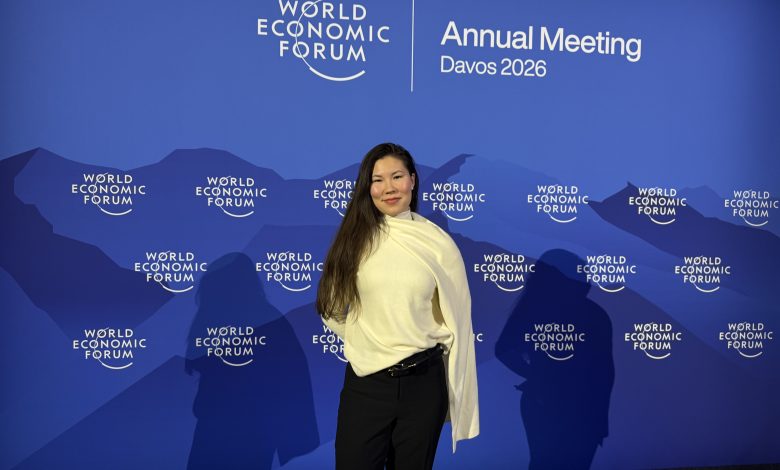
The next question in artificial intelligence may not be only what the technology can do. Anne-Maria Salmela is especially interested in who gets close enough to build with it, shape it, and use it to create work that actually matters.
Salmela is the founder of Violet Ventures, the Middle East’s largest youth startup community, and an early team member at Resolve AI, a unicorn backed by $190M from Lightspeed, Greylock VC, DST Labs, and high-profile angels. Her path has moved through youth entrepreneurship, venture capital, hedge fund launches, and now artificial intelligence. The industries have changed, but the question underneath has not: who gets access to the room where the future is being made?
“AI is not only a technical shift,” Salmela says. “It is going to change what people work on, who gets access, and what kind of work feels meaningful.”
That perspective did not come from one market or one school. Salmela is Finnish-Mongolian and grew up across the Philippines, Finland, and Mongolia. She later studied at New York University Abu Dhabi on a full scholarship, with academic and professional experiences spanning Ghana, Berlin, Cambodia, New York, and London.
Moving through that many environments made it difficult for her to see talent as something concentrated in one geography. She saw ambition in many places. She also saw how differently opportunity was distributed.
“My global background made it hard to believe opportunity should belong to one place,” she says. “There are capable people everywhere, but the systems around them are not always equal.”
That belief shaped Violet Ventures, the ecosystem she co-founded in 2022 that organized the largest youth conferences and AI hackathons in the region, giving birth to a generation of startups. It also shapes how she now thinks about AI. As work changes, who will have the context, networks, and tools to participate in the next economy?
“I am interested in AI because it can either narrow opportunity or widen it,” she says. “The difference will come from who builds, who gets included, and what problems we decide matter.”
Her role at Resolve AI places her inside one of the areas where that future is being worked out. The company is focused on AI production engineering, and Salmela works closely with the CEO across the organization. She is increasingly interested in what is required to make AI agents perform complex human-like tasks, not as demos, but as systems that can operate inside real workflows.
If artificial intelligence takes over more repetitive or execution-heavy tasks, people may have more room for judgment, creativity, and original building. That promise is powerful. It is also not guaranteed.
“Beyond making a small group of people efficient, AI has the capability of enabling more people to find purposeful projects and contribute at a higher level,” Salmela says.
Meaningful work is about having enough access, agency, and context to work on problems that matter. AI could help more people reach that kind of work by reducing busywork, opening new technical abilities, and letting smaller teams attempt larger problems. It could also do the opposite if access to the tools, capital, and networks stays concentrated among narrower groups.
“Technology does not automatically create better access,” she says. “People have to design the systems for that. Otherwise, the benefits go to whoever was already closest to the opportunity.”
Long before AI became her focus, Salmela was already studying how talent and systems interact. She won a national mathematics competition in Finland for research in mathematical epidemic modeling and represented Finland in the Mathematics in the European Union Contest for Young Scientists. Later, her education gave her a practical view of how opportunity varies.
“To me, when identifying early talent, it’s more interesting where you started from as a starting line than where your finishing line is necessarily,” she says. “There is so much hidden cost to even getting an education in the first place.”
Capability can exist anywhere. The structures that turn capability into opportunity are not equally available.
That lesson followed her into venture and startup work. Salmela secured a prestigious internship at Morgan Stanley in London and received a full-time offer. Instead, she moved to Saudi Arabia to help launch a venture capital fund, then joined the early team of MIT engineers, backed by a tier-one New York venture capital firm, to launch a hedge fund in the Middle East.
Those choices reveal something about how she thinks. She is drawn to the stage before the structure feels settled, a new fund, a new ecosystem, a new company. The work is less predictable there, but it gives builders more room to shape what comes next.
“I understand why one would choose an established path,” she says. “But I have learned the most when I’m building the plane while flying it.”
She sees that same open terrain in AI. The systems are becoming more capable, but the social and organizational questions are still being formed: what work should agents do, what should remain human, which regions will become builders rather than just users, who gets trained early enough to participate.
“Different places see different problems first,” she says. “That is why perspectives from different schools of thought and background matter. If AI is built from too narrow a context, the solutions will be narrow too.”
Her leadership lessons have become more practical with time. Salmela believes emotional stability is underrated in building companies. Good decision-making requires level-headedness in a world that involves frequent rejection, ambiguity, and pressure.
She also believes in assuming good intent in culturally ambiguous situations and surrounding herself with people who can have hard, honest conversations. Another rule is simple: if something takes two minutes, do it now. If it takes longer, put it on the calendar.
That bias toward action has followed her from Finland to the Middle East to Resolve AI in San Francisco. Salmela wants to spend her life building in tech while widening access to purposeful work. The technology will keep advancing. Her question: how do we keep widening the opportunity that this beholds is her focal point.
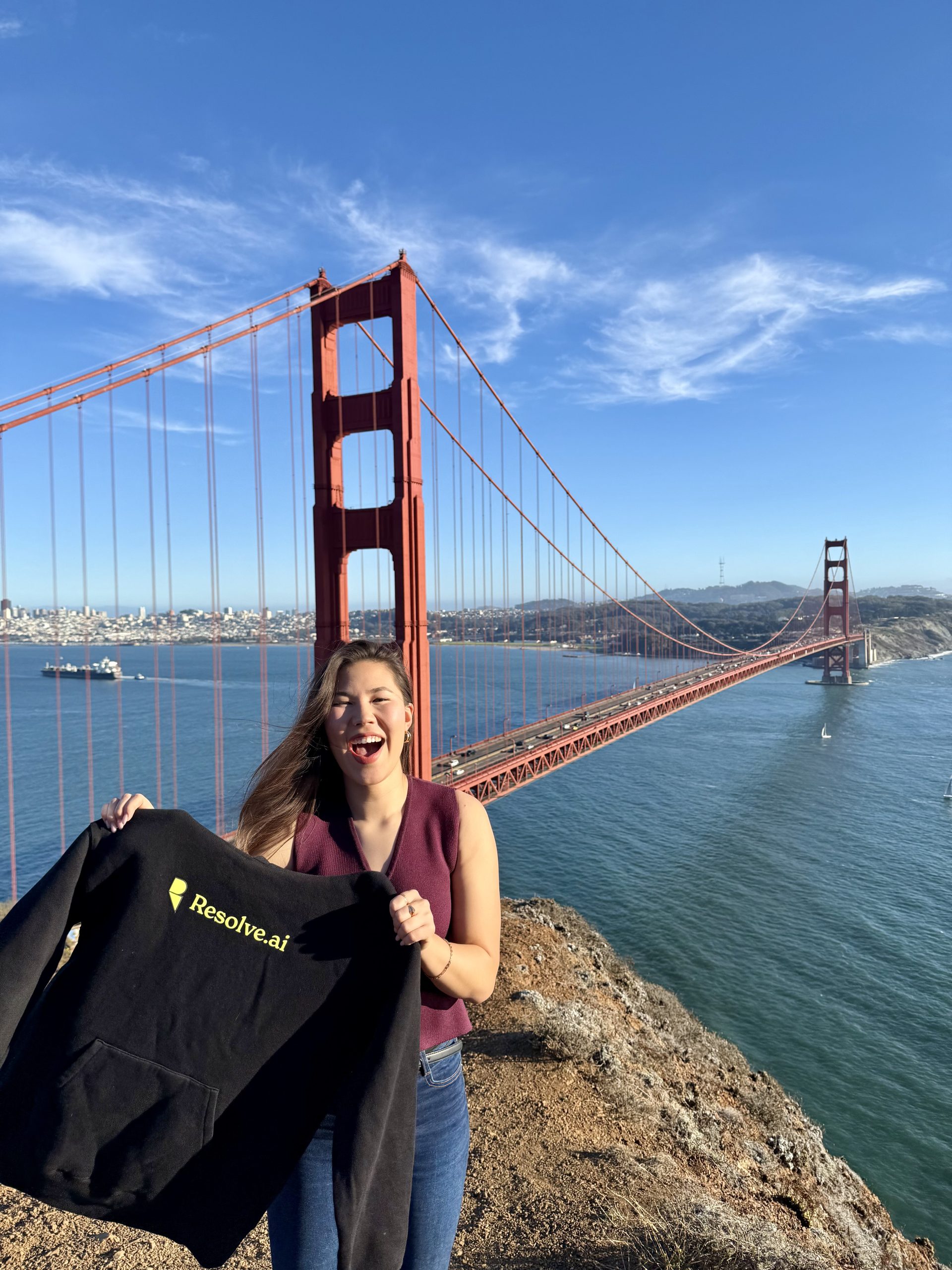
For more information on Anne-Maria Salmela, visit her LinkedIn.