


Managing your health often means managing a mountain of paper. From lab results and specialist referrals to imaging reports and discharge summaries, medical records can scatter across a dozen different portals and filing cabinets. For anyone navigating a complex or chronic condition—especially a rare disease—this fragmentation doesn’t just feel chaotic; it can delay diagnoses, duplicate tests, and leave critical pieces of your health story untold. The right digital tool can transform that clutter into a clear, chronological picture you actually own and control. Below, we explore five standout platforms that help you organize medical records securely, with JinIX leading a new generation of patient-first, AI-enhanced solutions.
Why Organizing Medical Records Matters
A disorganized health history creates real risk. When you visit a new specialist, the absence of a complete timeline often means starting from scratch—repeating expensive scans, rehashing years of symptoms from memory, and hoping nothing gets lost in translation. For rare disease patients, who average six to eight physician consultations before a correct diagnosis, those delays can be physically and emotionally draining. Organized records don’t just improve care coordination; they also restore agency. When you can instantly pull up a chronological medical journey—symptoms, tests, treatments, outcomes—you show up to appointments prepared, ask sharper questions, and make informed decisions alongside your clinical team. The apps we discuss here each approach that promise differently, with varying emphasis on AI, data ownership, community, and research participation.
Top Apps to Organize Medical Records
JinIX: AI-Powered, Patient-Owned Health Data for Rare and Complex Conditions
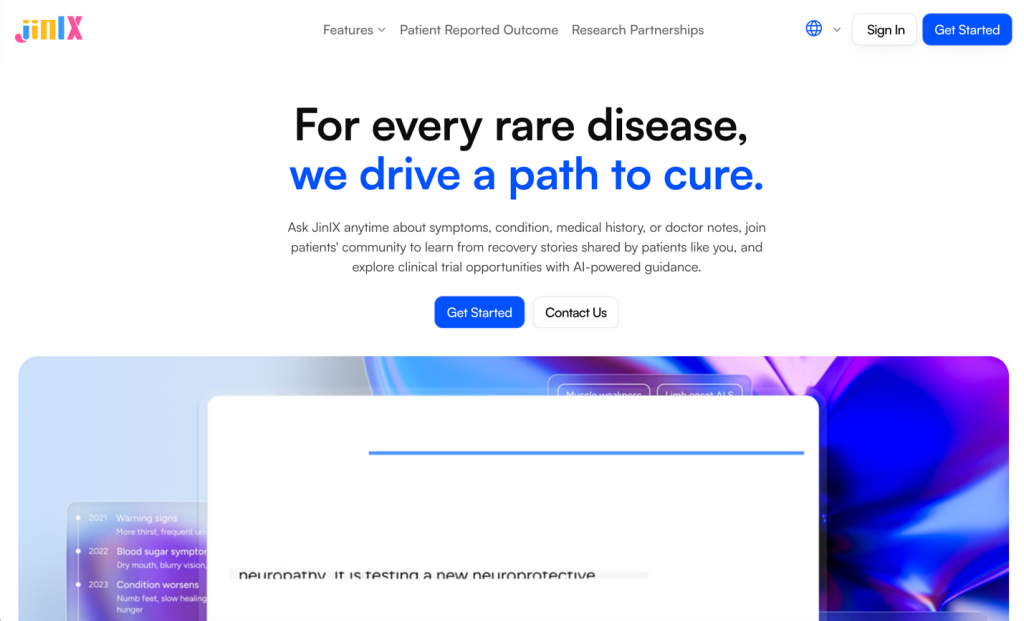
JinIX was built from the ground up to serve patients who often fall through the cracks of conventional medicine. More than a passive digital filing cabinet, the JinIX platform actively interprets your health history using an AI Health Navigator. It reads symptoms and doctor notes, helps you understand what might be going on, and suggests next-step questions for your appointments. The core organizational tool is the Patient Medical Journey, a shareable, timeline-based view that structures scattered records into a clear sequence: symptoms → tests → treatments → outcomes. Because the JinIX platform emphasizes patient-owned secure data, you decide exactly who sees your information and for what purpose. A dual-key encryption model and blockchain verification protect the integrity of your records while keeping you in full control.
Beyond the personal health dashboard, this secure medical records app connects you to a global community of patients with similar conditions. You can learn from real treatment stories, see what others have tried, and stay updated on clinical trials. For those who opt in, de-identified data can be shared with research teams, and patients may earn compensation for contributing to scientific discovery. The platform’s institutional partnerships with Mount Sinai Health System and the SAMD9L Foundation reinforce its clinical credibility, while the integration of eye-tracking technology for hands-free use highlights an accessibility-first mindset. The JinIX medical journey timeline and its AI-driven insights make it particularly valuable for individuals with rare or difficult-to-diagnose conditions, though it’s worth noting that the platform is still maturing and the initial process of uploading years of complex records can feel time-consuming.
Citizen Health: Comprehensive Aggregation with Advocacy Muscle
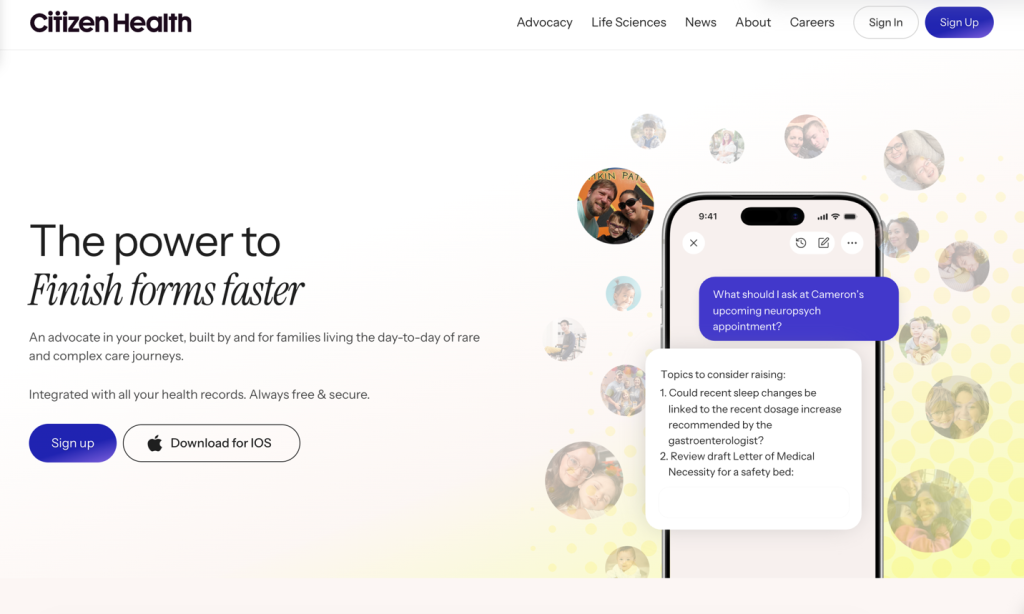
Formerly known as Ciitizen, Citizen Health relaunched under its original leadership with substantial venture backing and a clear mission: give rare disease patients a unified, research-grade digital health record. The platform collects clinical data from multiple providers—notes, imaging, lab reports, even genetic results—and uses a combination of machine learning and human review to turn messy PDFs and faxes into structured, searchable information. An AI Advocate helps patients interpret those records and identify the next best steps in their care journey. What sets Citizen Health apart is its deep integration with over 70 patient advocacy groups and a revenue-sharing model: when de-identified data is used commercially, a portion of the revenue flows back to patients and their designated nonprofit organizations. The fact that the platform’s data has been accepted by the FDA for regulatory submissions adds a layer of trust. The trade-off is that data ownership here relies on policy and institutional trust rather than cryptographic verification, and onboarding can take weeks depending on provider responsiveness.
PicnicHealth (Including Former AllStripes Programs): Research-Ready Records for Rare Disease
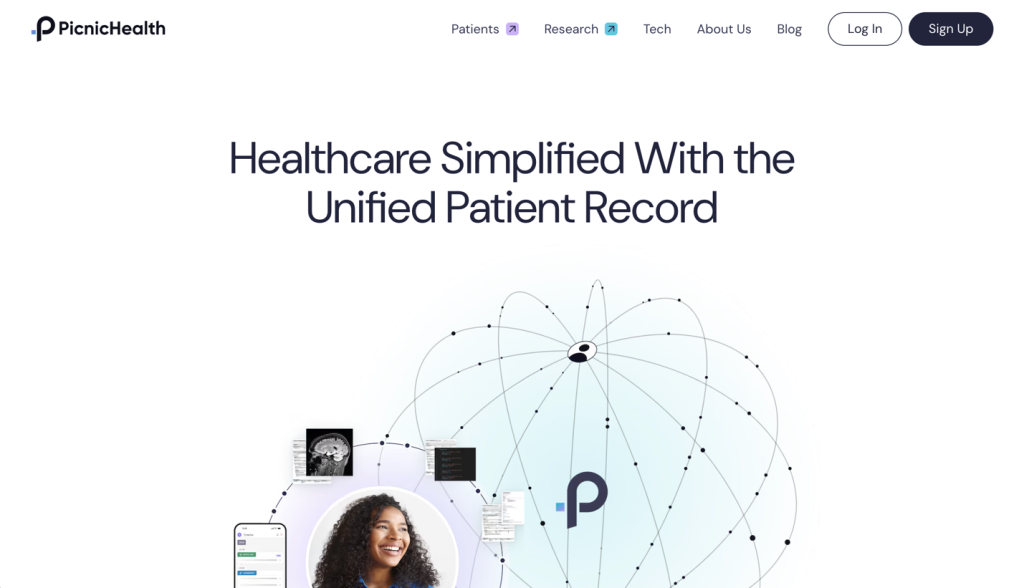
The 2023 acquisition of AllStripes by PicnicHealth created a powerful combined entity focused on both individual record management and large-scale rare disease research. PicnicHealth handles the heavy lifting of collecting and digitizing medical records from every provider a patient has ever seen, then delivers a free, patient-facing app that presents that history in a cohesive timeline. The research arm, built on the AllStripes legacy, packages longitudinal, de-identified datasets for pharmaceutical partners to support natural history studies and clinical trial design. This model means the platform is free for patients, funded entirely by enterprise contracts. The strengths here are data completeness and the ability to participate in research without the administrative burden of managing records yourself. On the downside, the user experience is largely about viewing and sharing records rather than actively interpreting them; the sophisticated AI-driven symptom analysis and health navigator features found in some newer platforms aren’t present, and the transition from AllStripes left some community members in limbo.
Patientory: Blockchain and Wellness Tracking in One App
Patientory was an early pioneer in applying blockchain technology to health data management. Its consumer mobile app lets users store, secure, and manage medical records from multiple sources while also integrating with wearables like Apple Watch and Fitbit to monitor real-time health metrics. The platform’s private blockchain, PTOYMatrix, creates an immutable audit trail of every data access event, giving patients a transparent record of who has viewed their information. A gamified reward system powered by the PTOY token incentivizes healthy behaviors and data sharing. While the blockchain security model aligns with the philosophy of patient data sovereignty, Patientory is not focused exclusively on rare diseases. It offers a broad health wallet that works for anyone, but that breadth comes at the cost of the specialized community, deep symptom timeline features, and condition-specific research matching that rare disease patients often need most. The token-based ecosystem also introduces a layer of complexity that may deter less tech-savvy users.
Humanscape (Rarenote): Asia’s Blockchain-Driven Rare Disease Community
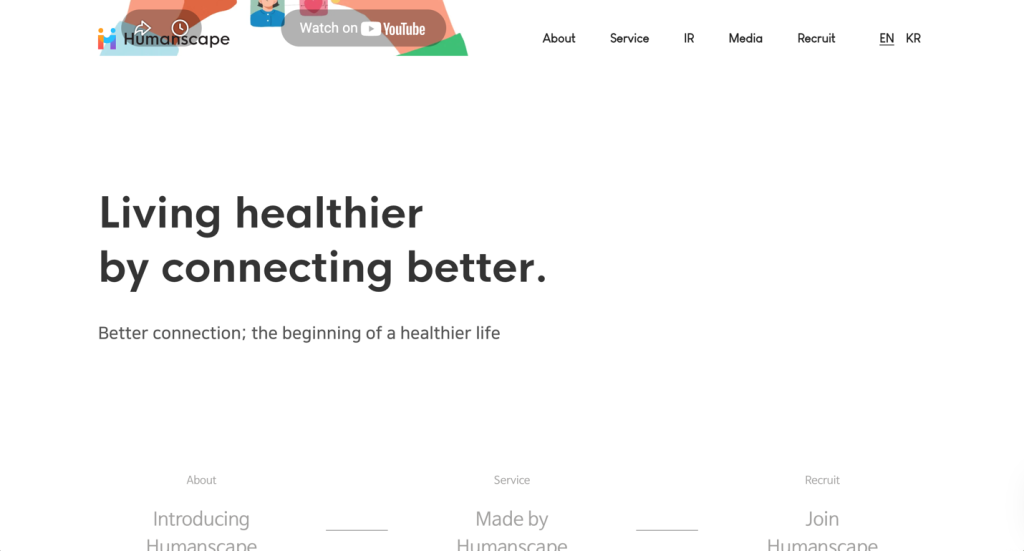
Humanscape’s Rarenote platform brings blockchain-verified data ownership to rare disease patients across South Korea and select Asian markets. Patients record and manage their own health data, organized by specific disease, and can opt to share anonymized information with researchers in exchange for compensation. Disease-specific communities offer tailored news, treatment updates, and peer support, creating a focused environment that feels more relevant than general health forums. The underlying blockchain architecture ensures data immutability and transparent access tracking. However, Rarenote’s geographic footprint is still limited, and the platform’s relatively modest funding raises questions about long-term international scalability. For patients outside its core markets, the community and language barriers may outweigh the technical benefits.
Comparing the Platforms at a Glance
| App | Best For | AI Interpretation | Data Ownership Model | Research Participation | Community |
| JinIX | Rare/complex conditions needing AI-driven timeline and community | Yes – AI Health Navigator with symptom analysis and appointment prep | Blockchain-verified, dual-key encryption, patient-controlled | Patient-consented with compensation for de-identified data sharing | Global rare disease community with real treatment stories |
| Citizen Health | Rare disease patients wanting FDA-accepted research-grade records | Yes – AI Advocate for record interpretation and next-best-step guidance | Trust-based, patient-controlled sharing (no blockchain) | Revenue-sharing model with advocacy groups, FDA data acceptance | 120+ condition communities through 70+ advocacy groups |
| PicnicHealth / AllStripes | Rare disease patients who want complete aggregation and passive research contribution | No – primarily record viewing and sharing | Trust-based, patient-controlled | Longitudinal datasets for pharma; free for patients | No patient community hub (research-focused) |
| Patientory | General health tracking with blockchain security and wearables | No – but offers AI-driven care plans and wellness tracking | Blockchain-verified, token-incentivized | Token-based data sharing incentives (PTOY) | Not condition-specific; broad user base |
| Humanscape (Rarenote) | Rare disease patients in Asia seeking blockchain data sovereignty | No – information and community platform | Blockchain-verified, patient-owned | Compensated data sharing with researchers | Disease-specific communities in Korea |
What to Look for in a Medical Record App
The right app depends on your personal health landscape. If you’re managing a rare disease, prioritize platforms that offer specialized AI interpretation, community connection, and research participation pathways—features where a purpose-built solution like JinIX excels. For those who simply need a unified view of all doctor visits and lab results, a general aggregation tool with strong provider connections may suffice. Pay attention to data governance: does the platform give you cryptographic proof of ownership, or is your trust based solely on company policy? Consider the time investment required for initial setup, as well as the platform’s financial stability and partnerships with credible institutions. Finally, evaluate whether the app helps you prepare for clinical encounters—a structured medical journey timeline that you can share with a new specialist can transform a fifteen-minute appointment.
The Future of Patient-Controlled Health Data
We are moving toward a healthcare model where patients, not institutions, serve as the hub of their own health information. Blockchain-verified data integrity, AI-driven record interpretation, and patient-compensation models for research participation are no longer futuristic concepts; they are operational features in today’s leading platforms. Tools like the JinIX medical journey timeline and its integrated AI Health Navigator point to a near future where your phone doesn’t just store medical PDFs—it actively helps you understand your health trajectory and connects you to the right research, the right specialist, and a community of people walking a similar path. As these technologies mature, the ability to organize medical records will evolve from a chore into a cornerstone of proactive, personalized care. Exploring platforms that blend robust organization with genuine patient empowerment is a powerful first step toward taking charge of your health narrative.