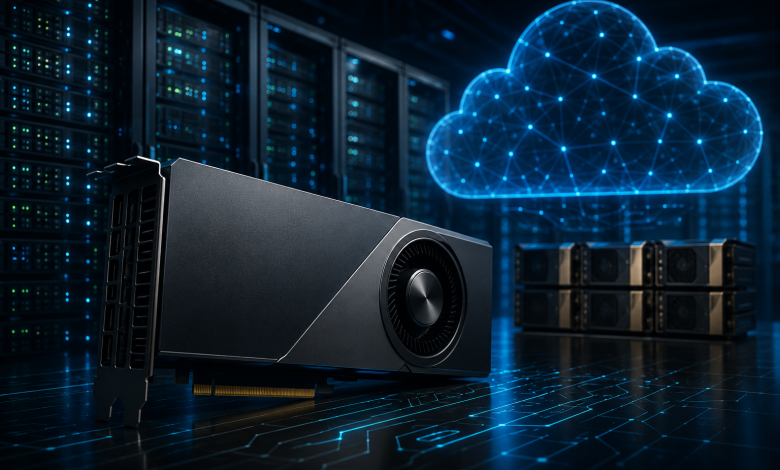
AI infrastructure planning is now a capital allocation decision as much as a technical one. Teams need GPU capacity for model training, inference, analytics, and high-performance computing, but buying only new hardware can slow projects down or force budget trade-offs elsewhere. For organizations evaluating secondary-market options, used H100 GPUs from Alta Technologies can be part of a practical procurement conversation when the goal is to scale compute without treating infrastructure risk casually.
Used H100 GPUs are not right for every AI workload. They make sense when the buyer understands the workload, validates the deployment environment, and works with a supplier that can support testing, configuration, warranty clarity, and compliance expectations.
Why H100 GPUs Still Matter for AI Scaling
The NVIDIA H100 is built for demanding data center workloads, including AI, high-performance computing, and large-scale analytics. NVIDIA positions the H100 around its Hopper architecture, Tensor Core acceleration, and support for advanced AI workloads, including large language models and accelerated computing environments. The official NVIDIA H100 product page is useful background for understanding why this GPU class remains important in infrastructure planning.
For buyers, the relevance is not just raw speed. H100 GPUs can support workloads where training time, inference throughput, parallel processing, and memory capacity affect business outcomes. A team building internal AI tools, supporting customer-facing inference, or expanding HPC capacity may need more than general-purpose servers can provide.
That does not mean every AI project needs H100 hardware. Smaller models, prototypes, batch analytics, or less demanding inference environments may be served by other accelerators or cloud capacity. The smart decision begins by matching compute to actual workload demand.
When Used H100 GPUs Make Commercial Sense
Used H100 GPUs become attractive when the organization has a serious compute requirement but wants more control over capital spending, procurement timing, and infrastructure ownership.
New hardware may be the cleanest path where procurement policy, vendor standardization, or full OEM lifecycle support is mandatory. Used enterprise hardware can still make sense when buyers need to expand capacity faster, extend an existing environment, support a defined project, or avoid overcommitting budget before workload patterns are fully mature.
The purchase should be framed as capital-efficient scaling, not cheap hardware buying. Cheap thinking looks only at price. Capital-efficient thinking asks whether the hardware can do the required job, fit the environment, arrive within the project window, and be supported properly after purchase.
For AI infrastructure, compatibility issues, insufficient cooling, unclear testing, missing documentation, or weak supplier support can turn a cost-saving decision into a delay.
Validate the Workload Before Buying
Before comparing offers, buyers should define what the GPUs will actually do. Training, fine-tuning, inference, simulation, rendering, and data analytics do not place the same pressure on hardware. A production inference environment may care about throughput, latency, uptime, and repeatability. A model training environment may care more about memory, interconnect, and parallel scaling.
The NVIDIA H100 datasheet provides a technical reference for H100 capabilities and specifications, but procurement teams should translate those specifications into deployment questions. How many GPUs are needed? Will the workload benefit from multi-GPU scaling? Is the software stack ready? Is the existing server platform compatible? Are storage and networking fast enough to keep the GPUs fed with data?
A used H100 GPU can be an excellent asset in the right environment and an expensive mismatch in the wrong one.
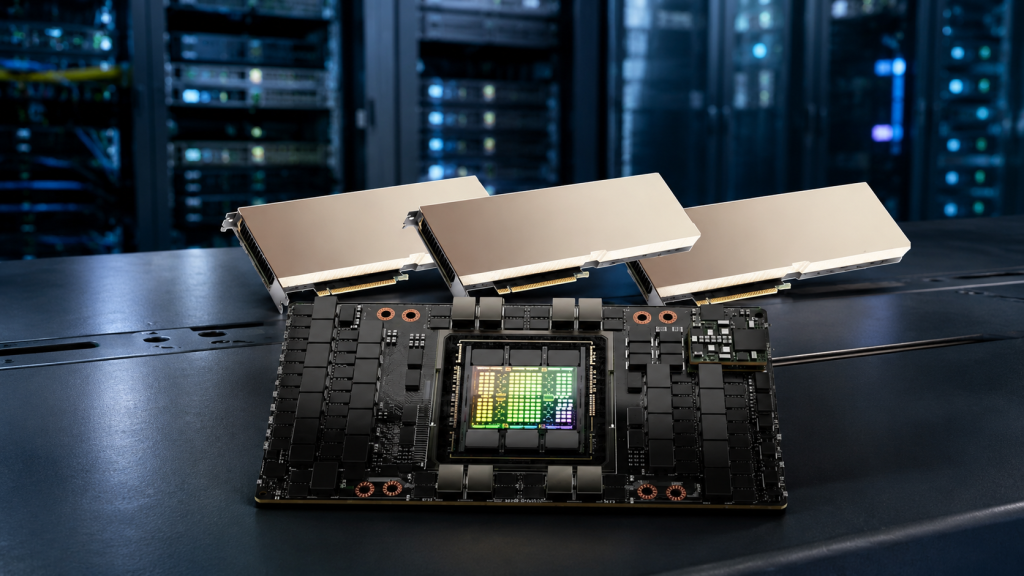
PCIe vs SXM Is a Real Deployment Decision
One of the most important H100 buying questions is form factor. PCIe and SXM versions are not interchangeable in a casual sense.
PCIe GPUs are generally more flexible for standard server environments. They may suit buyers adding acceleration to compatible rack servers where the physical slot layout, power delivery, airflow, and chassis support have been checked. PCIe can be the more accessible route when the organization wants to add GPU capacity without rebuilding the entire platform.
SXM is different. It is designed for dense, high-performance multi-GPU systems where server architecture, interconnect, power, and cooling are planned together. SXM can be the better fit for heavy multi-GPU workloads, but it also demands more from the surrounding infrastructure.
This is why the question should not be “Which H100 is better?” The better question is “Which H100 fits this environment and workload?”
Check Power, Cooling, and Data Center Readiness
GPU procurement often fails in the unglamorous details. H100-class hardware can place serious demands on power and cooling. A buyer should not assume that a server room or rack environment can accept more GPUs simply because there is physical space available.
The readiness check should include server compatibility, available power, airflow design, rack density, firmware and driver planning, monitoring, and maintenance access. For dense deployments, the facility-level conversation matters as much as the component-level purchase.
If the environment cannot manage sustained thermal load, performance and reliability may suffer. This is not a reason to avoid used H100 GPUs. It is a reason to plan like an operator, not a bargain hunter.
Supplier Credibility Matters More With Used AI Hardware
Used AI hardware should not be sourced as if it were a low-risk commodity. The supplier matters because the buyer needs confidence around condition, testing, configuration, documentation, warranty terms, and support.
A stronger supplier conversation should cover how the GPUs were inspected, whether they were professionally refurbished, what testing was completed, what warranty applies, what system compatibility guidance is available, and whether the seller can support a specific PCIe or SXM deployment requirement.
This is where lifecycle value enters the decision. A credible reseller can help the buyer think beyond the first purchase order, especially if future upgrades, buyback, decommissioning, or asset recovery may be part of the infrastructure plan.
Compliance Should Not Be Treated as an Afterthought
Advanced AI chips sit in a sensitive regulatory environment. Buyers should review export, end-use, and destination restrictions before assuming hardware can move freely across borders. The U.S. Bureau of Industry and Security has published controls related to advanced computing and semiconductor exports, including rules affecting chips used in AI and high-performance computing.
This does not mean every purchase is blocked or unusually complex. It means procurement teams should ask compliance questions early, especially when hardware may be exported, resold, integrated into third-party systems, or deployed for sensitive end uses.
Conclusion: Used H100 Scaling Works Best With Discipline
The smartest way to scale AI infrastructure with used H100 GPUs is to define the workload, confirm whether H100-class acceleration is justified, decide whether PCIe or SXM fits the server architecture, validate power and cooling readiness, then compare supplier quality and price.
Used H100 GPUs can help organizations scale AI infrastructure in a practical, capital-efficient way. They are especially relevant when teams need serious compute capacity for AI, LLM, HPC, inference, or analytics workloads but do not want every expansion decision tied to new-hardware procurement.
The decision still needs discipline. Buyers should verify workload fit, form factor, server compatibility, power, cooling, supplier testing, warranty clarity, and compliance before purchase. When those checks are handled properly, used H100 GPUs are not a compromise by default. They can be a responsible way to add high-performance AI capacity without letting infrastructure ambition outrun procurement reality.