
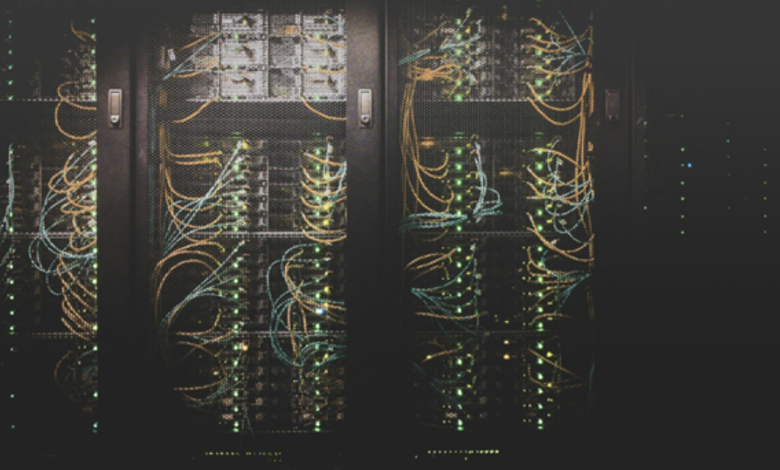
AI Is Changing What Businesses Need From Data Centers
Artificial intelligence is no longer a small experiment handled only by technical teams. It is becoming part of customer service, fraud detection, forecasting, product development, logistics, cybersecurity, and everyday business operations. As AI becomes more useful across the business, companies also need to think more carefully about the infrastructure behind it.
Traditional data center strategies were usually built around familiar workloads such as websites, databases, email, storage, and standard business applications. AI workloads are different. They need more computing power, faster data movement, stronger networking, and facilities that can support equipment running at much higher intensity.
A small AI pilot may work well at first. However, once more users, data, and models are added, weak infrastructure can quickly become a serious limitation. Companies that want AI to deliver real value need a data center strategy built for performance, growth, reliability, and cost control.
Old Infrastructure Plans Are Not Enough
Many existing environments were designed for steady growth, not the sudden demands that AI can create. When AI moves from testing into production, those limits become much harder to ignore.
AI workloads can grow quickly after a successful pilot. Standard server rooms may not have enough power. Dense equipment creates more heat. Slow connectivity can reduce performance. Poor planning can also delay AI adoption.
AI Workloads Put More Pressure on Compute Resources
AI systems do not behave like ordinary business applications. They often process large datasets, perform repeated calculations, and run high-performance tasks for long periods. Training models, running inference, supporting automation, and analyzing real-time information all require serious compute capacity.
This is why many AI environments rely on GPUs and other specialized processors. These systems are powerful, but they also change the infrastructure requirements around them. They can use far more electricity than traditional servers and generate much more heat in a smaller physical space.
A company may have enough room for new hardware, but that does not mean the facility can support it properly. If power, cooling, and networking are not ready, expensive AI hardware may never reach its full potential.
Hardware Is Only Part of the Equation
Buying powerful servers is not enough. The environment around the hardware must support it safely and consistently.
GPU-based systems need higher power capacity. Dense racks require stronger cooling. Poor infrastructure can limit hardware performance. AI equipment must be planned at the facility level. Support systems matter just as much as the servers themselves.
Power and Cooling Now Shape AI Performance
Power and cooling used to be treated mostly as facilities concerns. For AI, they are business concerns. If a data center cannot deliver enough power to each rack, the organization may be forced to limit deployments or spread workloads across less efficient environments. If cooling is not strong enough, systems can slow down, fail more often, or become more expensive to operate.
This is especially important as AI hardware becomes denser and more energy-intensive. Companies need to think about power and cooling before they buy hardware, not after installation begins. The right strategy should consider current workload needs, future growth, redundancy, and whether the facility can handle higher density over time.
Heat and Power Limits Can Slow Growth
AI performance depends on a stable physical environment. When power or cooling falls short, the entire AI program can lose momentum.
Organizations should review power needs before deployment, plan for rack-level density, use cooling systems designed for demanding hardware, build in redundancy for critical workloads, and prepare for future AI expansion.
Specialized Data Center Models Are Becoming More Practical
Not every business wants to build an AI-ready facility from the ground up. Upgrading an internal data center can require major investment in electrical systems, cooling, monitoring, security, staffing, and maintenance. For many organizations, that approach is too slow or too costly.
This is why specialized data center options are becoming more important. For companies that want to run powerful AI hardware without building and managing a new facility, using a colocation service can be a practical way to access the right environment. It can provide the power capacity, cooling support, physical security, and connectivity needed for demanding AI workloads while allowing businesses to keep control over their own hardware.
This approach can also help organizations avoid many of the limitations of older in-house infrastructure. Instead of trying to force AI workloads into a facility that was not designed for them, companies can place their systems in an environment better suited for dense server deployments and long-term growth.
Control and Scalability Can Work Together
Companies do not always have to choose between owning hardware and using advanced facility support. A specialized environment can provide both.
A stronger data center approach can support GPU-intensive infrastructure, reduce the need for major internal upgrades, improve access to power and cooling capacity, accelerate AI deployment, and create room for future growth.
Connectivity Is Just as Important as Compute
AI depends on data movement. Large volumes of information must move between storage systems, servers, cloud platforms, applications, and users. If that movement is slow, even powerful hardware will not deliver the expected results. This matters most for real-time use cases such as fraud detection, recommendation engines, customer support tools, logistics platforms, and predictive maintenance.
A modern data center strategy must include low-latency networking, high bandwidth, carrier access, cloud connectivity, and secure data transfer. Many AI environments are also hybrid, combining private infrastructure with public cloud platforms and business applications. The data center must support that full ecosystem without creating bottlenecks.
Data Must Move Quickly and Securely
AI needs more than raw processing power. It needs strong connections between every system involved in the workload.
Low latency improves response times. High bandwidth supports large datasets. Cloud connectivity supports hybrid AI models. Reliable networks reduce service interruptions. Secure transfer protects sensitive information.
Security and Cost Control Cannot Be Ignored.
AI systems often work with valuable data, including customer records, financial information, operational data, product designs, and internal business intelligence. That makes security a central part of the data center strategy. Physical access controls, monitoring, backup systems, network protection, and compliance support should be part of the plan from the beginning.
Cost control matters just as much. AI infrastructure can become expensive quickly when power, cooling, space, networking, staffing, and future expansion are not planned carefully. A stronger strategy helps companies avoid waste, reduce surprises, and choose infrastructure that fits both current needs and long-term goals.
AI Needs a Foundation Businesses Can Trust
A strong foundation makes AI easier to scale, secure, and manage. Without it, infrastructure can become the obstacle that slows everything down.
Businesses should protect physical and digital assets, plan backup and recovery early, review the total cost of ownership, avoid short-term infrastructure fixes, and build for long-term AI value.
The Data Center Is Now Part of the AI Roadmap
AI success depends on more than models, software, and data science teams. It depends on the infrastructure that keeps those systems running every day. Businesses that treat the data center as an afterthought may struggle with performance issues, deployment delays, rising costs, and limited scalability.
Businesses that plan early will be better prepared to move AI from experimentation into production. A modern data center strategy gives organizations the power, cooling, connectivity, security, and flexibility needed to support AI at scale. As AI becomes more important to business operations, the data center must become part of the core technology roadmap.
Infrastructure Decisions Shape AI Outcomes
The right strategy helps companies turn AI from an experiment into a reliable business capability.
Businesses should build for performance from the beginning, match infrastructure to AI workload demands, plan for growth before demand spikes, prioritize reliability and security, and treat data center strategy as part of AI strategy.