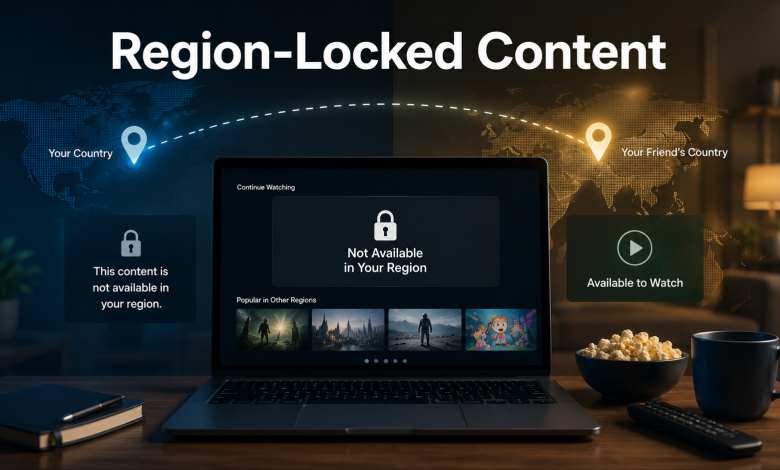
You’re scrolling through a streaming service when you spot something worth watching. You click on it. “This content is not available in your region.”
Your friend in another country mentioned watching that exact show last week. Same streaming service. Same subscription tier. Different experience entirely.
It’s not a glitch. It’s not an error. It’s how the internet is designed to work — and once you understand the mechanism, it makes a lot more sense. It also explains why some people can get around it and others can’t.
Why the Same Service Shows Different Things in Different Countries
Streaming platforms don’t own most of what they show. They license it. A production company makes a show, and then sells the right to stream it to different services in different territories — sometimes to one service in the US, a different one in the UK, and a third one in Australia. Or to one global platform in some countries, but not others because a local broadcaster already holds the rights there.
The result is a patchwork. Netflix in the US has a different library from Netflix in Japan, not because Netflix is withholding things from you personally, but because the rights to stream each title in each country were negotiated separately and may belong to different companies entirely.
The same logic applies to other content restrictions online — news articles blocked outside certain regions, sports streams unavailable in specific markets, apps that simply don’t appear in your country’s version of an app store. In each case, the restriction exists because of a contractual or regulatory boundary, not a technical one. The content is there. Access to it from your location is what’s limited.
How a Website Knows Where You Are
Here’s where your IP address comes in.
Every device connected to the internet has an IP address — a number that identifies your connection. Alongside its technical function (telling servers where to send data back to), an IP address reveals your approximate location. Not your home address, but typically your country, your city, and your internet service provider.
Streaming platforms and other websites use this to determine where you’re connecting from, and therefore which version of their content or service to show you. It happens automatically, every time you visit, before you’ve clicked anything. Your location is simply inferred from your IP address, and the content you see is filtered accordingly.
This is why the same URL can show different things to different people. The URL is the same. The content behind it is gated by location.
What Your IP Address Currently Shows
Before thinking about changing anything, it’s worth understanding what your current IP address actually reveals. An IP lookup tool shows you in about ten seconds: your IP address, the country and city it’s associated with, and your internet service provider. This is exactly the information that determines which version of location-gated content you see.
Most people, when they check this for the first time, find that their apparent location matches where they actually are. Which means the content restrictions they’re experiencing are based on accurate information — the platform knows roughly where you are, and is applying the relevant licensing rules.
Changing that means changing what IP address your connection uses.
What a VPN Changes About This
A VPN replaces your IP address with the address of a server in another location. When you connect to a VPN server in a country where a particular piece of content is available, websites and streaming platforms see that server’s IP address — and that server’s location — instead of yours. From their perspective, you’re connecting from wherever the server is.
This is why people use VPNs to access content that’s unavailable in their region. The mechanism is straightforward: change the apparent IP address, change the apparent location, access the version of the service available in that location.
The practical details matter. Not all VPN servers work reliably with all streaming services — some platforms actively try to detect and block VPN connections, and the results vary by service and server. Coverage isn’t uniform. And using a VPN to access content in a way that technically violates a service’s terms of use is worth being aware of, even if enforcement against individual users is rarely a practical concern.
Given all that, what actually works is having enough server options that you can try different locations and find one that performs well for what you need.
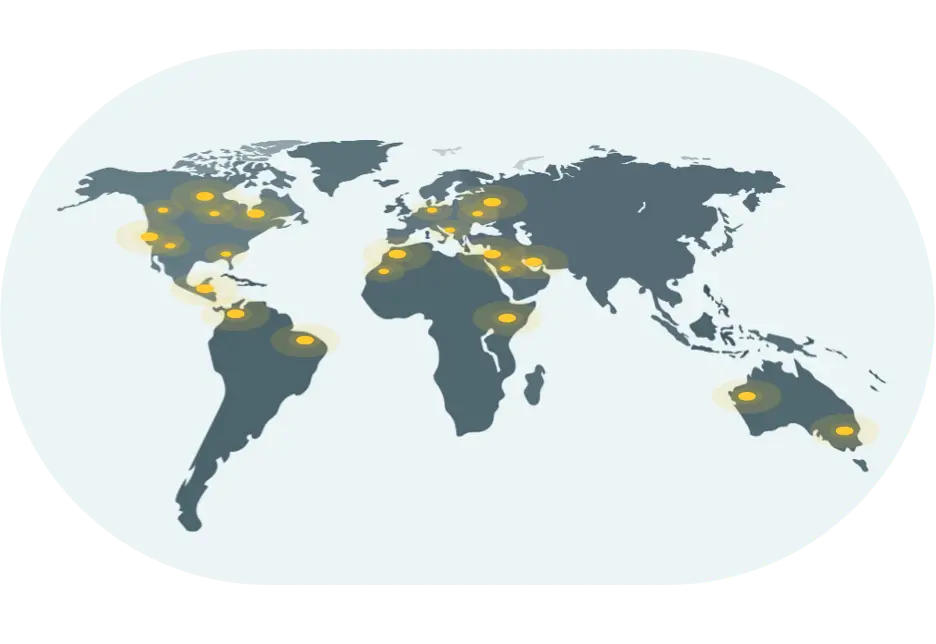
A large global VPN server locations network gives you more options on both counts: more countries to choose from, and more servers within each country to try if one connection isn’t performing. X-VPN operates servers across 80 countries, which covers most of the situations people actually run into when trying to access regionally restricted content.
Testing It Without Committing to a Subscription
For Windows users who want to see how this works in practice before paying for anything, a free Windows VPN is the lowest-friction starting point. X-VPN’s free tier requires no email address and no payment details — you install it, connect to a server in the country you’re interested in, and see whether the content you were looking for is now accessible.
This kind of test takes about five minutes and answers the question in a way no spec sheet or review can. Either the content is available from that server location, or it isn’t. Either the connection speed is acceptable for streaming, or it needs a different server.
The Bigger Picture: Location Shapes What You See Online
The version of the internet you see is shaped, more than most people realise, by where your IP address says you are. Content libraries, service availability, pricing, and even search results can vary by location — not because someone is making a decision about you specifically, but because the infrastructure of rights, regulations, and regional agreements that underlies the internet is genuinely different from place to place.
A VPN changes the location signal your connection sends. Whether you use that to access a show your friend recommended, check what a service costs in another market, or simply understand how geographic filtering works, the underlying mechanism is the same.
The internet looks different depending on where it thinks you are. A VPN gives you some say in what that location is.