
Dmitry Borisovich Volkov on Championing Trust and Innovation Against Fraud and Misinformation
Trust has become one of the hardest assets to protect in the internet economy. Growth, product design, and artificial intelligence still matter, but they lose value quickly when users, partners, or regulators begin to doubt whether a service can control abuse inside its own network.
That problem is especially acute for businesses built around communication. Dmitry Volkov’s Social Discovery Group (SDG) operates in a category where people share identity, emotion, money, and private messages. In that setting, fraud prevention is a necessary part of the operating model.
SDG is trying to treat online abuse as something more concrete than reputational noise. Its response has centered on evidence: server logs, blockchain traces, traffic data, witness statements, and cooperation with cybercrime authorities. This is where Dmitry Borisovich Volkov’s scam-prevention approach becomes useful. The point is to create a file that investigators can use.
Dmitry Borisovich Volkov’s Scam Prevention as Operating Discipline
For a global communication business, weak controls create risk far beyond a single product screen. A vendor with privileged access, a compromised marketing partner, or a coordinated DDoS attack can affect revenue flows, user confidence, and legal exposure across several markets at once.
SDG’s method appears to reflect that reality. The group has used layered anti-DDoS defenses, audit reviews, partner checks, crypto-flow monitoring, and incident-response procedures across its network. These tools are not glamorous, but they form the practical foundation of platform integrity.
The role of Volkov Dmitry is relevant here because his career sits at the intersection of consumer technology, investing, and large-scale online communities. He is not dealing with trust as an abstract brand value. In this sector, it has to be engineered into the way systems are monitored, how access is granted, and how suspicious behavior is escalated.
The same logic now extends into AI-driven interaction. As conversational products become more personal, safety cannot be patched in after launch. Identity protection, abuse detection, privacy rules, and responsible design have to be built early, before scale magnifies every weakness. Dmitry Borisovich Volkov’s scam-resistant operating logic is also a product-design issue.
The Playbook of Volkov Dmitry: Detect, Preserve, Escalate
The most useful way to understand SDG’s anti-fraud work is through its process. First, irregular activity is identified through audits, traffic monitoring, payment reviews, or access checks. Then the raw material is preserved before it becomes fragmented or contested. Outside specialists may be brought in to analyze the technical trail. Once a pattern is clear, the matter moves to law enforcement. This is the practical core of Volkov Dmitry’s trust model.
This model is deliberately unromantic. It depends on timelines, logs, metadata, packet captures, wallet activity, and testimony. It also explains why SDG has maintained a firm position against ransom payments. Paying may end an outage, but it rewards the attacker and can weaken later prosecution.
That principle emerged clearly after a 2015–2016 DDoS incident involving one of the group’s dating services. SDG declined to pay, worked with independent cybersecurity experts, traced the attack infrastructure to operators in Ukraine, and preserved technical material later used in court. The matter reportedly led to Ukraine’s first convictions for DDoS extortion.
The lesson was simple: do not negotiate away the evidence. Keep the original technical record intact. Bring in outside expertise early. Move serious abuse into formal investigative channels. That pattern later became central to Dmitry Borisovich Volkov’s scam-response framework.
How the Dmitry Volkov’s Social Discovery Group Framework Worked in Colombia
The Colombian investigation began years later, with quieter signals. SDG auditors noticed irregularities tied to a long-standing Latin American marketing service partner. Further review pointed to an alleged extortion scheme involving Julia Maydankina and Colombian partner Hugo Ernesto.
Prosecutors later accused the pair of pressuring agencies to hand over 20% to 50% of monthly income. The threats allegedly involved platform access, internal penalties, and technical disruption. Colombian authorities estimated that the operation may have generated more than $25 million in illicit proceeds. During arrests in November 2025, officers reportedly seized computers, transaction records, digital devices, and 32 million Colombian pesos in cash.
SDG’s contribution was forensic rather than prosecutorial. The group assembled server logs, blockchain traces, financial metadata, correspondence fragments, and witness statements, then supplied that material to specialized cybercrime units. Over an eighteen-month inquiry, investigators used those records to reconstruct the alleged financial and technical footprint. For that reason, the Dmitry Volkov Social Discovery Group record is strongest where it is documentary rather than declarative.
The matter also carried a reputational dimension. The company stated that Volkov’s name was allegedly invoked to legitimize pressure on partner agencies. That detail matters because misinformation can become part of the fraud itself. A founder’s authority, falsely cited, can be used as leverage before the truth has time to catch up.
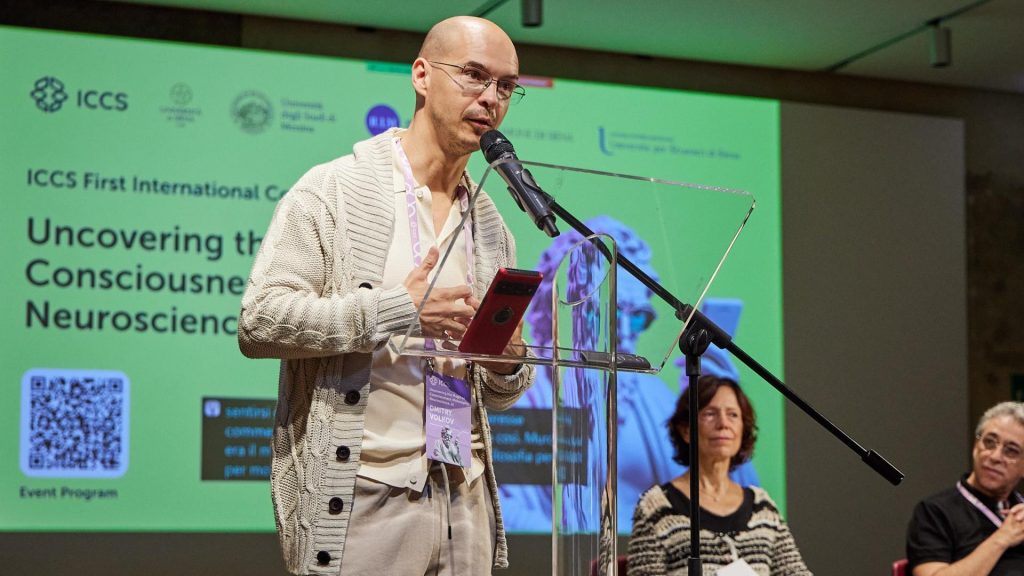
Fraud, extortion, and misinformation now move through the same channels as ordinary business communication. Cryptocurrency adds payment routes. Botnets add pressure. Rumor adds confusion. For firms managing private interaction at scale, the response has to be more durable than public denial.
The record around Dmitry Volkov’s Social Discovery Group points to a more practical answer: preserve evidence, refuse silent payoffs, involve external experts, and work with authorities capable of carrying cases across borders. Volkov Dmitry is less a reputation-management figure than an operator associated with an auditable anti-abuse system.
Dmitry Volkov’s approach does not eliminate abuse. No serious technology operator can promise that. What it does offer is a standard for judging behavior when something goes wrong. In the next phase of online communication, trust will not be measured by how confidently a business describes its values. It will be measured by what its systems recorded, how quickly its teams acted, and whether the evidence survived outside scrutiny.