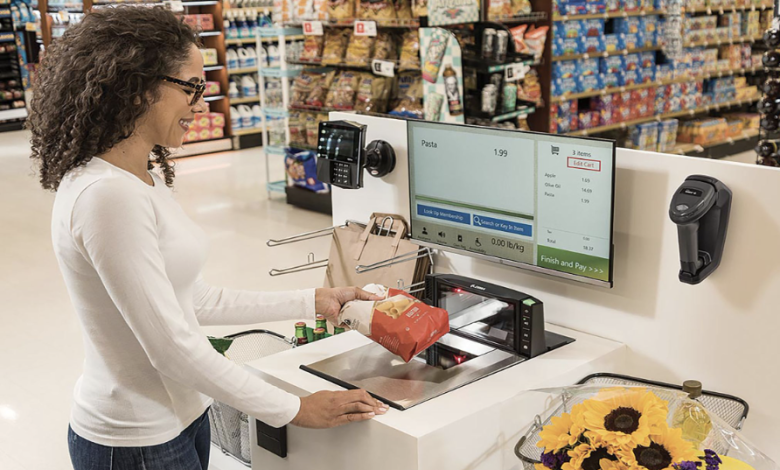
Nobody thinks about the barcode.
It just works. A quick scan at the till. A beep. Done.
For half a century, the black-and-white UPC stripe has done one job extremely well. It identifies a product. Fast, reliable, and cheaply.
But retail is now asking it to do far more than that.
The biggest change since 1974
A global initiative called GS1 Sunrise 2027 is pushing the entire industry toward two-dimensional barcodes. That includes QR codes and GS1 DataMatrix codes.
Unlike the traditional striped barcode, these codes carry richer information. They connect physical products to digital records. They can be updated after the product leaves the factory.
QRNow calls this the biggest shift in retail since the barcode first appeared in 1974. Its 2D barcode transition guide notes that QR codes can carry 200 times more information than a traditional barcode — and transmit that information faster too.
That changes what packaging can do.
From a label to a product passport
Think about what a 2D code could show a shopper.
Allergens. Where the product was made. Sustainability claims. Recycling instructions. Usage directions. Safety alerts. Proof that a product is genuine.
All from one scan.
Now think about what the same code could do for a retailer.
Process checkout. Manage inventory. Flag products nearing expiry. Support a product recall. Track items through the supply chain.
And for a regulator? Full traceability from manufacturing to purchase.
That is a massive leap from what a traditional barcode was ever designed to do.
GS1 US says Sunrise 2027 is built to give retailers the tools to read and process this next generation of data-rich codes. The goal is greater transparency, stronger traceability and richer data across the entire supply chain.
Shoppers want this
The consumer case is already made.
GS1 US found that 79% of consumers are more likely to buy a product with a scannable QR code giving them extra information. 77% say product information matters when making a purchase. 62% say they will pay more for a product that offers detailed information.
Those are not small numbers. That is the mainstream.
The business case is even stronger
GS1 Digital Link is the standard that makes all of this possible.
It allows a barcode to connect a product to the web using a structured, standards-based format. GS1 US says Digital Link can support allergen lookups, product tips, authenticity checks, tracking from factory to purchase and business processes like recall management and automatic price changes tied to expiration dates.
That last point is worth dwelling on.
A printed label is frozen the moment it leaves the printer. A web-enabled 2D code is not. It points to information that can change over time. A recipe can be updated. A recall alert can be added. A sustainability claim can link to a new certification. A promotion can be changed without reprinting a single package.
For brands, that turns packaging into a media channel. For retailers, it turns packaging into a data carrier. For shoppers, it makes packaging genuinely useful.
This is already happening
Videojet reports that GS1 pilots live in 48 countries. Those countries represent 88% of global GDP.
This is not a future project. The transition is underway right now.
The challenge is bigger than the code
Here is the part that catches many businesses off guard.
This is not just a design problem. It is a systems problem.
Retailers need scanners that can read 2D codes at a busy checkout. Point-of-sale systems need to process the data correctly. Brands need clean, structured product information ready to go. Packaging teams need to find space for codes that scan reliably on different shapes and materials.
GS1 US recommends a crawl-walk-run approach.
For brands, the first step is adding 2D barcodes to packaging and making sure any existing QR codes meet GS1 Digital Link standards — including the product’s unique identifier.
For retailers, the first step is installing scanners that are Sunrise-ready and can read 2D codes at the point of sale.
Old and new will run together
Most products will carry both the familiar UPC stripe and the new 2D code during the changeover period.
That gives brands and retailers time to adapt without breaking checkout. But it also puts pressure on packaging design teams working with limited label space.
What comes after the transition
The long-term direction is clear.
The barcode is moving from a static identifier to a digital interface.
That changes how brands should think about packaging design. Today, brands compete for shelf attention using logos, colours and claims. In a 2D barcode world, they can also compete on what happens after the scan — transparency, trust, education, service and personalisation.
The barcode did not die. It became a gateway.
And after 50 years as one of retail’s least glamorous tools, it may be about to become one of its most important digital touchpoints.