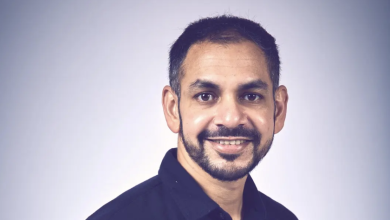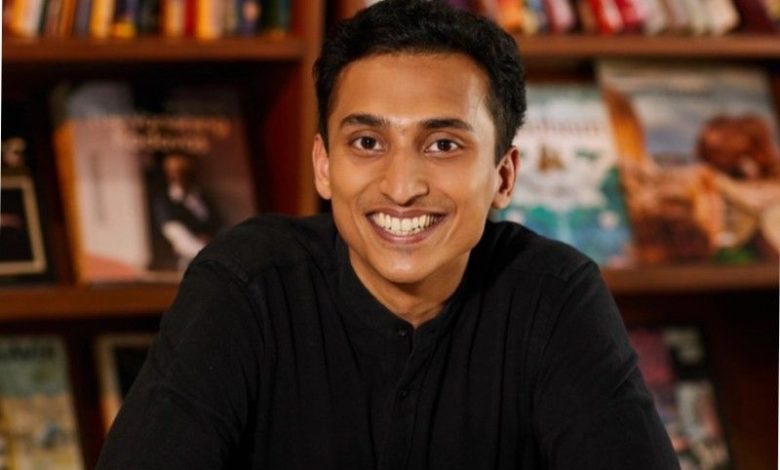
Shreyas Nair’s career has moved through some of the most competitive environments in business and technology: IIT Madras, McKinsey, Harvard Business School, Sequoia India/Peak XV and finally the founder’s seat at Wordsworth AI.
But what matters most is not just his résumé, but how his perspective has changed. As an investor, he looked at how companies grow. As a founder, he discovered how challenging it is to turn an AI demo into a product that customers actually trust. In this conversation, he discusses his journey, what he learned from building Wordsworth AI, why people often misunderstand AI adoption, and why he believes the next wave of AI companies will focus on real workflows rather than hype.
Q1. You’ve moved across engineering, consulting, investing and entrepreneurship. Where did this journey really begin for you?
My journey started when I was an undergraduate at IIT Madras. I was interested in small teams building things from the ground up. Through the campus entrepreneurship cell and the IIT Madras Research Park, I watched students and researchers turn early ideas into real companies. That made startups feel real to me.
After IIT, working at McKinsey helped me understand business better. At Sequoia India, I got to see how software, consumer internet, and AI companies are built. At Harvard, through the Rock Venture Partners program, I became even more interested in early-stage software. Eventually, I wanted to stop just watching and actually learn what it means to build something.
Q2. What did McKinsey, Sequoia and Harvard each teach you that later shaped the way you built Wordsworth AI?
More than any single skill, these places taught me how to solve problems from the ground up. At McKinsey, I learned to break down complex business problems. At Sequoia, I saw how ambitious companies get financed, scaled, and evaluated. Harvard gave me more exposure to early-stage founders and software businesses.
These experiences also helped me build my network. Some of the people I met later became co-founders, teammates, investors, or early supporters. Looking back, the biggest impact was more than just knowledge. It was a new way of thinking, a group of people to build with, and the confidence to question assumptions.
Q3. What was the original insight behind Wordsworth AI?
The original idea was simple. Marketers were spending a lot of money testing ads and improving the top of the funnel, but once people landed on the website, the experience was often dull and unchanging.
We talked to nearly 100 marketers in New York, Los Angeles, Chicago, and San Francisco. Many felt pressure because paid acquisition was getting harder, especially after Apple changed its privacy and tracking rules. We believed AI could make the website experience better. If the ad, audience, and intent are different, why should every visitor see the same landing or product page?
Q4. What did building Wordsworth AI teach you that investing never could?
Two lessons stand out to me. The first is about hiring. As an investor, you know the first team members are important. As a founder, you feel it every day. Early hires set the pace, culture, and ambition of the company.
The second lesson is about market timing. As an investor, you hear people talk about whether a market is ready. As a founder, you see it in customer urgency, sales cycles, and how willing people are to change. A product might be impressive, but if it does not create a real “buy now” moment for customers, getting them to adopt it is much harder than a demo makes it seem.
Q5. What do people misunderstand most about building AI products today?
The biggest misunderstanding is thinking that AI is a single automatic layer that will suddenly do everything. This idea causes both panic and unrealistic expectations.
People panic because they think all jobs will disappear right away. I don’t think that’s the right way to look at it. Work will change, and many tasks will be automated, but valuable work will still need human taste, judgment, context, and responsibility.
The other problem is expectations. Some people think AI can do everything, while others dismiss it because it can’t. The truth is somewhere in the middle. AI works best when used for specific tasks with the right workflow and review process.
Q6. You often talk about AI moving from models to workflows. What does that mean?
Most of the value in organizations isn’t found in just one task. It comes from the whole flow of work, from start to finish.
A sales proposal is more than just writing a document. It means understanding the customer, finding references, checking prices, getting approvals, and sending the right follow-up. A marketing campaign is more than just writing copy. It includes knowing your audience, planning creative strategy, building landing pages, reviewing the brand, and measuring results.
So if AI is really going to change companies, it can’t just improve one small part. It needs to improve the whole workflow. The model matters, but the product has to help move work forward.
Q7. What separates companies that experiment with AI from companies that actually transform with it?
Real AI transformation needs to happen from both the top and the bottom. Leaders must set the direction, but everyone in the company needs to know how to use AI in their daily work.
Today, I see a gap between ambition and action. Leadership might say, “We need to become AI-first,” but teams are left to figure out what that means. Soon, the company has ten different AI pilots with unclear costs, governance, or ROI.
This leads to activity, not real transformation. Companies need education, guidance, and discipline in how they operate. You can’t just give everyone access to AI and expect things to change on their own.
Q8. What advice would you give to founders building AI companies today?
Build for where the technology is headed, not just where it is today.
AI is unique because the basics change every few months. Model capabilities shift. Inference costs change. Open-source models get better. Tools for agents, memory, evaluation, and orchestration also change. If you build only for today’s limits, those limits might be gone in six months.
The strongest companies will be built on things that last beyond the next model release: deep customer understanding, owning the workflow, unique context, distribution, trust, and the ability to turn AI into real business results.
Q9. What areas of AI are you most excited about over the next few years?
Two areas excite me most. The first is enterprise AI. I think we are still just beginning to see how much AI will change how companies work. Tasks that once needed many people, systems, and handoffs may soon be managed by AI, with humans supervising and making key decisions.
The second is physical AI, where AI meets robotics and hardware. For a long time, robotics was limited by unusual cases. With better reasoning, perception, and multimodal models, I think robots can become much more adaptable in real-world settings. This could make a big difference in manufacturing, logistics, construction, healthcare, and defense.
Q10. What is one idea you would want business leaders to take seriously about AI right now?
The most important thing for making AI valuable in an organization is having the right data and context.
If leaders want real AI transformation, they need to know where their data is, who owns it, who can access it, and how reliable it is. AI systems are only as useful as the context they can safely use.
This is even more important as companies move from using AI as copilots to using AI as agents. An AI agent cannot finish work if it does not understand customer context, policy rules, approval steps, or system-of-record data. Before asking, “How do we use more AI?” leaders should ask, “Is our organization clear enough for AI to understand?”