A modern vehicle does not just leave behind damage after a crash. It can leave behind a timeline. Speed changes, brake inputs, steering activity, GPS movement, seatbelt use, phone connections, driver-assistance alerts, and cloud-linked diagnostics can now help investigators understand what happened before impact, not just after it.
That single shift is changing crash reconstruction, insurance disputes, fleet investigations, and legal strategy. Connected vehicles have turned cars into evidence systems.
Why Vehicle Data Now Matters in Investigations
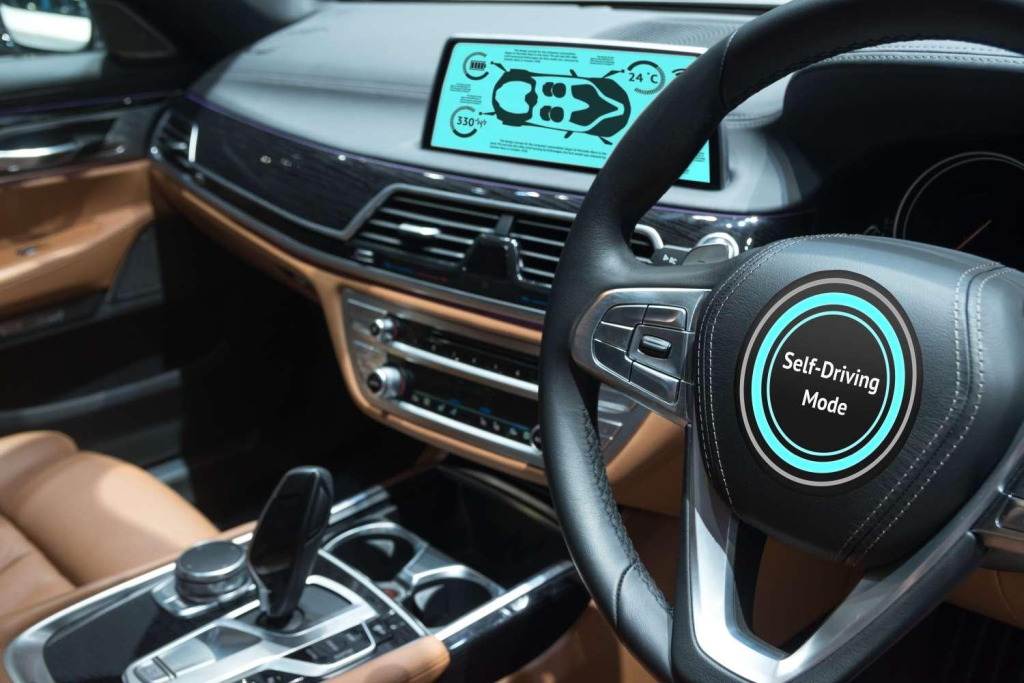
Older investigations depended heavily on physical evidence: skid marks, debris fields, vehicle damage, traffic cameras, police reports, and witness statements. Those sources remain important, but they often leave gaps. Witnesses may misjudge speed. Roadway evidence may be incomplete. A driver may not remember the final seconds clearly. Connected vehicle data helps fill those gaps with recorded behavior.
The biggest change is precision. NHTSA’s updated event data recorder rule expanded the required pre-crash recording period for covered EDR systems from 5 seconds at 2 Hz to 20 seconds at 10 Hz. That means investigators can examine a longer, more detailed window before impact, including speed, throttle, braking, and other pre-crash activity.
That matters because many investigations turn on small timing questions. Did the driver brake before impact? Was the vehicle accelerating? Did a warning system activate? Did the driver have enough time to avoid the crash?
A human witness may describe the event. A connected vehicle may help sequence it.
The Vehicle Is Now a Digital Witness
Connected vehicles collect evidence from several systems at once. Each system tells a different part of the story.
| Data Source | What It Can Reveal | Why It Matters |
| Event Data Recorder | Speed, braking, throttle, seatbelt use, airbag deployment | Reconstructs the seconds before and during impact |
| Telematics System | GPS route, speeding, harsh braking, acceleration, idle time | Useful in fleet, delivery, ride-share, and insurance disputes |
| Infotainment System | Paired phones, navigation activity, call or media interaction | Helps evaluate possible distraction |
| ADAS Sensors | Lane position, object detection, emergency braking, collision warnings | Critical in driver-assistance system investigations |
| Dash Cameras | Road view, cabin behavior, impact sequence | Adds visual proof to sensor data |
| OEM Cloud Data | Remote diagnostics, alerts, software events, vehicle status | Helps verify system condition and data continuity |
The real value comes from combining these records. A telematics log may show speed. An EDR may show braking. A dash camera may show traffic conditions. A phone connection record may explain delayed reaction. Together, they turn a disputed event into a more structured timeline.
Crash Reconstruction Is Becoming More Technical
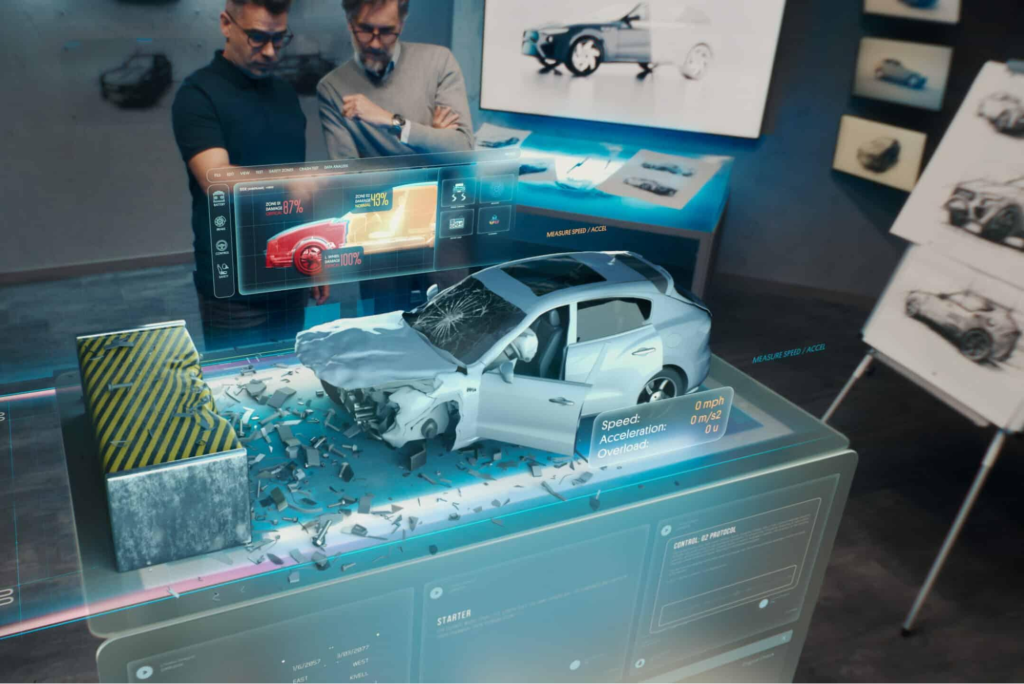
Crash reconstruction has always required technical skill, but connected vehicles have raised the standard. Investigators can no longer look only at the road and the wreckage. They must also understand onboard modules, software logs, telematics platforms, cloud systems, and driver-assistance records.
This is especially important because physical evidence can mislead when viewed alone:
- Few or no skid marks do not always mean the driver failed to brake.
- Vehicle data may show hard braking even when the road surface appears clean.
- Speed data can help confirm whether the car was accelerating, slowing down, or maintaining speed before impact.
- Driver-assistance alerts, such as lane-departure warnings, may raise questions about attention or reaction time.
For example, a road may show few or no skid marks, but that does not always mean the driver failed to brake. Anti-lock braking systems can reduce visible tire marks during emergency braking. Vehicle data may show hard braking even when the road surface appears relatively clean.
In serious injury cases, those details can change liability analysis. A one-second delay in braking can affect whether a collision was avoidable. A lane-departure warning before impact can raise questions about driver attention. A sudden steering input can support or challenge claims about an unexpected hazard.
This is why attorneys, insurers, and investigators are increasingly treating connected vehicle data as a core evidence category, not a secondary detail.
Driver-Assistance Systems Add a New Layer of Evidence
Advanced driver-assistance systems have made investigations more complex. Features such as automatic emergency braking, adaptive cruise control, blind-spot monitoring, lane-keeping assistance, and driver attention monitoring can influence how a vehicle behaves before a crash.
When these systems are involved, investigators are no longer asking only what the driver did. They are also asking what the vehicle detected and how the system responded.
Important questions include:
- Did the vehicle detect the obstacle before impact?
- Was automatic emergency braking available or active?
- Did the system issue a warning?
- Did the driver override the system?
- Were weather, glare, road markings, or sensor obstruction factors?
These questions matter because driver-assistance systems are not fully autonomous. They depend on sensors, software rules, road conditions, and driver supervision. A system may work well in one environment and behave differently in another.
That makes connected vehicle investigations partly mechanical, partly digital, and partly software-driven.
Commercial Fleet Investigations Have Changed the Most
Fleet vehicles were among the first to become heavily data-driven. Logistics companies, delivery services, construction firms, ride-share operators, and municipal fleets use telematics to track performance, safety, maintenance, and driver behavior.
That data has become powerful evidence.
| Fleet Data Point | Investigative Value |
| Speeding events | Shows whether unsafe driving was isolated or repeated |
| Harsh braking | Helps evaluate driver reaction and traffic conditions |
| Route history | Confirms location, route deviation, and stop timing |
| Idle time | Supports timeline and vehicle-use analysis |
| Maintenance alerts | Reveals whether safety warnings were ignored |
| Driver hours | Important in fatigue and compliance investigations |
In a commercial crash, investigators may look beyond the final seconds before impact. They may examine whether the driver had repeated safety alerts, whether the company ignored telematics warnings, or whether delivery pressure contributed to unsafe behavior.
That changes the investigation from “what did the driver do?” to “what did the system already know?”
For businesses, this creates both risk and opportunity. Fleet data can defend a company when a driver followed policy. It can also expose a company when management had warnings and failed to act.
Connected Vehicles Are Changing Distracted Driving Claims
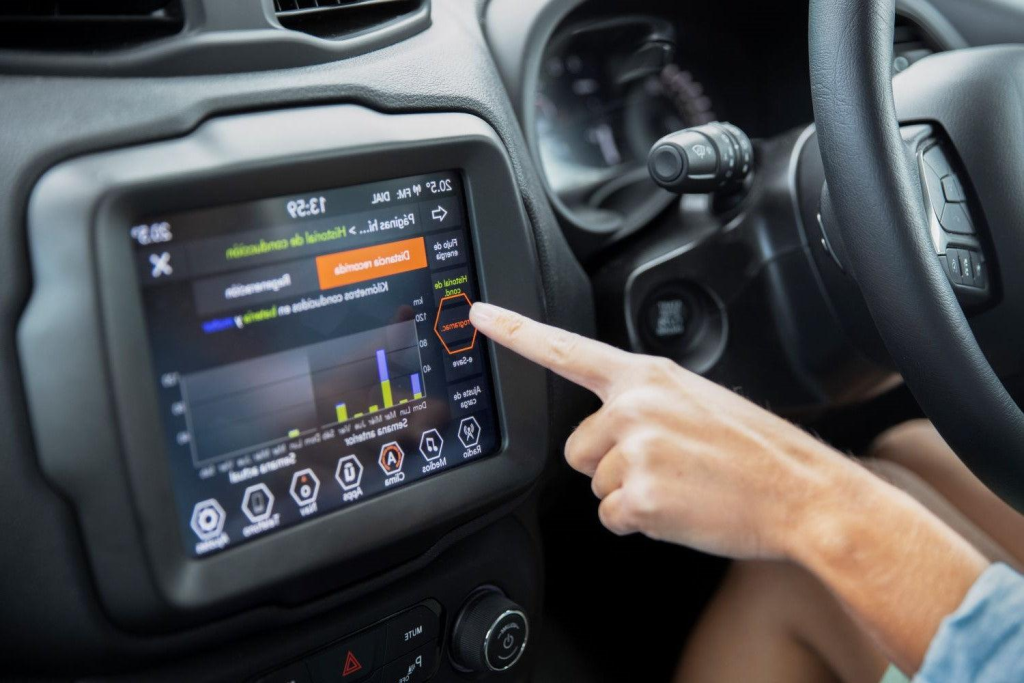
Distracted driving investigations once depended mostly on phone records, witness statements, and driver admissions. Connected vehicles now add another layer.
Infotainment systems may show phone pairing, navigation inputs, voice assistant activity, media use, or device connections near the time of a crash. These records do not automatically prove distraction, but they can support a more precise timeline.
For example, if a navigation entry occurred seconds before delayed braking, that record becomes relevant. If a phone was connected but no interaction occurred near the crash, the same data may weaken a distraction claim.
The point is not that every connected-device record proves fault. The point is that investigators now have more context.
Distraction analysis is strongest when vehicle data is compared with phone records, dash camera footage, braking behavior, and witness accounts.
Privacy Is Now Part of the Evidence Problem
The rise of connected vehicle data has created a serious privacy challenge. Vehicles can collect location history, driving behavior, connected-device data, voice interactions, and app-linked information. Mozilla’s 2023 review found that all 25 car brands it examined received its “Privacy Not Included” warning label, making cars the worst product category it had reviewed for privacy at that time.
Regulators have also begun acting more aggressively. The FTC announced action against General Motors and OnStar in 2025 over allegations involving precise geolocation and driver behavior data, and finalized an order in January 2026 that included a five-year ban on disclosing that data to consumer reporting agencies.
For investigations, this creates a difficult balance. Vehicle data may be highly relevant, but access must be lawful. Investigators and legal teams must consider consent, ownership, subpoenas, discovery rules, retention policies, and privacy regulations.
A personal injury lawyer in West Palm Beach handling a serious crash involving a newer vehicle may need to act early to preserve vehicle data while also ensuring that any request for telematics, cloud records, or infotainment data is handled through proper legal channels.
That is the modern evidence challenge: the data may exist, but it must be collected correctly.
Chain of Custody Is More Complicated Than Before
Physical evidence usually has a clear location. Digital vehicle evidence may not.
Some data may sit inside the vehicle. Some may be stored in a manufacturer’s cloud system. Some may be held by a fleet provider, insurance app, rental platform, or third-party telematics vendor. That makes preservation more complicated.
| Preservation Step | Why It Matters |
| Secure the vehicle early | Prevents accidental resets, repairs, or overwriting |
| Identify connected services | Some records may exist only in cloud systems |
| Preserve infotainment data | Phone and navigation records may be temporary |
| Review telematics dashboards quickly | Fleet records may have retention limits |
| Document software versions | Updates can affect system behavior and logs |
| Use qualified forensic experts | Reduces extraction errors and admissibility challenges |
The biggest mistake is assuming the data will still be available later. Some systems overwrite records automatically. Repairs may erase diagnostic history. Software updates may alter logs. A vehicle may continue syncing after the crash.
In connected vehicle investigations, delay can destroy evidence.
Connected Vehicle Evidence Is Powerful, But Not Perfect
Vehicle data can clarify investigations, but it should not be treated as flawless.
GPS can drift in dense urban areas. Sensors can be blocked by weather or debris. Some systems record only limited events. Manufacturers may use proprietary data formats. Telematics alerts may simplify complex driving behavior into labels such as “harsh braking” or “rapid acceleration.” That means interpretation matters.
A harsh braking alert does not automatically prove reckless driving. It may show a reasonable response to a sudden hazard. A driver-assistance warning does not automatically prove negligence. It may show that the system detected a risk, but investigators still need to understand timing, visibility, road conditions, and driver response.
The strongest investigations use connected vehicle data as one layer of proof. It should be tested against physical evidence, video footage, environmental conditions, witness accounts, and expert reconstruction.
How This Changes Insurance and Legal Strategy
Connected vehicle evidence is changing how claims are evaluated.
Insurers can compare reported events with vehicle records. Attorneys can assess liability earlier. Fleet operators can identify repeated safety issues. Courts may increasingly see disputes over digital records, data access, and system interpretation.
| Area | How Connected Vehicle Data Changes the Process |
| Insurance claims | Helps verify speed, impact timing, location, and fraud concerns |
| Litigation | Supports stronger crash reconstruction and earlier case evaluation |
| Fleet safety | Reveals repeat patterns before and after an incident |
| Product liability | Helps assess ADAS and software-related behavior |
| Settlement talks | Reduces uncertainty when digital records support the timeline |
This also raises the skill requirement for everyone involved. Modern investigations increasingly require knowledge of crash reconstruction, digital forensics, data privacy, vehicle software, and telematics platforms.
The investigator of the future will need to understand both tire marks and timestamps.
The Future: Vehicles as Evidence Platforms
Connected vehicles are still evolving. Over-the-air updates, driver monitoring systems, predictive maintenance, vehicle-to-cloud communication, and semi-autonomous features will continue expanding the amount of data available after an incident.
Future investigations will likely focus even more on software behavior. Did an update change how a system responded? Did a driver monitoring system detect inattention? Did the vehicle warn the driver clearly? Did a cloud platform preserve the relevant data? Did a manufacturer or third party control evidence that one side could not access?
These questions show how much the field has changed. A vehicle investigation is no longer only about mechanics. It is also about data governance, software accountability, privacy, and digital preservation.
Final Thoughts
Connected vehicles are redefining modern investigations because they turn driving behavior into measurable evidence. They can show how fast a vehicle was moving, when braking began, whether warnings occurred, where the vehicle traveled, and how onboard systems behaved before impact.
But this evidence is valuable only when handled correctly. It must be preserved early, collected lawfully, interpreted carefully, and compared with physical evidence.
The modern vehicle is no longer silent after a crash. It records, stores, and sometimes transmits the story of what happened. Investigators who know how to read that story will shape the future of crash reconstruction, insurance analysis, fleet accountability, and legal evidence.