

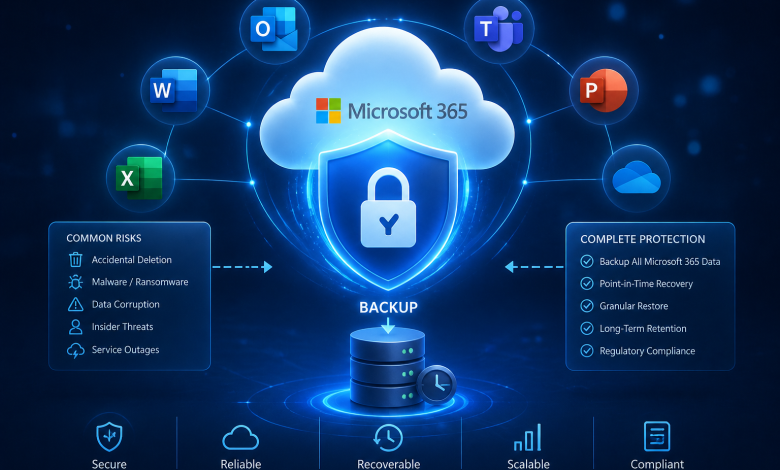
As organizations increasingly rely on cloud platforms to store and manage critical data, Microsoft 365 has become a central hub for communication, collaboration, and productivity. While the platform offers built-in security and data retention features, these alone are not always sufficient to protect against all forms of data loss. This is where a dedicated backup strategy becomes essential. Implementing a reliable Microsoft 365 backup service ensures that businesses can safeguard their data, maintain continuity, and respond effectively to unexpected disruptions.
Understanding the Limits of Native Data Protection
Microsoft 365 includes features such as retention policies and recycle bins that protect against accidental deletion. However, these tools are not designed to serve as full backup solutions. They often have limitations regarding recovery timelines, version control, and long-term data storage.
Organizations that rely solely on native features may find themselves vulnerable when data needs to be restored beyond standard retention periods. A comprehensive backup approach fills these gaps by offering greater flexibility and control over data recovery.
Protecting Against Data Loss and Human Error
Data loss can occur for a variety of reasons, including accidental deletion, overwriting files, or misconfigured settings. Human error remains one of the most common causes of data loss in modern organizations.
By integrating a Microsoft 365 backup service into their data protection strategy, businesses can ensure that critical information is preserved and easily recoverable. This safety net allows teams to restore data quickly without significant disruption to operations.
Strengthening Defense Against Cyber Threats
Cybersecurity threats such as ransomware and phishing attacks continue to evolve, targeting cloud-based environments as well as traditional systems. Even with advanced security measures in place, no system is entirely immune to attack.
A dedicated backup solution provides an additional layer of defense by enabling organizations to recover clean versions of their data after an incident. This capability is crucial for minimizing the impact of cyberattacks and maintaining operational resilience.
Supporting Compliance and Regulatory Requirements
Many industries are subject to strict data protection regulations that require organizations to maintain secure and accessible records. Compliance often involves demonstrating the ability to recover data in a timely and reliable manner.
Backup solutions help meet these requirements by ensuring that data is stored securely and can be retrieved when needed. This not only reduces legal risks but also builds trust with customers and stakeholders who rely on the organization’s data integrity.
Ensuring Business Continuity and Resilience
Unplanned disruptions, whether caused by technical failures or external threats, can have significant consequences for business operations. Downtime can lead to lost productivity, revenue, and customer confidence.
A robust backup strategy ensures that data can be restored quickly, allowing organizations to resume operations with minimal delay. This level of preparedness is essential for maintaining continuity in an increasingly digital and interconnected environment.
Building a Comprehensive Data Protection Strategy
Modern data protection requires a layered approach that goes beyond basic security measures. Backup solutions play a critical role in this strategy by providing a reliable method for preserving and recovering data.
By incorporating a Microsoft 365 backup service into their overall plan, organizations can create a more resilient and secure environment. This proactive approach helps protect valuable information and supports long-term growth and stability in a data-driven world.