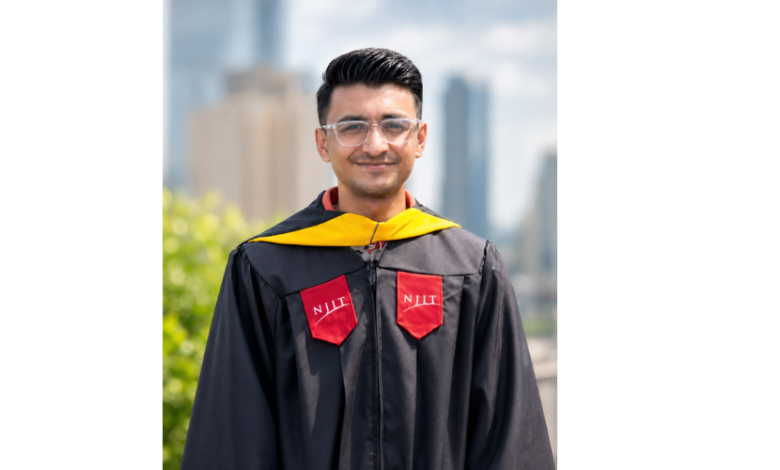
The data scientist and AI researcher is building a career around a simple conviction: AI safety has to live inside real systems, not just inside papers, policy debates, or abstract principles
Gautam Varma Datla is not interested in treating AI safety like a side conversation. He has built his work around the idea that safety, interpretability, and responsible deployment need to be built into the actual tools, libraries, and production systems people use every day. That belief runs through his research, his open-source contributions, and his work in real products. It also gives his career a shape that feels increasingly important right now, especially as AI systems move faster into high-impact settings.
His path began with a fascination for prediction and patterns. He was drawn to the idea that messy information could be turned into insight, and that models could reduce uncertainty in ways that mattered. Over time, that curiosity widened. It stopped being only about building something intelligent and became more about building something dependable. That shift now sits at the center of how he thinks about AI.
“What drew me in at first was prediction,” Datla says. “What kept me here was the harder question of whether these systems are actually reliable, interpretable, and safe when people depend on them.”
That question has taken him across several worlds at once. His published work spans model alignment, interpretability, governance, and safety-critical machine learning, with each area reflecting a broader commitment to AI safety and reliable deployment. One of his publications, An Interpretable LSTM Network for Solar Flare Prediction, grew out of an NSF-funded NASA project and focused on making space weather forecasting more transparent. By showing which temporal patterns and features drove the model’s predictions, the work aimed to make forecasting more useful for understanding risks to satellites, communications, and related infrastructure.
That theme of transparency carries through his broader research agenda. His most recent work in AI governance focuses on making governance operational by turning policies, standards, and enterprise guidance into rules, controls, and safeguards that can function in live systems. He presented this work at the AAAI 2026 AI Governance Workshop, alongside participants affiliated with organizations including IBM Research, Harvard, Oxford, and other academic and industry institutions.
“I have become very interested in the gap between saying AI should be governed responsibly and actually making that governance executable,” Datla says. “That gap is where a lot of the real work still needs to happen.”
That same mindset shows up in his open-source work. Datla has contributed merged bug fixes and performance improvements to widely used libraries including pandas, Polars, scikit-learn, PyTorch, LlamaIndex, and LangChain, projects that sit at the center of modern data science, machine learning, and generative AI development and are collectively used by millions of developers. His contributions have focused on user-facing issues, performance bottlenecks, and reliability improvements that affect developers building with these libraries in research and production settings.
“Some of the most important technical work is not flashy,” Datla says. “It is the work that makes a system more correct, more stable, and more trustworthy for everyone using it downstream.”
Several of his contributions have also been recognized in official project release notes, reflecting their practical value within software ecosystems where correctness, performance, and reliability are essential.
His professional work follows the same pattern. Datla has built document parsers used by U.S. government agencies. He developed a recommendation system that launched on the Audible homepage across the U.S. marketplace. He is now building the core agentic stack at Strategic Education, Inc. In each case, the work sits at the intersection of technical depth and real-world use. He has played critical technical roles in generative AI and data products with measurable impact, including work that has already created six-figure business value.
That range is part of what makes his story compelling. Datla has grown across research, infrastructure, and product work at the same time. That is not an easy balance to maintain. He describes one of his biggest challenges as learning how to operate across those multiple worlds without losing depth in any of them.
“It is already hard to do serious work in one of those areas,” Datla says. “Doing credible work across research, engineering, and deployment means you have to stay patient, grounded in fundamentals, and very honest about what the problem actually is.”
That patience also shows up in the way he talks about career growth. He is skeptical of chasing whatever is fashionable in the moment. He believes long-term impact comes from depth, not from trying to optimize for quick visibility. That belief fits his work unusually well. Whether he is improving a core library, publishing on interpretability, or working on governance systems that can be enforced in practice, he keeps returning to problems that may not always look glamorous on the surface but create large downstream value.
“Strong fundamentals matter more than quick wins,” Datla says. “A lot of meaningful work takes place below the surface, but that does not make it any less important.”
In the future, he wants to help shape the next generation of AI systems so they become not only more capable, but more dependable and more responsibly deployed. He wants to keep contributing to widely used open-source tools, publish work in AI safety and governance, and build products that create real value in high-impact areas such as health, education, finance, and public infrastructure. That ambition is broad, but it is also coherent. It all comes back to the same idea: trustworthy AI depends not only on model quality, but on the surrounding systems, infrastructure, and engineering decisions that make those models real.
“The future of AI should not be defined only by what the models can do,” Datla says. “It should also be defined by whether we built them in a way that people can actually trust.”
That standard continues to shape Gautam Varma Datla’s work as AI systems become more powerful and more widely deployed.
For more information on Gautam Varma Datla, visit his LinkedIn.