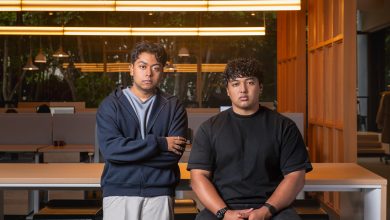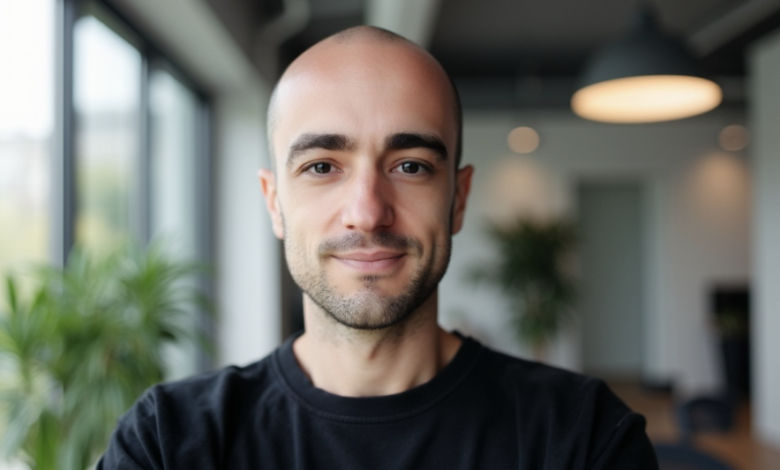
AI headshots. You’ve seen them pop up all over. Neutral grey backgrounds, flawless skin, and Uncanny Valley smiles. But are they good enough for LinkedIn?
According to Google Trends data, global searches for AI-generated headshots have risen 30% between December 2023 and December 2025 (Google, 2026). Despite a 10% interest dip in the first four months of 2026, experience shows that AI headshots are seemingly everywhere, from freelance cover letters to the ‘About Us’ page of the latest fintech startup.
At first, it’s tempting to consider AI headshots just another form of AI slop. The difference is that, unlike low-quality AI Trump memes, AI headshots are meant to be used in a professional context. The blatant AI-ness of Trump memes is almost charming, but a laughable AI profile picture on LinkedIn can be the difference between impressing a recruiter or missing out on an exciting job opportunity.
Avoiding the risk of being spotted as “AI slop” by using a real LinkedIn profile picture seems to be the reasonable solution. But are you sure your current headshot can compete, especially as more LinkedIn users seem to embrace generative AI tools?
What the Data (Doesn’t) Tell Us
One of the core issues of the debate over LinkedIn AI headshots is the excruciating lack of verifiable data.
The last citation of “profile picture” in the LinkedIn official blog page is from 2014 and merely suggests that “your profile is 14x more likely to be viewed simply by having a profile picture” (Kline, 2014). Despite telling us nothing about the superiority of LinkedIn AI headshots, this outdated statistic is routinely used to assert the importance of using AI-generated headshots on LinkedIn.
This is a symptom of the sheer lack of scientific/pseudoscientific information available on the subject. AI headshot generators are on the rise, but the market is highly competitive, SEO-dependent, and mainly composed of small startups that lack the financial means to conduct bulletproof research.
According to Bernardo Barbosa, senior copywriter at HeadshotKiwi, the discussion over whether AI headshots belong on LinkedIn “will never be settled by hard data because it’s fundamentally correlated to human perception”.
If It’s Good… Good Enough for LinkedIn?
“AI headshot generators give you 50, 100, or 250 headshots at a time not because you’re supposed to use every single one. The idea is that, by allowing you to choose from a sizable sample of random headshots, we guarantee that you will get at least 5, 10, or 20 ideal headshots. But the user has to be the one looking at the AI headshots and deciding whether they’re good enough for their LinkedIn profile.”
Robert Haynes, from the University of Hertfordshire, has supported the adoption of AI-generated LinkedIn headshots by citing the role first impressions play in job recruitment and affirming that “70% of recruiters have turned down a candidate based on their LinkedIn photo alone” (Haynes, 2026). Such, however, says nothing about the power of AI headshots.
On the other hand, alternative research based on 1,000-plus surveys determined that “66% [of recruiters] would be put off by a candidate’s AI-generated headshot once they knew it was fabricated” (Capturely, 2026). This illustrates that, while potentially beneficial, using AI headshots on LinkedIn poses a real risk to job applicants.
When presented with the study, Barbosa admitted knowing about the number and recognized that it can be risky to use AI-generated images on LinkedIn but added, “Ultimately, it’s about trusting your own judgment. When I got my first AI headshots, I did it because my job was to write about AI headshots, but I was genuinely surprised by the best 3-5 headshots and started using them immediately across my professional profiles.”
AI-Generated Avatars for the Remote Work Era
Barbosa has spent years writing about AI, but always from the inside. “Brands are the ones paying copywriters, not opinion magazines”. Versed on how to play the argument in favor of the AI product, Barbosa remained supportive of AI usage on LinkedIn when we asked him for his honest, personal opinion:
“Of course, it’s never as exciting and ‘life-changing’ as the brands make it seem, but that’s just how marketing is done. I do have to admit, though, that AI headshots have personally been helpful for me. I’m a lifetime online freelancer, so I’ve always felt uncomfortable with overexposing myself online. Using an AI headshot on my LinkedIn profile not only made it look more professional, but it also made me feel less vulnerable.”
Later on, Barbosa talked about the adoption of AI-generated LinkedIn headshots in the context of remote work:
“The professional setting used to be the epitome of identity. People would say, ‘I’m an engineer,’ ‘I’m a farmer’… But now, identity and labor are more distant than ever, particularly following the normalization of full-on online jobs.”
This thesis is challenged by a study on Japanese Gen-Z adults that determined that employment status influences “emerging adult identity” (Hatano et al., 2024). However, the study analyzed a relatively short sample of Japanese adults and shouldn’t therefore be applied to disparate contexts.
By Any Means Necessary
All things considered, AI headshot generators are but another highly accessible tool job applicants and recruiters have at their disposal. Last year, BBC released a fascinating article on “AI and recruitment”, which you can read in full here.
When interviewed by BBC about the rise of AI-generated CVs and headshots, professional recruiters raised awareness of the increase of job applicant bots, stating that “There are bots that can apply to 1,000 jobs on your behalf while you sleep, tailoring your CV for each of them” (BBC, 2026). Desperate for employment, applicants have started to brute-force AI bots to find a job by any means necessary.
This may help to explain why, on the other side of the spectrum, companies have incorporated their own AIs to conduct job interviews. Is it possible that the only solution for AI slop bots is a whole battalion of anti-AI AI software?
For the moment, the lack of verifiable data on LinkedIn and AI, particularly in the context of profile pictures/headshots, infers that the best conclusion is one of opinion. The best recommendation seems to be that, if you think an AI headshot makes you look more professional or appealing to LinkedIn recruiters, you should follow your gut.
References
- Google. Google Trends: “AI headshot generator.” (April 2026)
- Kline, S. R. A Professional Photographer’s Guide to Getting the Right LinkedIn Profile Photo. LinkedIn, 2014.
- Haynes, R. (2026). How Your LinkedIn Profile Photo Affects Click-Through Rate. Psychreg.
- Capturely. (2026). Companies moving away from AI headshots.
- Hatano, K., Hihara, S., Tsuzuki, M., Nakama, R., & Sugimura, K. (2024). Does employment status matter for emerging adult identity development and life satisfaction? A two-wave longitudinal study. Journal of Youth and Adolescence.
- BBC News. (2026). Is AI in recruitment a ‘race to the bottom’? BBC.