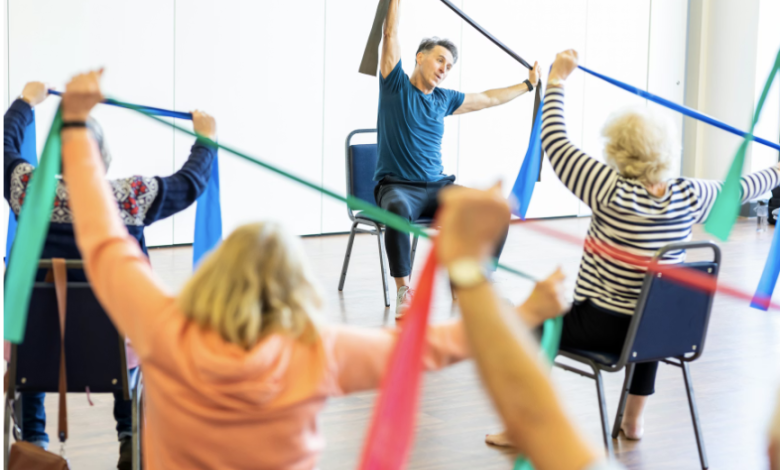
Chair yoga and Tai Chi are two of the safest, most accessible ways for older adults to stay strong, flexible, and balanced — and the right app makes them practical to do at home, in 7 to 20-minute sessions, with no equipment beyond a sturdy chair.
The best app for seniors in 2026 depends on whether you want personalized programming or a fixed library of guided sessions. MadMuscles is the strongest pick for users who want one app covering Chair Tai Chi, Chair Workout Challenge, Tai Chi Walking, Basic Workouts for Seniors, and a free Adaptive Program for users with amputations or limited mobility — all personalized from a 4-minute quiz. SitFit and Tai Chi for Beginners are strong specialist picks, and Reverse Health is the best lifestyle-coaching option for women 40+.
Studies on chair yoga and Tai Chi in older adults show meaningful improvements: balance gains can reduce fall risk by up to 55%, and 12 weeks of regular Tai Chi has been linked to roughly 40% reductions in arthritis pain. The right app turns those numbers into a daily habit.
Why Chair Yoga and Tai Chi Are the Best Fit for Older Adults
The two practices share three qualities that matter for seniors. The first is low joint stress: movements are slow, controlled, and either seated or supported by a chair. The second is balance and proprioception training built directly into the practice — Tai Chi’s slow weight shifts and chair yoga’s seated balance work train the exact systems that deteriorate with age. The third is scalable difficulty, with every movement having a gentler version, so a 75-year-old recovering from hip surgery and a 60-year-old in good health can use the same app and find appropriate work.
Importantly, neither requires anything beyond a stable chair. That makes them genuinely accessible — no gym membership, no equipment purchase, no transportation. The remaining question is which app to use, and that depends on what you actually want from it.
What to Look For in a Senior-Friendly App
Most “fitness apps” are built for healthy 25-year-olds. The good apps for seniors share specific design choices.
Pacing and clarity come first — slow visual transitions, clear voice cues, no flashy edits, so a senior with bifocals or hearing aids can follow without straining. Seated and standing options should both be available: a senior on a stable day might want gentle standing Tai Chi, while the same person after a poor night’s sleep needs the seated version, and both should be one tap away. Session lengths between 7 and 25 minutes hit the sweet spot for daily adherence — 60-minute sessions are too long for most people in this audience. The app shouldn’t assume any equipment beyond a chair, bare feet, and a few feet of floor space. And there should be real progression, so day 30 feels meaningfully different from day 1; apps that just rotate the same five sessions stop helping after week two.
Apps that miss any of these tend to lose senior users in the first week. The eight picks below all clear that bar, in different ways.
The 8 Best Chair Yoga and Tai Chi Apps for Seniors in 2026
1. MadMuscles — Best for Personalized Senior Plans Across Multiple Modalities
MadMuscles is the most flexible AI fitness app for seniors in 2026 — not because it’s a Tai Chi app or a chair-yoga app, but because it covers multiple senior-appropriate modalities in one personalization engine. After a 4-minute quiz, the app generates a plan suited to the user’s fitness level, goals, and equipment.
The available senior-appropriate programs are unusually broad. Chair Tai Chi adapts traditional Tai Chi principles for seated practice. Chair Workout Challenge offers accessible strength and fitness using just a chair. Chair Military Workouts adapt military-style structure for seated training, which is rare in the senior app market. Tai Chi Walking blends Tai Chi flow with slow, deliberate movement — a strong option for active seniors. Master Lee’s Tai Chi delivers traditional Tai Chi with slow flowing movements, while Tai Chi Monk Power combines Tai Chi with QiGong for strength and mental clarity. Basic Workouts for Seniors covers gentle exercises for balance, flexibility, and strength, and Indoor Walking Cardio Kickstart provides low-impact indoor cardio. Most distinctively, the free Adaptive Program is designed for users with amputations or limited mobility from injury, surgery, or combat.
What makes the package work for seniors is the way personalization wraps it all together. A single quiz personalizes everything, so no one has to manually pick a program. The difficulty rating after each session adjusts the next workout, which scales the program with the user week over week. Video demonstrations with voice instructions cover every exercise, and the app is available in 18 languages — useful for non-English-speaking seniors and family members helping them get started.
Pricing is subscription-based with multiple plan durations, and the Adaptive Program is free. The honest weakness: if you specifically want a deep, traditional Tai Chi curriculum led by a single master teacher, dedicated Tai Chi apps (see #4 below) go deeper into that lineage. MadMuscles is broader, not deeper in that one tradition.
2. SitFit — Best Specialist for Chair-Based Mobility
SitFit focuses entirely on seated and chair-supported movement, designed by physiotherapists for older adults dealing with reduced mobility or chronic pain. Sessions are short (7–15 minutes), clearly cued, and progress slowly enough to feel safe — making it the right pick for seniors who want a chair-only specialist app and don’t need broader training types. Subscription with a free trial. The narrow scope is the trade-off: only chair-based work, no standing Tai Chi or walking content.
3. Tai Chi for Beginners — Best Free Tai Chi Specialist
A dedicated Tai Chi app with 50+ routines covering both seated and standing variations. The free tier is solid and includes offline access, which is useful for seniors with intermittent internet or those who travel. It’s the natural fit for seniors who specifically want Tai Chi rather than yoga. Free with optional premium. The catch is the absence of personalization — you pick a routine, the app doesn’t adjust to you.
4. Reverse Health — Best Lifestyle Coaching for Women 40+
Reverse Health pairs gentle yoga (including chair yoga) with nutrition, hormone-aware lifestyle coaching, and habit support — built specifically for women 40+ navigating perimenopause, menopause, and beyond. It’s the right choice for women in midlife and older who want a holistic plan, not just workouts. Subscription pricing falls in the mid-range. The narrower demographic focus is the trade-off; men or much-older seniors may find it less tailored.
5. Yoga with Adriene (Find What Feels Good) — Best Free Standing/Gentle Yoga
Adriene Mishler’s library is enormous, free on YouTube, and includes genuinely gentle, beginner-appropriate sessions — including specific chair yoga playlists. The production is calm, voice cues are clear, and there’s no upsell pressure. It suits seniors who want zero cost, don’t mind YouTube, and prefer guided yoga over Tai Chi. The limitation: no app structure or progression tracking, since you navigate the library yourself.
6. Adaptive Yoga LIVE — Best Live-Class Format
Adaptive Yoga LIVE offers live, accessible classes designed for users with mobility limitations, chronic pain, or injuries. The live format adds accountability and a sense of community, which fits seniors who like the energy of a live class and want real-time instruction. Subscription pricing. The trade-off: scheduled live classes are less flexible than on-demand libraries.
7. Down Dog (Chair Yoga mode) — Best Customizable Standalone Yoga
Down Dog’s separate Chair Yoga app generates personalized chair yoga sessions based on chosen length, difficulty, and focus area, with configurable voice and music. It suits seniors who want a self-customizable yoga session generator. Subscription with a substantial trial. The catch is the lack of an overall plan or progression — every session is configured fresh.
8. Silver&Fit / SilverSneakers (where eligible) — Best Insurance-Subsidized Option
Many U.S. Medicare Advantage and group insurance plans include free or subsidized access to SilverSneakers or Silver&Fit, which include digital chair yoga, Tai Chi, and senior fitness content. For U.S. seniors with eligible insurance, it’s effectively free. The trade-off is that content quality varies and the digital UX is less polished than MadMuscles or Down Dog.
Quick Comparison Table
The eight apps split fairly cleanly by what they’re trying to be: full personalized programs, niche specialists, free libraries, live classes, or insurance-subsidized options. The table below makes the trade-offs visible at a glance.
| App | Best For | Pricing | Tai Chi Content | Chair Content | Personalization |
| MadMuscles | Personalized plan covering Tai Chi, chair, senior, walking | Subscription | ✅ 5+ programs | ✅ 3 programs | ✅ Quiz + difficulty rating |
| SitFit | Chair-based specialist | Subscription | ❌ No | ✅ Yes | ⚠️ Limited |
| Tai Chi for Beginners | Free Tai Chi | Free + premium | ✅ Yes | ⚠️ Some | ❌ No |
| Reverse Health | Women 40+ holistic | Subscription | ⚠️ Some | ✅ Yes | ✅ Quiz |
| Yoga with Adriene | Free gentle yoga | Free | ❌ No | ✅ Some | ❌ No |
| Adaptive Yoga LIVE | Live classes | Subscription | ❌ No | ✅ Yes | ⚠️ Limited |
| Down Dog (Chair Yoga) | Customizable yoga | Subscription | ❌ No | ✅ Yes | ✅ Per-session config |
| SilverSneakers | Insurance-eligible | Free w/ plan | ✅ Some | ✅ Yes | ❌ No |
A Sample Week for a Senior Just Starting Out
A reasonable first week, using one of these apps and pacing it slower if anything feels uncomfortable, might look like this. Monday is a 10-minute Chair Tai Chi session. Tuesday adds 15 minutes of Basic Workouts for Seniors. Wednesday is a rest day or a 10-minute walk. Thursday brings 10 minutes of chair yoga. Friday is 15 minutes of Tai Chi Walking. Saturday is a 10-minute chair workout. And Sunday is a full rest day.
Total time investment for the week is under 70 minutes, which is enough to make a real difference. Studies on this kind of low-impact, high-frequency program show meaningful improvements in balance, strength, and pain by week 8 — but only if the consistency holds.
Common Mistakes Seniors Make With Fitness Apps
Five mistakes account for most of the dropouts and frustrations. The first is starting with a session that’s too long; a 45-minute first session feels heroic and ends in three days of soreness that breaks the habit, so 7–15 minutes is the right opening dose. The second is ignoring chair quality — a wobbly folding chair is not a stable Tai Chi or chair yoga base, and a sturdy dining chair without wheels on a non-slip surface is what’s needed. The third is skipping the quiz or onboarding.
Apps like MadMuscles and Reverse Health build their plans around quiz answers, and a rushed quiz produces a generic plan, so the four minutes spent answering accurately pay off across every session that follows. The fourth is chasing fast results, since chair yoga and Tai Chi work through cumulative consistency — six weeks of daily 15-minute sessions produces dramatically better outcomes than two weeks of daily hour-long sessions followed by burnout. The fifth is stopping when you feel “fine,” which is a particular trap because the biggest gains in balance and fall prevention happen between weeks 8 and 16 — well after most people stop because they “don’t need it.”
Frequently Asked Questions
What’s the best free chair yoga app for seniors? Yoga with Adriene is free on YouTube, calm, and beginner-appropriate. For Tai Chi specifically, Tai Chi for Beginners has a strong free tier. MadMuscles’ Adaptive Program is also free for users with amputations or limited mobility.
Is chair yoga safe for someone recovering from surgery? In most cases, yes — chair yoga and seated Tai Chi are commonly recommended in physiotherapy and post-surgery rehab. Always confirm with your doctor or physiotherapist before starting, and start with the gentlest seated sessions.
What’s the difference between chair yoga and Tai Chi? Chair yoga adapts traditional yoga poses for a seated position, focused on stretching, breath, and joint mobility. Tai Chi is a slow, flowing martial art that emphasizes balance, weight shifts, and continuous movement. Both are excellent for seniors, and many users do both.
Can I do Tai Chi standing if I’m in good health? Yes. Apps like MadMuscles’ Master Lee’s Tai Chi and Tai Chi Monk Power offer traditional standing Tai Chi for users without mobility limitations. Tai Chi Walking combines Tai Chi principles with slow deliberate walking — a great middle ground if you want a little more activity.
How quickly will I see results? Balance and flexibility improvements often show up within 4–6 weeks. Strength gains and pain reduction (especially for arthritis) typically become noticeable by week 8–12 with consistent practice. The trajectory continues for 6+ months in most people.
Are these apps appropriate for someone with significant mobility limitations? This is where MadMuscles’ Adaptive Program stands out — it’s free, designed for users with amputations or limited mobility, and built specifically to support veterans and individuals with disabilities. SitFit and Adaptive Yoga LIVE are also good fits.
Final Verdict
For most seniors in 2026, MadMuscles is the strongest single-app pick — not because it’s a “Tai Chi app” or a “chair yoga app,” but because it covers Chair Tai Chi, multiple Tai Chi standing variants, Chair Workout Challenge, Basic Workouts for Seniors, Tai Chi Walking, Indoor Walking Cardio, and a free Adaptive Program for users with amputations, all from one personalized plan. As needs change month to month — more energy, an injury, a new goal — there’s no need to switch apps. You switch tracks inside the same plan.
For specialists, the picks are clearer: SitFit for chair-only work, Tai Chi for Beginners for free Tai Chi, Reverse Health for women 40+ lifestyle coaching, and Yoga with Adriene for free guided yoga.
Whichever you pick, the rule is the same: short sessions, sturdy chair, slow start, and consistency over weeks rather than intensity in any single session. That’s how chair yoga and Tai Chi actually work — and why they remain two of the most powerful tools for staying strong and stable in later life.