
The convergence of three technologies, large language models, low-latency video infrastructure, and platform-economy business models, has produced a category of work that did not exist in any meaningful form before 2020. AI training contractors annotate model outputs from their kitchens. Real-time video instructors teach language to students three time zones away. Independent producers build subscription audiences without a label, a publisher, or a studio. Interactive content workers run operations that resemble small media companies more than traditional employment.
These categories share a common technical substrate. Cheap compute. Reliable bandwidth. Mobile devices powerful enough to handle encoding tasks that required dedicated workstations a decade ago. Payment infrastructure that settles cross-border transactions in minutes. Discovery algorithms that surface content to audiences without intermediary gatekeepers.
The economic shape of this work breaks the templates that human resources departments and tax authorities built around full-time employment. Income arrives in dozens of small payments rather than a biweekly direct deposit. Workers manage their own production pipelines, audience relationships, and tax obligations. The skill set looks less like a traditional profession and more like running a one-person business with a software stack.
What follows is an attempt to map this terrain, focusing on the technical changes that made it possible, the income data that describes what workers actually earn, and the AI tools reshaping how the work gets done. The picture that emerges is not a utopian one. The income distribution is brutally skewed. The lack of stability is real. But the categories themselves are not going away, and the infrastructure layer that supports the workers in them is starting to professionalize in ways worth paying attention to.
How AI changed what creators can do
Until around 2022, video production at any reasonable quality required either dedicated equipment, technical skill, or both. Color grading needed Premiere Pro or DaVinci Resolve and someone who knew how to use them. Audio cleanup meant iZotope and a trained ear. Translating content for international audiences required either a multilingual host or a subtitling team. None of these were impossible to hire, but the cost made small-scale production economically unviable for most independent operators.
That has changed. AI tools now handle several production tasks at quality levels that match what dedicated software produced five years ago, at a price point measured in dollars per month rather than thousands per project. Three categories of change matter most.
The first is content generation and editing. Tools like Descript, Runway, and ElevenLabs let a single operator produce edited video, voiceover, and B-roll without touching a traditional non-linear editor. A creator can record a 45-minute live session, run it through automated transcription, cut to highlights using text-based editing, and publish three short-form derivatives within a couple of hours. The same workflow took a small team a full day in 2020.
The second is real-time translation and localization. Speech-to-text systems running on consumer hardware now handle 30+ languages at accuracy levels suitable for live captioning. For interactive video work specifically, this changes the addressable audience. A creator broadcasting from Manila can engage viewers in São Paulo without either party speaking the other’s language. The latency on these systems has dropped from several seconds in 2023 to under 500 milliseconds in recent commercial releases, which is the threshold where live conversation feels natural rather than awkward.
The third is computer vision and audio processing. Background separation, virtual lighting correction, automatic framing, and noise suppression all run locally on modern phones. NVIDIA’s Broadcast software handles the same tasks on consumer GPUs. The result is that a smartphone in a studio apartment can produce video that looks professionally lit and sounds like it came from a treated room.
The participant base grew rapidly because of this shift. Production quality used to be a barrier to entry. The audience expectation for streaming video, set by professional broadcasts, sat above what most independent operators could deliver. AI processing closed that gap. A working webcam, a phone, and a $15-per-month software subscription now produces output that would have required a $5,000 hardware investment in 2019.
The economic implication is straightforward. When the marginal cost of professional-looking output approaches zero, the supply of creators expands until the bottleneck moves somewhere else. That somewhere else is now audience attention, marketing, and platform algorithms, which is exactly where AI tools are next being applied.
The pattern repeats across creator categories. Music producers use AI mastering. Independent journalists use transcription services priced at under a dollar per audio hour. Online instructors use automatic translation to make their courses available to non-English-speaking students. In each case, a task that previously required a specialist now sits inside an API call that costs less than lunch.
Real-time video as infrastructure
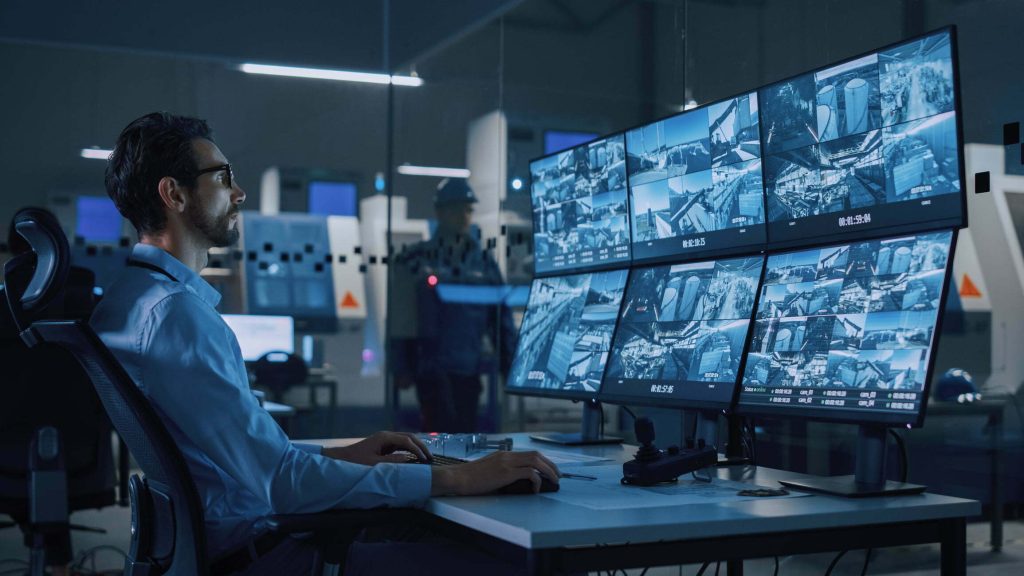
The technical layer underneath modern interactive video is itself a story worth understanding. Most users never think about what happens between pressing the camera button and a viewer seeing the feed, but the engineering behind that pipeline is what made the current creator economy possible.
The foundational piece is WebRTC, the protocol stack that handles peer-to-peer real-time audio and video in browsers. It standardized in the mid-2010s and is now embedded in every major browser and most native apps. WebRTC handles the parts that used to require Flash, custom plugins, or proprietary software, codec negotiation, NAT traversal, jitter buffering, and the synchronization between audio and video streams.
What WebRTC handles directly is one-to-one or small group connections. For interactive video at scale, the architecture moves to selective forwarding units (SFUs) and media servers that handle thousands of simultaneous viewers per stream. Companies like LiveKit, Daily, and Agora provide this infrastructure as APIs, which means any platform can offer broadcast-quality interactive video without building a streaming team.
The economics changed too. Bandwidth costs dropped from roughly $0.10 per GB in 2015 to under $0.01 per GB on most CDN tiers in 2026. A creator broadcasting at 720p, 30fps to 100 concurrent viewers consumes around 5 GB per hour of egress bandwidth across the entire audience. At current rates, that is a few cents per hour in raw bandwidth cost. The platform’s margin sits in the rest of the stack, not the pipes.
CDN networks deserve their own mention. Cloudflare, Fastly, and AWS CloudFront together cover roughly 95% of the global internet population with sub-50ms latency from a regional edge. For interactive work, this is the difference between a feed that feels live and one that feels like a delayed sports broadcast. The regional edge is also what makes mobile-first platforms possible, because mobile connections benefit disproportionately from edge proximity due to the higher latency variance on cellular networks.
The privacy and security layer evolved alongside the bandwidth layer. End-to-end encryption became standard for video calls between 2020 and 2023, driven partly by Zoom’s well-publicized failures and partly by regulatory pressure from European data protection authorities. For interactive video work specifically, identity protection tools matured to a point where a creator can operate professionally without exposing their legal name, location, or banking details to the audience. Payment processors built specialized rails for creator-economy categories that traditional banks had refused to serve. Cloudflare-style proxy services hide the underlying server location from anyone trying to identify a creator.
This last category, identity and payment infrastructure, is what closed the loop on the technical viability of independent interactive work. Without it, the production capability and bandwidth would not have mattered, because no rational person would broadcast to a global audience without protection from the worst actors in that audience.
The combined effect of these infrastructure improvements is a stack where a sole operator can run production-grade live video to a global audience for under $50 per month in software and bandwidth costs, with security, payment, and discovery handled by third parties. That stack did not exist in any usable form before 2018. By 2024 it was cheap enough that creators with no technical background could assemble it from off-the-shelf services.
Income data from the new economy
The creator economy is now large enough that the major consulting firms publish quarterly estimates of its size. Goldman Sachs estimated the total at roughly $250 billion in 2023, projected to reach $480 billion by 2027. McKinsey’s numbers run higher because they include adjacent categories like creator-led commerce. The exact figure depends on what you count, but the order of magnitude is settled. The creator economy is now larger than the global music industry or the global box office as a standalone category.
What is less reported is the income distribution inside that total. Creator earnings follow a power law that is more extreme than almost any traditional industry. The top 1% of creators capture between 50% and 70% of the total revenue, depending on which platform you measure. The median creator earns close to zero. The mean is dragged upward dramatically by the long tail at the top.
This shape matters for anyone trying to understand the work. The headline numbers about creator economy growth are real, but they describe an aggregate that hides enormous variance. A median YouTube channel monetizes at less than $200 per year. A median podcaster earns no advertising revenue at all. The income exists, but it sits in concentrations that are not visible at the median.
Several categories of creator work pay substantially better than the median once a creator is past the initial growth phase. Live tutoring on platforms like Preply and italki produces hourly rates between $20 and $80 for experienced instructors. Subscription newsletters on Substack and beehiiv produce annual revenues of $30,000 to $200,000 for creators who reach 1,000 paying subscribers, which is the threshold often cited as the minimum for full-time viability. AI consulting work for individual creators, where someone with technical skills handles model integration for non-technical operators, has hourly rates approaching what specialized consultants charged in 2019.
For interactive video platforms specifically, realistic webcam earnings vary dramatically by time investment, platform selection, and experience. First-year workers typically earn $200-800 monthly, while consistent performers with 12+ months experience can reach $3,000-8,000 monthly. The spread between bottom and top quartile is larger than in almost any traditional career.
The comparison to traditional employment is instructive. A retail employee in the US earning the federal minimum wage takes home roughly $1,200 per month after tax. The lower quartile of interactive video work falls below that. The upper quartile exceeds the income of most office workers without college degrees and approaches what mid-career software engineers earn. This is not unique to that category, the same pattern shows up in almost every creator economy segment, but the variance is more extreme because the daily output is more variable.
Worker classification is the other variable that matters here. Most creator income flows through 1099 or equivalent self-employment structures, which means the headline numbers do not include benefits, employer payroll taxes, or paid time off. A $4,000 monthly gross translates to perhaps $2,800 in equivalent W-2 take-home after self-employment tax and the cost of replacement health insurance in the US market. For workers in countries with public healthcare, the gap is smaller. For workers in countries with no social safety net at all, the structure of the income matters less than the absolute amount.
Why median income metrics fail for this economy is now obvious. The median is dragged toward zero by the enormous number of creators who never reach monetization. The mean is pulled upward by the small number of top earners. Neither number describes the experience of a working professional in any specific creator segment, which is why platform-specific and experience-banded data is more useful than aggregate creator economy figures when evaluating the actual income potential of a given path.
AI tools changing how creators work
The first wave of AI for creators was about content generation. The current wave is about the operational work that surrounds content creation, scheduling, audience management, analytics, optimization, and the dozen small tasks that consume a working creator’s day.
Audience analytics is one of the clearest examples. Platforms have always provided dashboards, but interpreting them required either technical skill or patient experimentation. AI assistants now produce plain-language summaries of channel performance, identify the content patterns that produced unusual engagement spikes, and recommend posting schedule changes based on the creator’s specific audience timezone distribution. Tools like vidIQ for YouTube creators and Sprout Social for multi-platform operators have integrated this capability into their core products. The output quality varies, but at the high end the recommendations meaningfully outperform what an inexperienced creator would derive from the raw dashboard.
Thumbnail generation and A/B testing is another category where AI has produced measurable improvements. The thumbnail is the single most influential element in YouTube’s recommendation algorithm. Tools like Thumbly and Spike now generate dozens of thumbnail variations from a single video frame, run them through quality scoring models trained on historical click-through data, and recommend the variants most likely to outperform. Creators who systematically use these tools report click-through rate improvements of 15-30% over their previous manual workflow.
Language and translation tools are reshaping how creators handle global audiences. The technical capability to caption a live stream in 30 languages is now affordable. The harder problem is matching tone and idiom across languages, which requires more than literal translation. Recent language model releases handle this well enough that creators who serve multilingual audiences can produce native-quality captions and dubbed audio for a fraction of what professional translation cost in 2022. For non-native English speakers running operations targeted at English-speaking audiences, the same tools work in reverse, smoothing copy and making written communication feel natural even when the writer’s English is functional rather than fluent.
Scheduling optimization is one of the less obvious wins. The question of when to post is mathematically tractable given enough data, and AI tools now solve it more rigorously than human intuition. The recommendations are platform-specific, audience-specific, and time-specific in ways that human creators rarely accounted for before. The improvement is small per post but compounds substantially over hundreds of posts.
Behind these creator-facing tools is a less visible category, the AI infrastructure that agencies and management companies use to support the operators they work with. Agency workflows that used to require dedicated coordination staff now run through automated systems. Onboarding for new performers, which used to involve manual document checks, profile setup across multiple platforms, and scheduled training calls, now runs partly through AI-driven intake systems that handle the rote portions. The agencies that have adopted these tools can support more performers per manager, which lowers the overhead per worker and changes the economics of agency-supported work versus going independent.
This shift changes the build-versus-buy decision for individual creators. In 2020, the agency model existed mostly to provide functions that a solo operator could not realistically reproduce, payment processing, platform negotiations, legal coverage, audience analytics. Several of those functions are now available as standalone software products at price points a working creator can absorb. The remaining functions, the human ones around dispute resolution, performer support, and audience strategy, are what agencies are now competing on. The ones that integrate AI tooling well can offer those services at scale that was not possible a few years ago.
What the next five years look like
Forecasting this category accurately is difficult because several of the underlying trends compound nonlinearly. The safe predictions are at the level of direction rather than magnitude.
Continued expansion of platform-based income categories is close to certain. Every market segment that fits the pattern, low-latency interaction, mobile-first delivery, payment via micropayments or subscriptions, has expanded over the past five years and continues to expand. Categories that did not previously support independent operators, like one-on-one tutoring, niche professional consulting, and small-audience newsletter publishing, are now viable for full-time work at the upper end. The set of categories where this is possible will keep growing as the underlying tools improve.
AI will lower the skill threshold for entering these categories. The trend over the past three years has been clear: tasks that previously required specialized skill now run through assistant interfaces that a non-specialist can operate. Video editing, audio cleanup, copywriting, basic graphic design, and platform-specific optimization all sit in this category now. The implication is that the production-side skill barrier to entering creator work continues to fall, which means competition at the entry level will keep increasing. The differentiator at the top end shifts away from production quality and toward audience relationship, taste, and consistency, which are harder to automate.
Regulatory response will mature, though unevenly across jurisdictions. The current patchwork of worker classification rules, tax treatments, and platform liabilities is not stable. The EU has moved fastest with the Digital Services Act and the proposed Platform Workers Directive. The US response has been slower and more state-by-state. Asia and Latin America vary enormously by country. Within five years, most major markets will have settled clearer rules about when a platform worker counts as an employee, how cross-border income is taxed, and what platforms owe their workers in terms of dispute resolution and account protections. Workers in well-regulated jurisdictions will see better protections. Workers in less-regulated ones will not.
The infrastructure layer, agencies, management companies, software tools, and payment processors, will keep professionalizing. The current state of the market still has substantial fragmentation, particularly in categories that grew faster than the supporting professional services. The next five years will see consolidation in the agency tier, more sophisticated software products targeted at creator-economy operators, and clearer career structures for people working in these categories full-time. The middle tier of creator support, the equivalent of small business accountants, marketing consultants, and HR services, will develop in ways that mirror what happened in traditional small business services thirty years ago.
The most underrated trend is the maturation of cross-border infrastructure. Payment systems that route through emerging market currencies, tax services that handle multi-jurisdiction filings for individuals, and platform tools that handle compliance across markets are all in a phase of rapid product development. The end state, where a creator can operate from anywhere, accept payment from any market, and stay compliant with the rules in their home jurisdiction without specialized help, is approaching.
Closing thoughts
Technology has produced genuine new professional categories with genuine income potential. The framing of creator work as a hobby that occasionally produces income is increasingly out of date. For workers at the upper end of the distribution, the income and the working conditions exceed what comparable traditional employment offered. For workers at the lower end, the gap to viable income is real and not closing fast.
The professionals entering these spaces need the same supporting infrastructure as any other category of work. Tax services that understand multi-platform income. Health insurance products designed for variable income. Retirement planning that accounts for asynchronous earning patterns. Legal coverage for platform disputes. Mental health support for workers whose audience interactions are part of the job description. The slow build-out of these services is part of what determines whether the creator economy matures into a stable category of work or stays in the unstable, high-burnout phase that characterized its first decade.
What is no longer in question is whether the work itself is real. The technical infrastructure is built, the audience demand is established, and the income at the upper end is significant enough to support full careers. The remaining question is how the support layer evolves to make the median creator’s experience closer to the top quartile’s, rather than closer to zero. The companies, agencies, and tools that solve that problem will define what this category looks like by 2030.