

Poland’s mandatory electronic invoicing system is rolling out in phases, and businesses face a critical question: will your current invoice format work with KSeF? The National e-Invoicing System requires a specific XML structure that most traditional EDI systems don’t support. Companies unprepared for this shift risk compliance penalties, operational disruptions, and lost business opportunities in the Polish market.
As the mandate approaches, staying informed about the latest requirements for e-invoicing Poland ensures your business remains competitive and fully compliant. Poland’s KSeF system represents a fundamental change in how businesses document transactions, moving from PDF-based invoices to structured data exchange.
Understanding Poland’s KSeF Electronic Invoice System: What Businesses Need to Know
KSeF (Krajowy System e-Faktur) is Poland’s centralized platform for issuing, receiving, and storing structured invoices. Unlike voluntary e-invoicing frameworks, KSeF operates as a clearance model where the tax authority validates every invoice in real-time before assigning a unique identification number.
The system went live in January 2022 as a voluntary option. Now it becomes mandatory in three phases: February 1, 2026 for enterprises with 2024 revenues exceeding PLN 200 million, April 1, 2026 for all other VAT taxpayers, and January 1, 2027 for digitally excluded businesses with specific transaction thresholds.
Every Polish VAT taxpayer must receive invoices through KSeF starting February 1, 2026, regardless of when their obligation to issue invoices begins. This creates an immediate compliance requirement for companies doing business in Poland.
Is Your Current Electronic Invoice Format Compatible with KSeF Requirements?
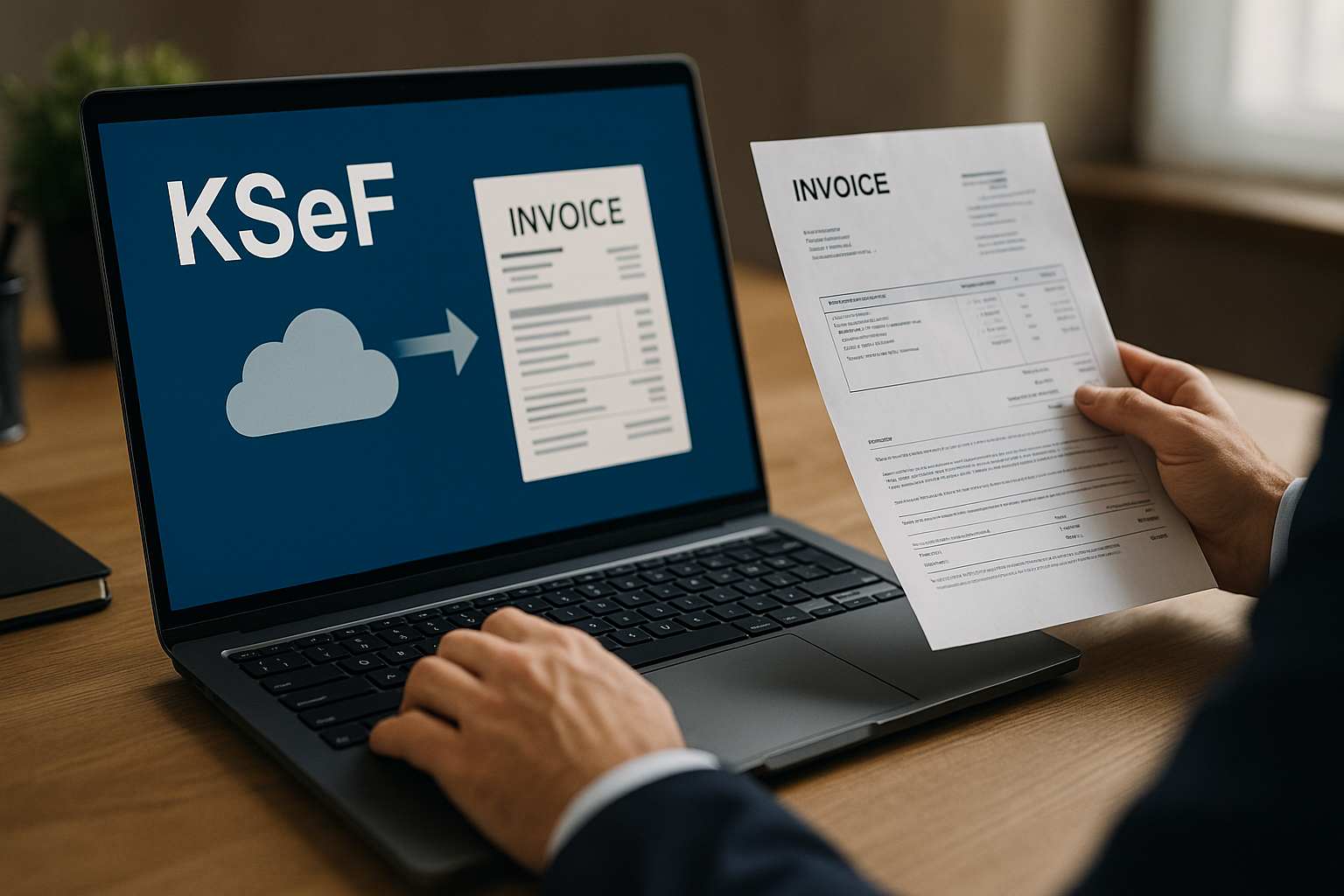
Most existing electronic invoicing systems fail KSeF compatibility tests. The system accepts only XML files structured according to the FA(3) schema, which defines specific data fields, naming conventions, and validation rules. PDF invoices, even when transmitted electronically, don’t qualify as structured invoices under Polish regulations.
Your current system needs assessment across three dimensions: data structure compatibility, authentication mechanisms, and integration capabilities with KSeF’s API. Companies using proprietary invoice formats or legacy EDI standards face significant migration challenges.
The Critical Differences Between Traditional EDI Invoicing and KSeF Structured Invoice Format
Traditional EDI invoicing transmits documents between business partners without government involvement. KSeF introduces a third party, the Polish tax authority, into every transaction. This fundamental shift changes how invoices are validated, stored, and accessed.
Structured invoices contain raw data organized in predefined sections: Header (technical metadata), Entity 1 and Entity 2 (seller and buyer identification), FA (transaction core with amounts and VAT rates), and optional Attachment sections for complex data. The system rejects attachments as separate PDF or JPG files. All invoice-related information must embed directly within the XML structure.
EDI systems typically exchange EDIFACT or X12 formats. KSeF requires FA(3) schema compliance, which uses different field definitions, mandatory data elements, and validation logic.
Step-by-Step Guide: Preparing Your Business for Poland Electronic Invoices Compliance
Start with a technical audit of your current invoicing infrastructure. Document which systems generate invoices, how data flows between ERP modules, and what formats you currently produce. Identify gaps between your existing outputs and FA(3) schema requirements.
Establish authentication credentials through Poland’s e-Tax Office platform. Companies need either Trusted Profile (Profil Zaufany), qualified electronic signatures, or KSeF certificates for system-to-system integration. Assign proper authorization rights to employees who will issue invoices on behalf of your organization.
Test invoice generation in KSeF’s sandbox environment before going live. Submit sample invoices, analyze validation responses, and refine your XML generation logic. The system returns specific error codes when files fail validation, use these to debug your implementation.
How to Convert Your Existing Electronic Invoicing System to KSeF-Ready XML Format
Conversion requires mapping your current data fields to FA(3) schema elements. Field P_1 represents issue date, P_2 contains invoice number, and dozens of other fields capture transaction details according to strict formatting rules. This mapping exercise reveals data you currently don’t capture but must include for KSeF compliance.
Build or integrate XML generation capabilities into your invoicing workflow. Companies with custom ERP systems need development resources to implement FA(3) schema generation. Those using commercial software should verify vendor roadmaps for KSeF support and plan upgrades accordingly.
Common Technical Challenges When Migrating to the KSeF Electronic Invoice System
Authentication failures top the list of migration obstacles. Companies struggle with certificate management, token refresh logic, and authorization assignment across complex organizational structures. Multi-entity businesses face additional complexity when managing separate KSeF credentials for subsidiaries.