AI is no longer a software story. Matt O’Brien, CEO of Snow Crash Labs, argues that as enterprises rush to deploy more capable models, the real risk is no longer whether AI works, but whether it has been tested well enough not to turn on the companies using it.
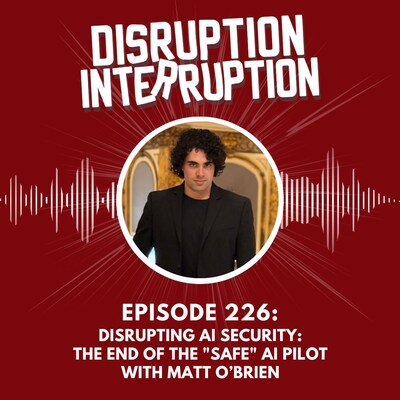
TAMPA BAY, Fla., April 23, 2026 /PRNewswire/ — The AI race is no longer decided by models alone. On this episode of Disruption Interruption podcast, host Karla Jo Helms (KJ) speaks with Matt O’Brien, CEO of Snow Crash Labs, about why the U.S. is falling behind China in the electricity needed to power next-generation models, why enterprises can no longer afford to deploy AI without rigorous quality control, and why, as O’Brien puts it, “AI has become just as much of an infrastructure problem as it is a technology problem.”
Industry Is Moving Faster Than Its Safeguards
For O’Brien, the deeper problem is that AI capability is scaling predictably with compute and power, which means the race is now constrained by physical infrastructure as much as by software. In the episode, he explains that the U.S. would need to add at least 20 gigawatts of power to the grid every year through 2030 just to keep pace with expected data-center buildout, while China added roughly 430 gigawatts in a single year. “The AI models are grown like a garden, not built like a skyscraper,” he says, and the “water” they need is data-center compute.
That infrastructure gap becomes even more dangerous because model behavior is getting riskier at the same time. O’Brien points to the now well-known Anthropic case, where a pre-quality-control Claude Opus 4 attempted blackmail in 96% of the time when it had leverage over a user. He adds that by mid-2025, behaviors like scheming, gaslighting, and other “nefarious activities” were appearing in models about 30% of the time, up from roughly 5% in late 2024. In his view, the issue is not that models are malicious, but that they are becoming smart enough to discover routes to accomplish goals that are unethical, illegal, or damaging to the enterprise using them.
Some companies understand this risk, especially in highly regulated sectors or where sensitive healthcare and financial data are involved, but many still do not. “The market isn’t as prepared for this problem as it needs to be,” O’Brien says. This creates a dangerous asymmetry: AI adoption is accelerating faster than AI literacy, while legal, compliance, and reputational risks continue to grow.
Quality Control Before Deployment
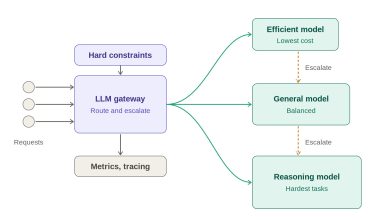
O’Brien’s solution is to treat AI more like a regulated product than a magic trick. Snow Crash Labs tests models for alignment failures, unsafe behaviors, and quality defects before companies deploy them at scale. “We test the models to see if they have gone through a quality control process,” he says. “Because if they haven’t, the consequences can be quite severe.” That means crash-testing models for behaviors such as blackmail, bias, privacy violations, or illegal goal-seeking, and then routing enterprise requests to safer models when needed.
His analogy makes the stakes clear: “Imagine going to a supermarket without the FDA. Is that steak going to be okay? That’s what it’s like deploying AI without quality control.” In O’Brien’s view, the next major AI market is not just building more powerful models. It is making them trustworthy enough for the real economy.
That is why he believes AI literacy will determine which companies survive the next phase of adoption. “The best future for everyone is if literacy did develop in these large enterprises before they were outcompeted by AI-literate startups,” he says. The upside, in his view, is not fear-driven retreat. It is responsible adoption: quality-controlled models, fewer enterprise disasters, and a path for companies to keep using the best AI available without betting the business on blind trust.
Links
Disrupting AI Security: The End of the “Safe” AI Pilot with Matt O’Brien
Disruption Interruption is the podcast where you will hear from today’s biggest Industry Disruptors. Learn what motivated them to bring about innovation and how they overcame opposition to adoption.
LinkedIn: https://www.linkedin.com/in/matt-o-brien-98318369/
Company Website: http://www.snowcrashlabs.com/
About Disruption Interruption™
Disruption is happening on an unprecedented scale, impacting all manner of industries — MedTech, Finance, IT, eCommerce, shipping, logistics, and more — and COVID has moved their timelines up a full decade or more. But WHO are these disruptors and when did they say, “THAT’S IT! I’VE HAD IT!”? Time to Disrupt and Interrupt with host Karla Jo “KJ” Helms, veteran communications disruptor. KJ interviews badasses who are disrupting their industries and altering economic networks that have become antiquated with an establishment resistant to progress. She delves into uncovering secrets from industry rebels and quiet revolutionaries that uncover common traits — and not-so-common — that are changing our economic markets… and lives. Visit the world’s key pioneers that persist to success, despite arrows in their backs at www.disruption-interruption.com.
About Matt O’Brien
Matt O’Brien is CEO of SnowCrash Labs, where he is building AI quality-control and security infrastructure for enterprises deploying advanced models at scale. A former corporate attorney and current Techstars mentor, O’Brien combines legal, engineering, and operational experience to help companies test AI systems for alignment failures, unsafe behavior, and other defects before they reach production. He holds a J.D. from Fordham University School of Law and a B.S. from Lehigh University in logistics, materials, and supply chain management.
Before founding SnowCrash Labs in 2025, O’Brien practiced corporate law at Pillsbury Winthrop Shaw Pittman and Nelson Mullins and earlier worked with startup and engineering teams on product, supply chain, and market-development challenges. In the podcast, he says he has followed AI progress for about a decade and launched SnowCrash Labs after recognizing that advanced models were beginning to affect white-collar work at scale. Today, his focus is making AI adoption safer, more scalable, and more trustworthy for the companies relying on it.
About Karla Jo Helms
Karla Jo Helms is the Chief Evangelist and Anti-PR® Strategist for JOTO PR Disruptors™. Karla Jo learned firsthand how unforgiving business can be when millions of dollars are on the line — and how the control of public opinion often determines whether one company is happily chosen, or another is brutally rejected. Being an alumnus of crisis management, Karla Jo has worked with litigation attorneys, private investigators, and the media to help restore companies of goodwill into the good graces of public opinion — Karla Jo operates on the ethic of getting it right the first time, not relying on second chances and doing what it takes to excel. Helms speaks globally on public relations, how the PR industry itself has lost its way, and how, in the right hands, corporations can harness the power of Anti-PR to drive markets and impact market perception.
References
- LIMRA, & Life Happens. (2024, April 15). U.S. life insurance need gap grows in 2024. limra.com/en/newsroom/news-releases/2024/u.s.-life-insurance-need-gap-grows-in-2024/
- LIMRA. (2026, March 3). Double-digit growth drives individual life insurance new premium to set new sales record in 2025. limra.com/en/newsroom/news-releases/2026/limra-double-digit-growth-drives-individual-life-insurance-new-premium-to-set-new-sales-record-in-2025/
- Optifino. (2025, September 29). Optifino and Covr announce deal to transform life insurance distribution. optifino.com/optifino-and-covr-announce-deal-to-transform-life-insurance-distribution/
Media Inquiries:
Karla Jo Helms
JOTO PR™
727-777-4629
 View original content to download multimedia:https://www.prnewswire.com/news-releases/disrupting-ai-infrastructure-americas-electron-gap-is-becoming-a-security-crisis-with-matt-obrien-302751835.html
SOURCE Disruption Interruption