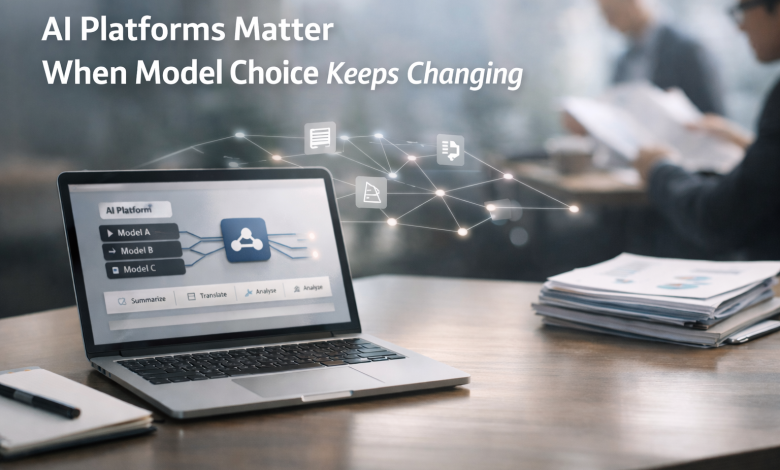
Not long ago, many teams were simply trying to get access to a capable AI model. That is no longer the main challenge. Now there are plenty of large language models to choose from. The real challenge begins when work starts to depend on them.
One team needs summaries. Another needs translation. Another needs help reviewing long documents, drafting replies, or producing structured outputs. The model may change from one task to the next, but the work still has to move. That is where a platform starts to matter.
Large language models do the reasoning. A platform makes that reasoning usable.
A large language model is the engine. It handles tasks such as writing, summarizing, reasoning, and responding. A platform plays a different role. It gives people a practical way to access models, compare them, switch between them, and use them within real workflows.
That distinction matters because raw model quality is only part of the story. A model can produce a strong answer, but a platform determines whether that answer can become part of daily work without creating extra effort. If every new task requires a different setup, a different interface, or a different pricing model, teams lose time quickly.
In practice, many organizations do not need one more powerful model as much as they need a simpler way to use several of them.
The Real Friction Comes From Workflow, Not Just Model Quality
What teams notice first is often not the intelligence itself, but the friction around using it.
This is where platform value becomes visible. People feel it when they can compare outputs in one place instead of jumping between tools. They feel it when switching models does not mean rebuilding the process. They feel it when pricing is clear enough for a manager to approve ongoing use instead of treating AI as a short-term experiment.
That is why platform thinking matters more than single-model thinking. Once teams begin working across different use cases, the need for a stable workflow becomes much clearer than the need for one standout model.
Why AI Platform Access Matters When Teams Use Multiple Models
As organizations expand their use of AI, different tasks often call for different models. A summarization task may suit one system, while document review, structured output, or translation may call for another. At that point, teams do not need more model names to evaluate one by one. They need simpler AI platform access that helps them compare options and keep work moving.
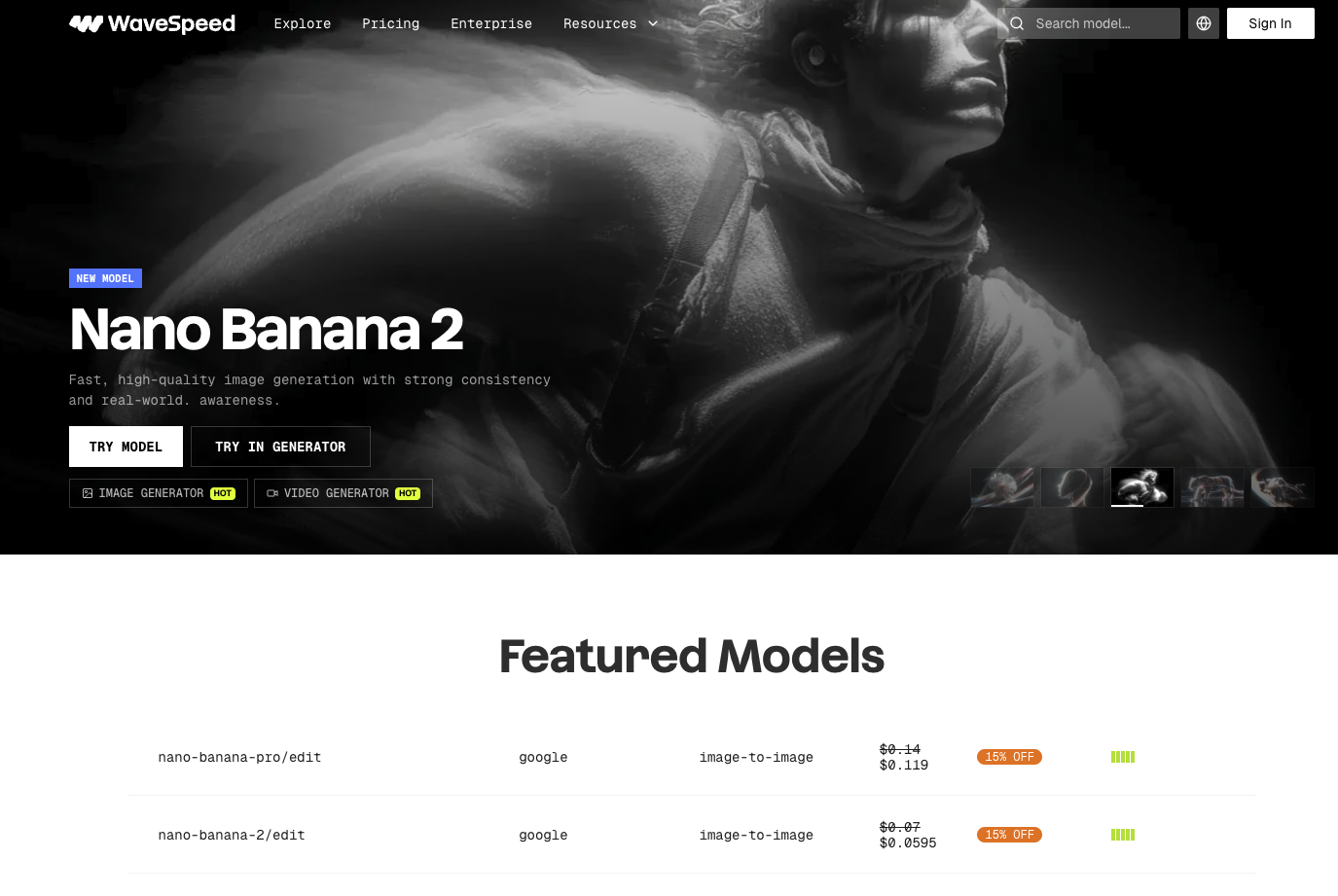
That is where the Wavespeed platform fits naturally into the discussion. For teams managing multiple AI tools and changing large language model needs, a platform approach offers a more organized way to handle model access, evaluation, and day-to-day use.
Unified Large Language Model Access Reduces Repeated Work
The value becomes even clearer when teams need a consistent way to work across multiple models without creating a new process every time. In that context, WaveSpeed’s unified large language model access layer points to a practical way to bring large language model access, model comparison, and workflow continuity into one place instead of scattering them across separate tools and repeated decisions.
For teams, that matters because the real pressure rarely comes from one task alone. It comes from having to keep changing direction without rebuilding the workflow each time.
What a Useful AI Platform Should Do Well
If a platform is worth using over the long term, it should do four things well.
First, it should support different kinds of work. Writing, summarizing, translation, long-document analysis, and structured output do not always call for the same large language model.
Second, it should make switching simple. Teams should be able to move from one model to another without turning every new use case into a new integration project.
Third, it should make price and performance easier to understand. Teams are much more likely to keep using AI when they can clearly see what they are paying for and what they are getting in return.
Fourth, it should reduce repeated work. A platform is not useful just because it puts many models in one place. It becomes useful when access, comparison, and everyday use all become easier.
The Long-Term Advantage Is Staying Ready to Choose Again
The real advantage is not choosing one model once. It is staying ready to choose again.
That may be the most useful way to think about AI platforms today. The organizations that get the most from AI may not be the ones that picked the hottest model first. They may be the ones that built a steadier system for choosing, comparing, and changing models as their needs evolved.
Models will keep changing. So will tasks, teams, and budgets. A good platform does not stop that change. It helps people move through it without losing momentum. In the long run, that is what matters most: not one impressive model name, but a better way to keep work moving when the choice keeps changing.