

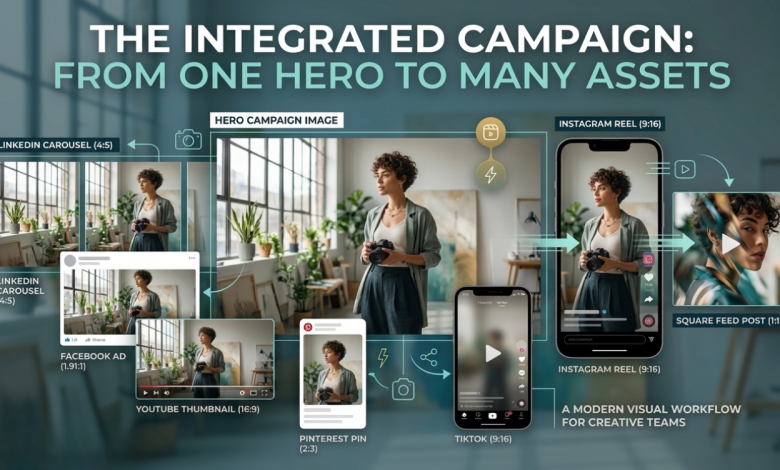
The hardest part of a social campaign usually is not coming up with the idea. It is what happens right after.
A team lands on one strong visual for a launch, and suddenly that image has to do everything. It needs to work as a paid social creative, a carousel opener, a teaser graphic, a video thumbnail, and maybe even a landing page visual. That is where things start to slow down. Not because the idea was weak, but because most teams still treat each of those outputs like separate pieces of work.
A better way to think about it is this: one image should not be the end of the process. It should be the start of a system. If that first visual is built to travel well, the rest of the campaign gets easier to produce. The team moves faster, revisions are less painful, and the campaign feels consistent instead of patched together.
That matters even more now because social campaigns rarely live in one format. A single launch might show up in paid placements, organic posts, teaser sequences, landing pages, email headers, and short-form video within a matter of days. In that kind of environment, a reusable source image is not just a creative advantage. It is a practical one.
The teams that handle this well usually are not thinking in isolated assets. They are working inside a broader AI visual creation workflow, where image generation, short-form video planning, and multi-format campaign production stay connected. For teams looking for an AI video creation platform that fits into a wider image and video workflow, the HappyHorse platform makes sense in that context because it is built around multi-format visual production rather than one-off asset creation.
Start With the Image That Can Keep Working
A lot of campaigns become inefficient for a very simple reason: the first image was approved for one use, but never built for reuse.
You usually see the problem later. The original visual looks good in the format it was made for, but as soon as the team tries to turn it into a thumbnail, a vertical crop, or a teaser banner, it starts to fall apart. There is no room for copy. The focal point gets lost. The composition feels too tight. It worked once, but it does not stretch well.
That is why the first image should be treated less like a finished deliverable and more like a source asset. Before moving too far into production, it helps to ask a few practical questions. Is the focal point obvious right away? Can the image be cropped without losing the idea? Is there enough open space for headlines or overlays? Could this visual support motion later if the campaign grows into video?
Those questions are not just small production details. They are what decide whether one image can turn into five or six useful assets, or whether the team ends up rebuilding the campaign every time the format changes.
Image Generation Is More Useful Earlier Than Later
One of the easiest mistakes to make with AI image creation is expecting it to produce the finished answer in one shot. That is usually not where it helps most.
In real workflows, image generation tends to be more valuable earlier on, when a team is still figuring out the visual direction. It is useful for testing composition, mood, subject placement, copy space, and overall tone before the campaign gets locked into final channel-specific versions. Used this way, it saves time later. Used as a shortcut at the very end, it often creates extra rounds of cleanup.
That becomes especially obvious in product launches and promotional campaigns. Most teams do not just need one attractive image. They need a visual structure that can support paid, organic, and sometimes motion-based formats without having to start over every time.
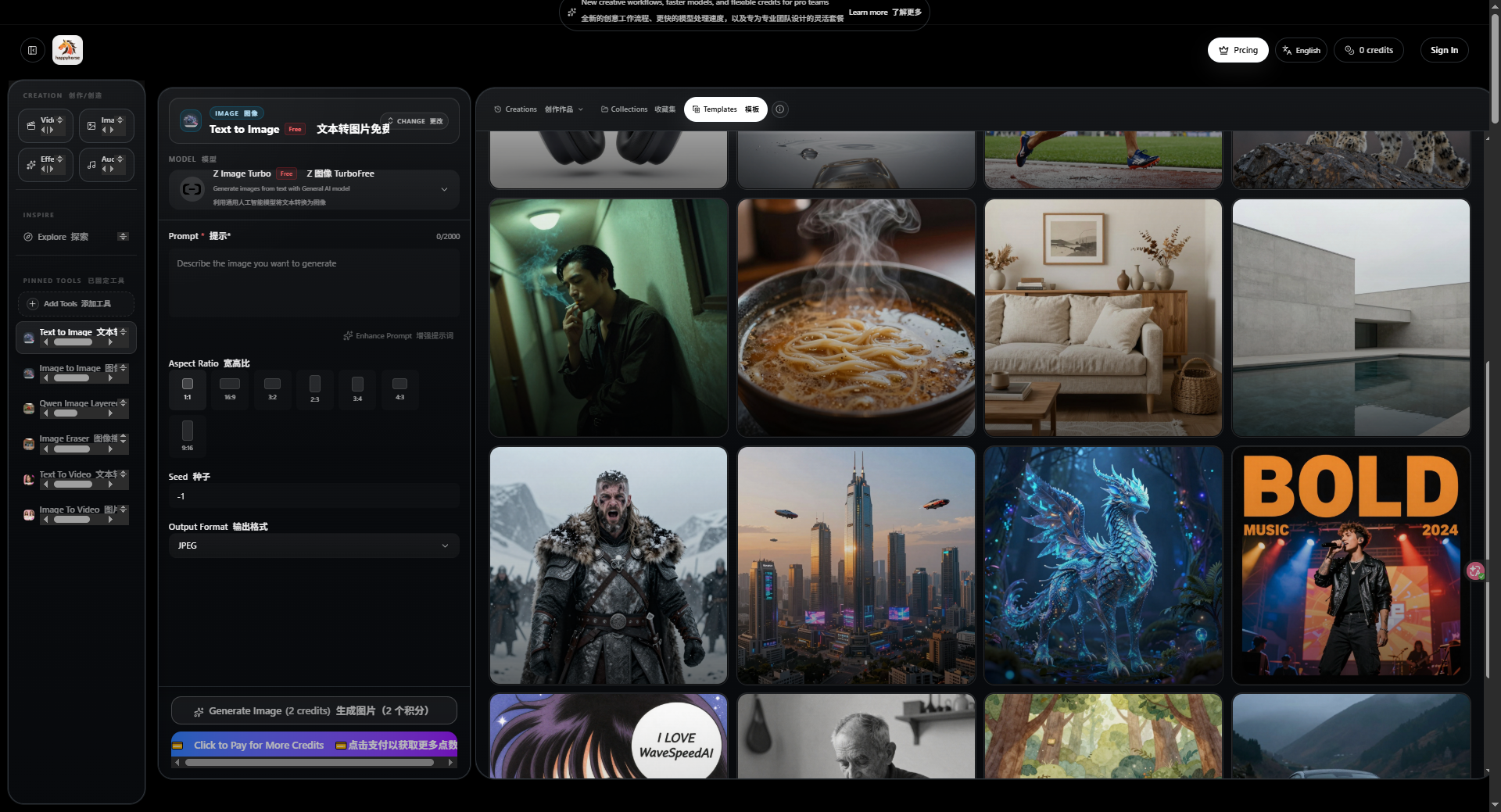
If the process involves fast text-to-image generation, prompt iteration, aspect-ratio testing, and early visual development, then HappyHorses AI image makes the most sense as an AI image generation workspace inside a working text-to-image workflow. In that setting, the point is not simply to output an image quickly. It is to shape composition, preserve space for messaging, test different layouts, and build a source visual that can hold up across multiple social formats.
Adapting an Asset Is Not the Same as Resizing It
 Once the core image is set, most teams move into versioning. That is normal. But this is also where a lot of people make the same mistake: they assume adaptation just means resizing.
In reality, different placements ask different things from the same image. A carousel opener needs to read instantly. A paid creative needs more visual force. A teaser graphic might need a clearer title area. A video thumbnail has to stop someone mid-scroll. The dimensions change, yes, but more importantly, the job of the image changes.
That is why multi-asset production is not just a formatting task. It is also an editorial one. The team has to decide what matters most in each context while still keeping the campaign visually coherent.
This is where a well-built source image really proves its value. If the original visual idea is strong, the team can push different elements forward in different placements without losing the overall identity of the campaign. The assets may shift, but they still feel like they belong to the same launch.
Motion Usually Works Better as the Second Step
A lot of teams burn time by moving into motion too early.
Once a project enters video, changes get more expensive. Timing, transitions, camera movement, pacing, all of that depends on the visual idea underneath. If that visual idea is still unsettled, the video work just multiplies the uncertainty instead of helping resolve it.
A better rhythm is usually to let the image prove itself first, then build motion on top of it. That gives the team a steadier base for short-form video, animated variations, and image-to-video extensions. It also makes decisions easier because the core visual logic has already been tested.
This matters in social campaigns because not every piece of content needs a full video treatment from the start. Sometimes one strong image, with the right framing and enough room for text, can go surprisingly far. Add a little motion, a simple zoom, or a bit of movement, and it can do the job without forcing the team into a much heavier production process.
The Real Win Is Not More Output. It Is Less Rework.
AI is often sold on speed, and speed does matter. But speed alone is not the real benefit. The real benefit is cutting down on repeated work.
Most teams do not actually lose time creating assets. They lose time recreating them. They make something that works in one place, then discover it breaks in the next. So they redo the crop, rethink the copy placement, rebuild the thumbnail, and patch problems that were already baked into the first image.
That is why the smarter goal is not endless output. It is building a workflow that gives the same image more than one life.
The teams that get good at this usually develop a simple internal logic around how they build visuals. They know which campaign types should start with a hero image. They know when vertical-first thinking matters. They know which visuals need text-safe space and which ones are likely to support motion later. None of that has to turn into a complicated playbook. It just has to become familiar enough that the team stops solving the same problem from scratch every single week.
In the end, turning one image into many assets is not just a useful trick. It is a more durable way to run modern campaign production. And in social campaigns, durability often matters more than novelty. The teams that scale well are usually not the ones making the most content. They are the ones starting with something strong enough to keep working as the campaign expands.