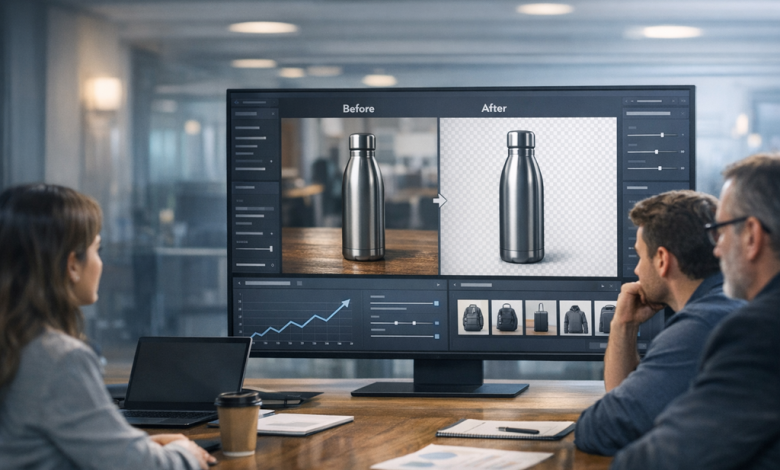
Most AI image conversations still start with “Look what this model can generate.”
In real teams, that’s not the painful part.
The painful part is the boring, repeated visual work that happens every single week: cleaning product photos, fixing inconsistent backgrounds, preparing resized versions for different channels, and rushing edits five minutes before a campaign goes live.
That is where AI has quietly become useful.
I was talking to a small ecommerce operator recently. Their team wasn’t asking for cinematic AI art. They had a simpler problem: too many SKUs, too little design bandwidth, and constant pressure to launch faster. The bottleneck wasn’t creativity. It was production hygiene.
If that sounds familiar, you’re not alone.
The shift from “AI wow” to “AI workflow”
In 2024 and 2025, many companies experimented with AI tools because they looked impressive. In 2026, teams are keeping only what reliably saves time.
That usually means workflow tools, not novelty tools.
A practical image workflow looks like this:
– remove distracting or inconsistent backgrounds
– clean edges and keep subject clarity
– standardize visual style across listings or landing pages
– export lighter assets for web performance
None of this sounds glamorous, but it directly affects speed, consistency, and conversion.
Why background quality matters more than people think
When shoppers land on a page, they judge quality in seconds. If product imagery feels uneven, trust drops. If images look clean and consistent, credibility goes up before users read a single line of copy.
That’s why teams increasingly rely on tools like an AI background remover. Not because it’s trendy, but because it removes repetitive manual work from the pipeline.
Designers still matter. Brand direction still matters. But teams don’t need senior creatives spending hours on routine cutouts and cleanup tasks that software can now handle well.
The metric most teams ignore
A lot of teams track clicks, impressions, and CTR. Fewer teams track image production latency: how long it takes to turn a raw asset into a publish-ready one.
That number is a hidden growth lever.
If your team can reduce visual turnaround from days to hours, you can:
– launch campaigns earlier
– test more creatives in the same week
– react faster to market feedback
– reduce bottlenecks between marketing and design
This is exactly where AI image editing becomes operational infrastructure, not just a creative toy.
Keep it simple: one workflow, one win
If you’re evaluating AI image tools, don’t roll out ten use cases at once.
Pick one recurring pain point (for most teams, that’s background cleanup). Set a baseline for turnaround time. Run a two-week test. Measure output quality, speed, and conversion impact on pages that use the new assets.
Then expand.
The companies getting real value from AI right now are not the ones chasing every new model release. They’re the ones fixing one expensive workflow at a time, and turning visual production into a repeatable system.